
Project – 화성 장안 다목적 복합센터 건립사업 설계공모 Multi purpose complex center(Hwasung)
Location – Jangan-myeon, Hwaseong-si, Gyeonggi-do
Programme – Multi purpose complex center
Site area – 11,528.0㎡
Building area – 742.23㎡
Gross floor area – 891.12㎡
Building scope – 3F
Height – 13.3m
Parking – 25
Structure – RC+Steel Frame Structure
Duration: 2023.04 – 2023.05
Architect – 아키도형건축사사무소 acdo architects
* 2등 우수상 / 2nd prize
정중동 靜中動
고요한 가운데 움직임이 있다.
건물은 고요하다. 고요한 가운데 변화하는 주변 환경과 날씨, 계절 따라 건물 안, 밖은 빛과 그림자에 의해 시시각각 장면을 바꾼다. 메인 홀과 진입 마당을 중심으로 실타래처럼 펼쳐지는 유기적인 동선 체계는 바삐 제 갈 길로 움직인다. 또한 예측하기 어려운 각종 행사와 프로그램도 이곳에서는 어려움이 없다. 우리는 기존 행정복지센터의 근무자, 방문객, 그리고 새롭게 찾아오게 될 사용자 모두에게 이로울 공간을 제안한다. 화성시는 사회의 변화와 여가 및 문화생활의 충족, 나날이 늘어가는 생활체육에 대한 시민들의 요구에 의해 다목적 복합센터 건립을 추진하고 있다. 다목적 복합센터는 단순히 실내체육관의 기능을 넘어 지역 주민들의 행사 및 축제 등 다용도 복합문화활동을 위한 공간으로 기능하여야 한다.
대지는 장안면 행정복지센터의 주차장으로 사용되던 곳으로 두 개의 지역지구에 걸쳐있다. 자연녹지지역 건폐율의 한계로 멀리 달아날 수 없고, 기존 행정복지센터에 가까이(계획관리지역) 건물을 배치할 수밖에 없는 필연이 존재하는 사이트이다. 기존 행정복지센터의 정면성과 서로 다른 프로그램의 시설이 만나게 될 이 장소는 적당한 거리와 높이, 효율적이고 경제적인 관계맺기로 섬세한 배치와 조닝이 필요한 생각보다 어려운 사이트이다. 우리는 법의 테두리 안에서 기존 행정복지센터와의 물리적 거리감과 공존에 대한 문제인식에서 설계를 시작했다.
靜中動
There is movement in the stillness.
The building is still. The changing surrounding environment, weather, and seasonal changes in the building and the outside changes the scene moment by moment by light and shadow. The organic movement system, which unfolds like a thread around the main hall and the entrance yard, is busy moving to its own path. In addition, various events and programs that are difficult to predict are not difficult here. We propose a space that will benefit both workers, visitors, and new users of existing administrative welfare centers. Hwaseong City is promoting the construction of a multi-purpose complex center in response to changes in society, the satisfaction of leisure and cultural life, and the growing demand of citizens for daily sports. The multi-purpose complex center shall function as a space for multi-purpose complex cultural activities such as events and festivals of local residents beyond the function of an indoor gymnasium.
The site was used as a parking lot for the Jangan-myeon Administrative Welfare Center and spans two local districts. It is a site that cannot escape far due to the limitation of the building rate in natural green areas, and there is an inevitable need to deploy buildings close to existing administrative welfare centers (planned management areas). This place, where the facilities of the existing administrative welfare center and other programs will meet, is a more difficult site than expected due to its proper distance and height, efficient and economical relationship. We began designing with a sense of physical distance from the existing administrative welfare center within the framework of the law and a recognition of the problem of coexistence.

STEP 01. 대지의 안정
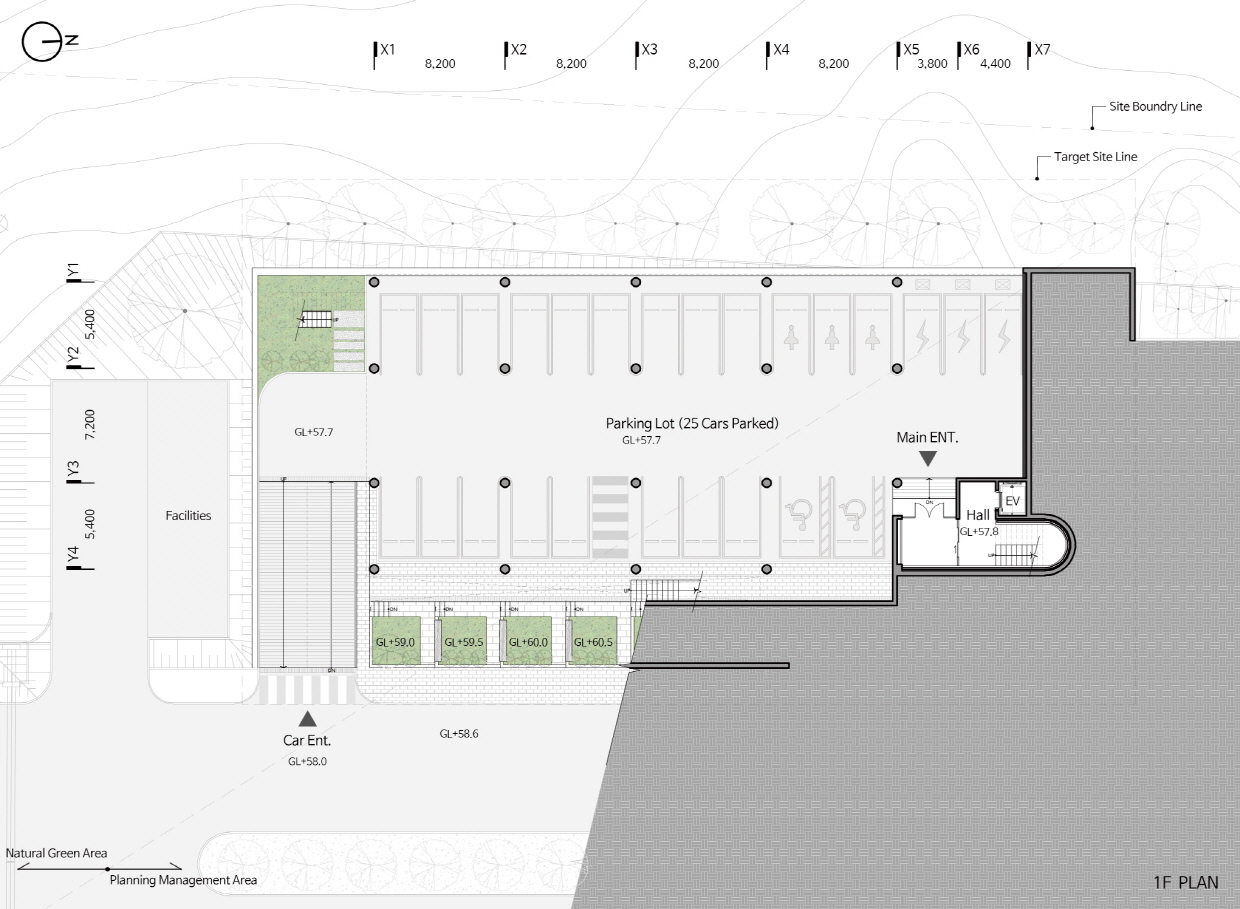
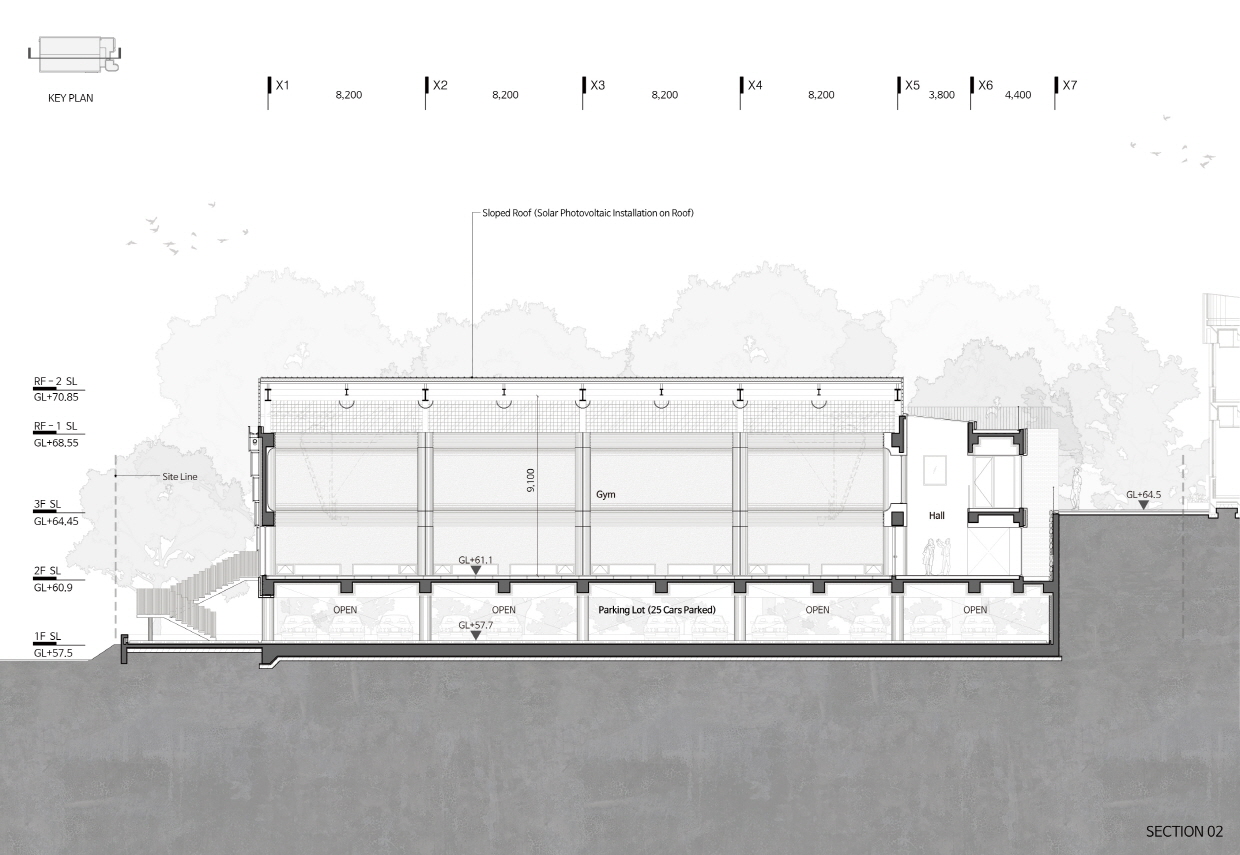
기존 주차장 부지는 성토된 대지(연약지반)로 지내력 확보를 위한 공사비 증가 및 지면을 확장할 성토가 불가피하다. 우리는 일부 절토를 계획하고 현 주차장 평균 레벨에서 약 1.3M 정도 아래로 필로티 주차장 바닥을 형성했다.
step 02. 지내력의 확보, 위압감에서의 해방
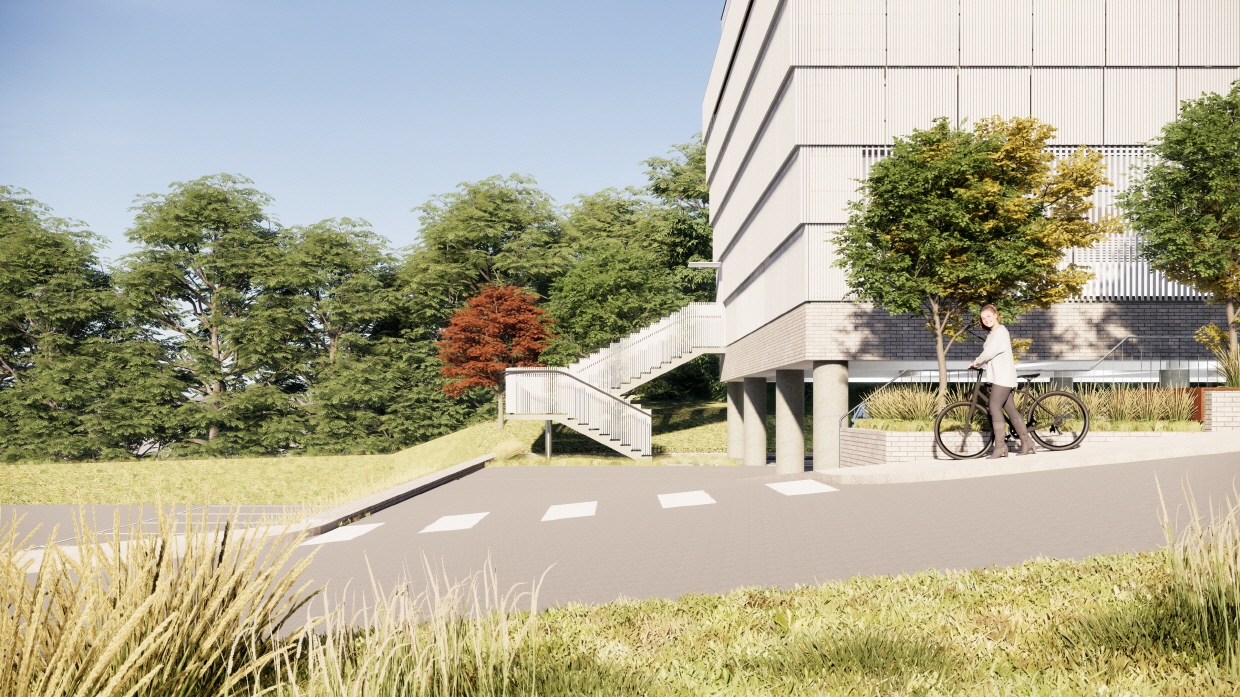
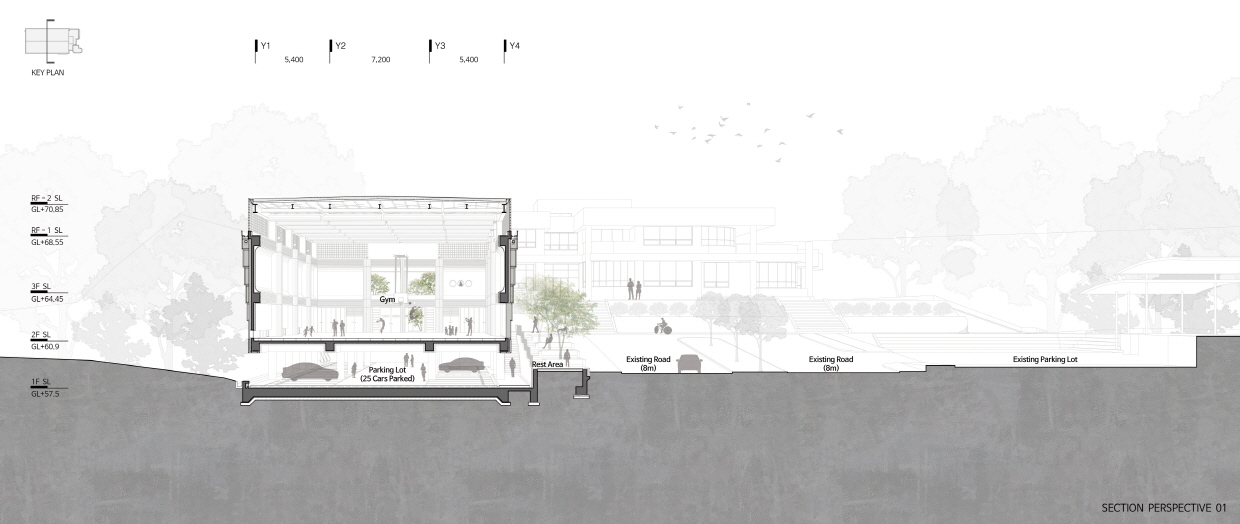
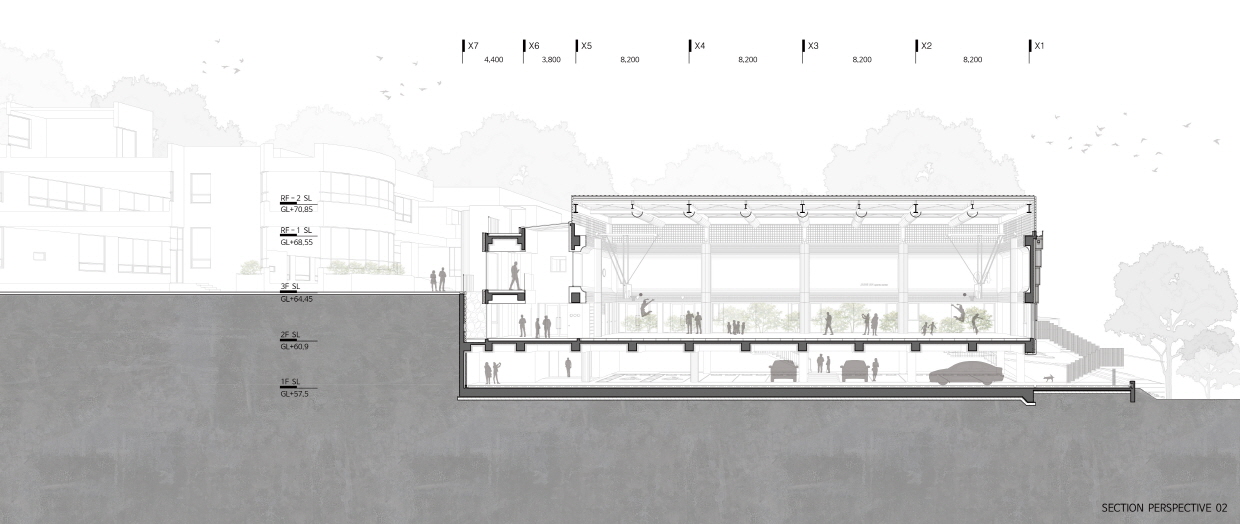
기존 행정복지센터의 거주성과 다목적복합센터의 지내력 확보를 동시에 꽤 할 수 있게 계획가능 영역 내에 접하는 도로의 가장 낮은 레벨에 필로티 주차장을 계획하였다. 이로 인해 건물의 전체 높이를 낮출 수 있고, 완벽한 보차분리를 가능하게 하며, 위압감이 큰 볼륨을 낮게 계획 할 수 있다.
step 03. 배치전략(지역지구의 한계)
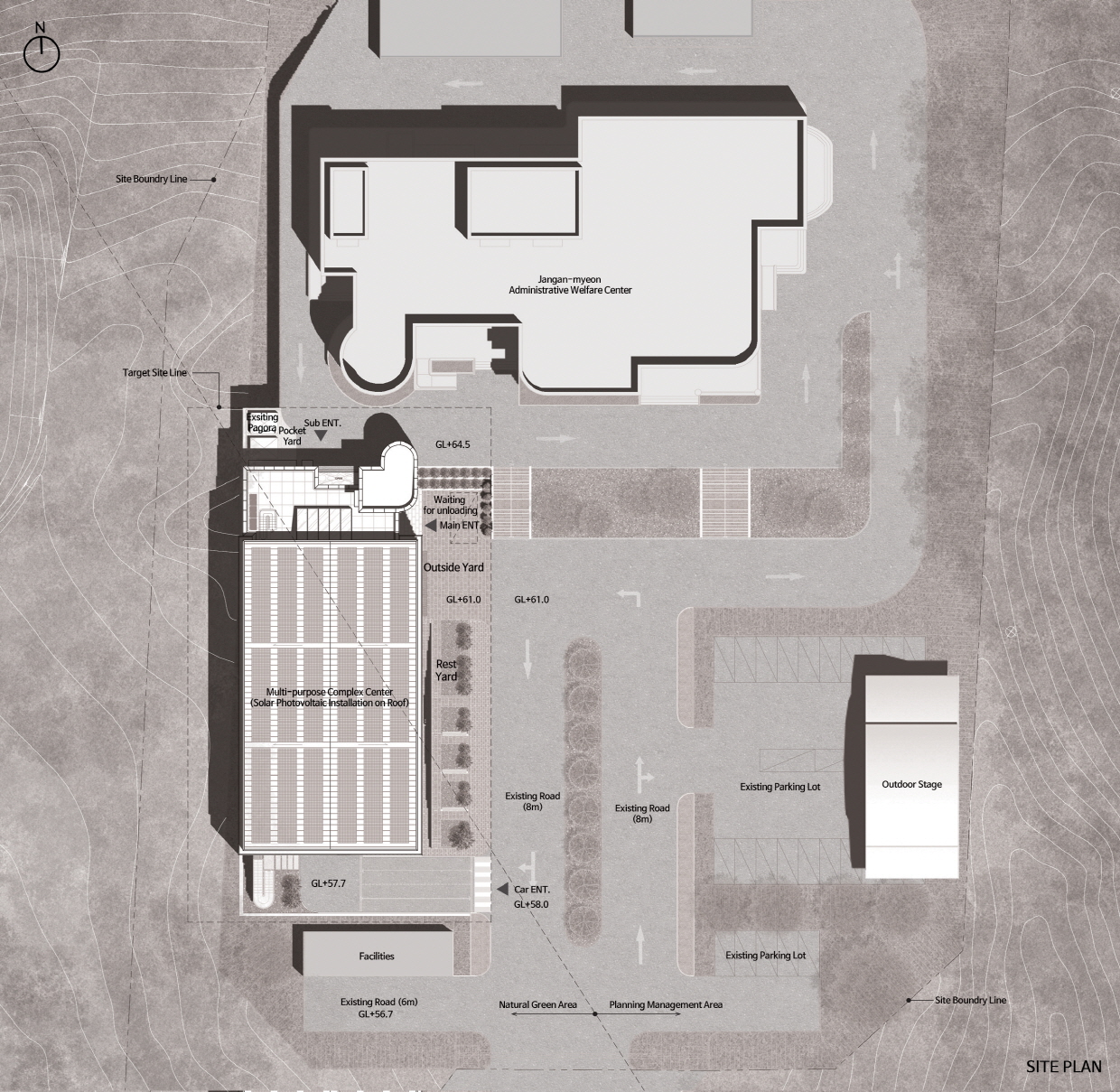
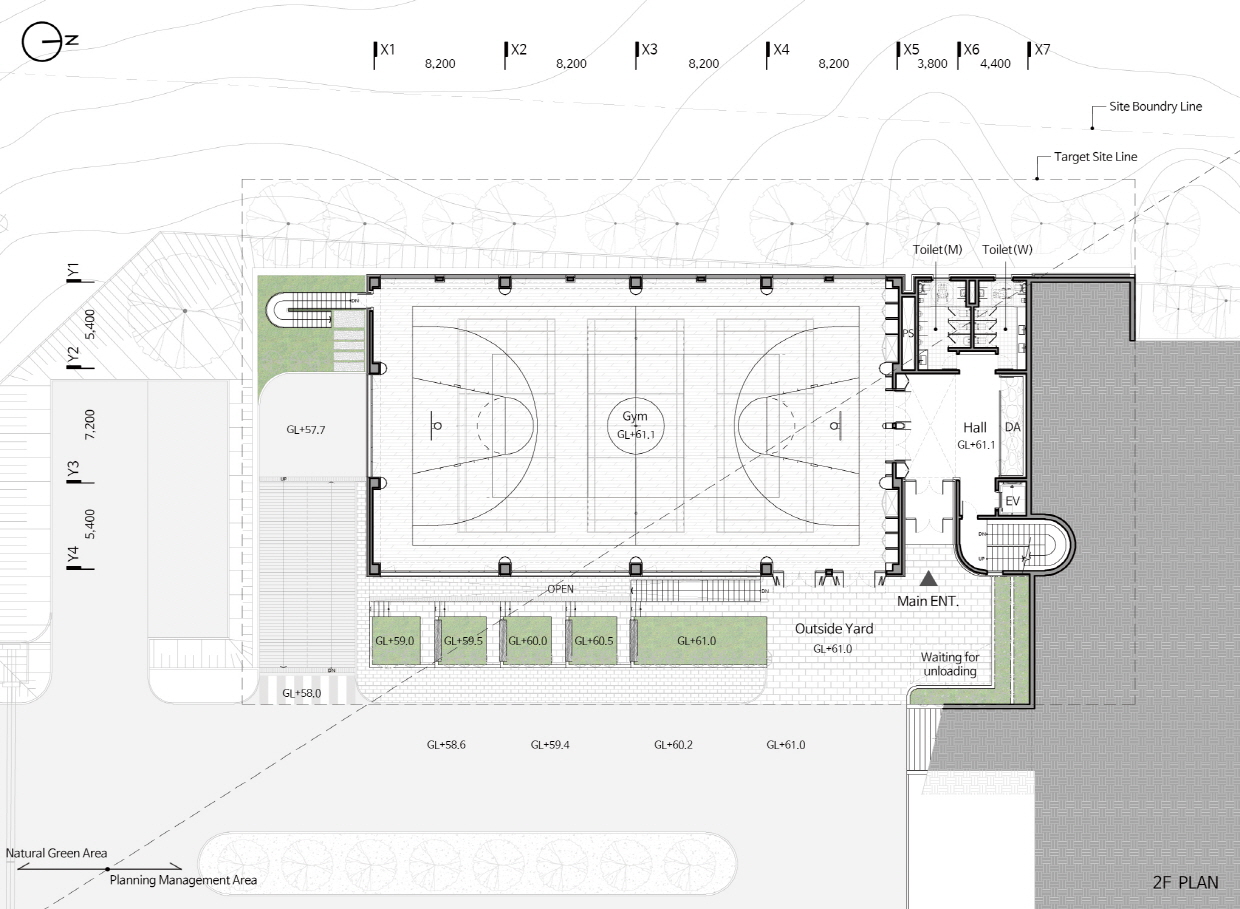
대지는 두 개의 지역지구에 걸쳐있고, 행정복지센터와의 물리적(거리) 간섭을 고려하여 가능한 한도 내의 건폐율을 이용해 건물을 배치하고 체육관(소음군) 과의 물리적 거리는 프로그램의 조닝으로 해결하였다.
step 04. 프로그램의 조닝
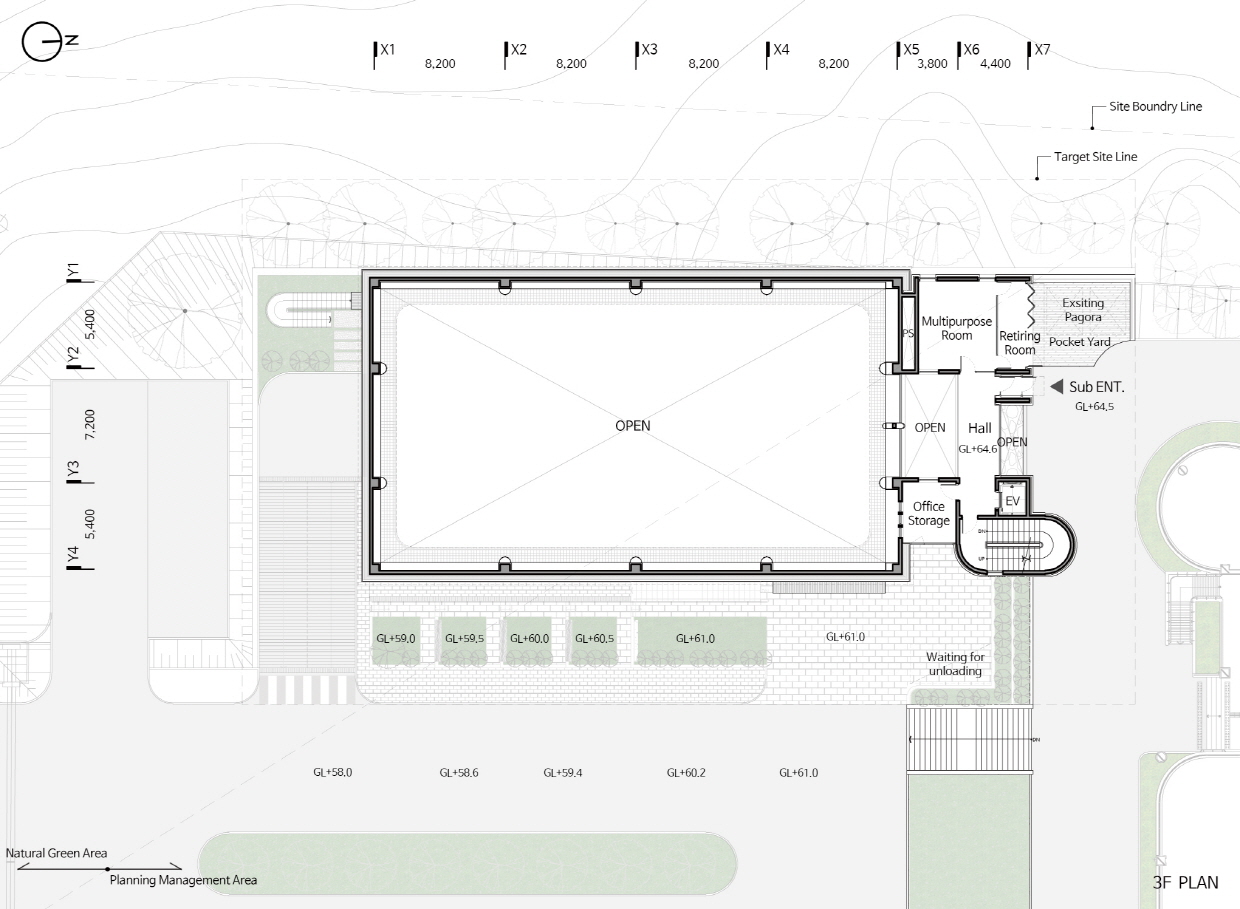
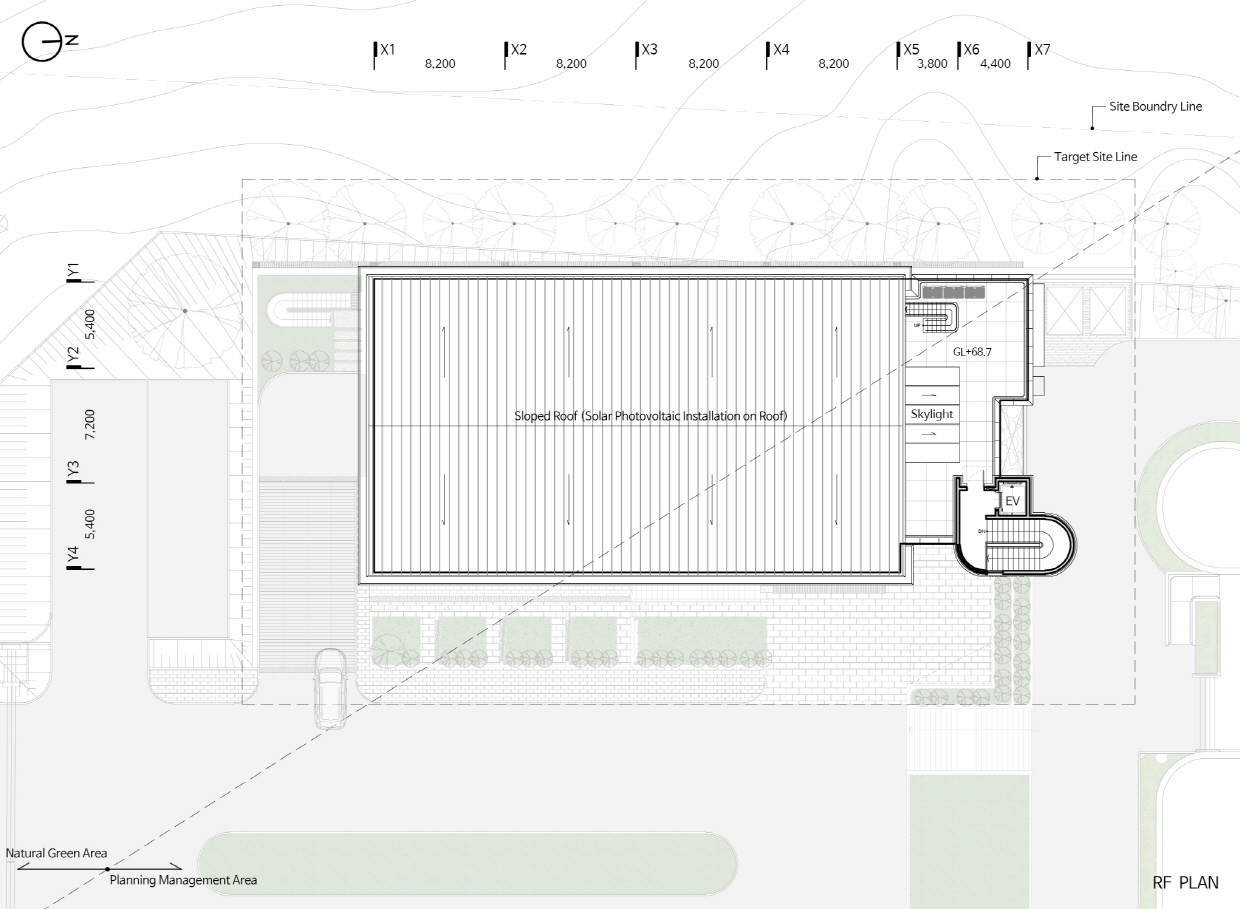
프로그램을 수직, 수평 모듈에 맞게 압축시켜 효율적인 조닝을 계획하였다. 소음군(체육관)은 홀에 의해 분리되고, 중첩된 메인홀을 중심으로 체육관과 기존 행정복지센터를 이어주고, 홀 상부에 천창을 두어 자연광을 유도하면서 체육관으로 열린 창을 통해 기존 행정복지센터 레벨에서도 시각적으로 연결되도록 하였다.
step 05. 유기적인 동선계획
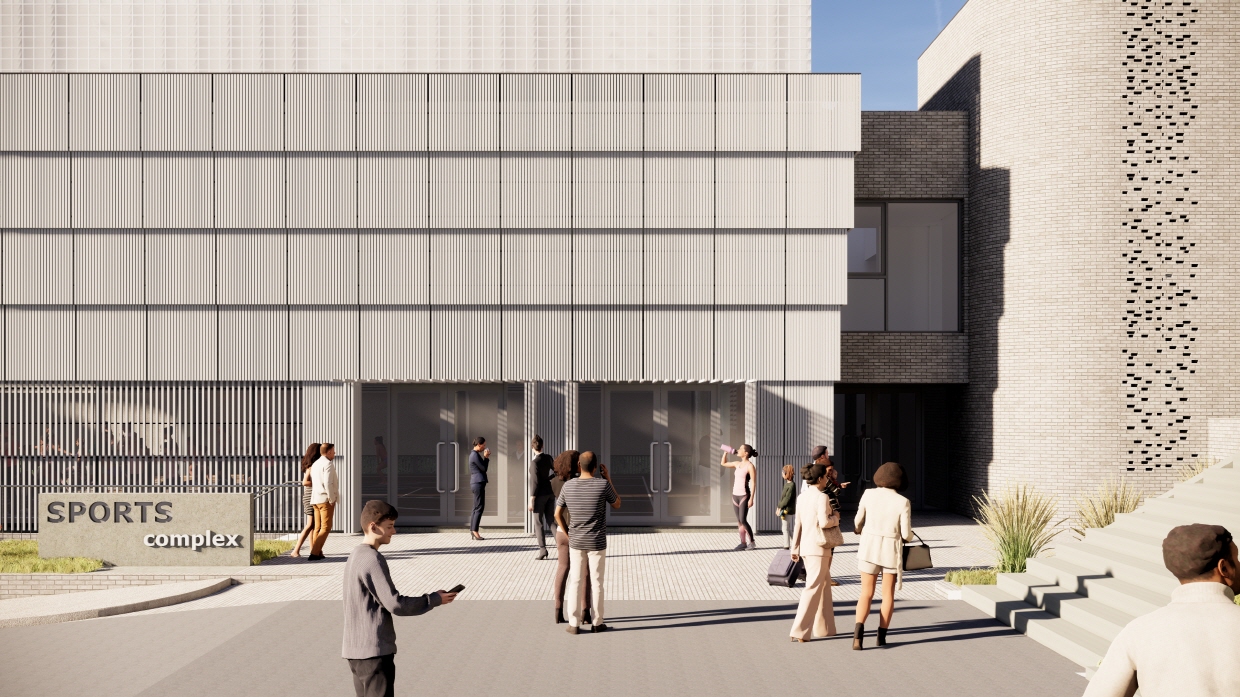
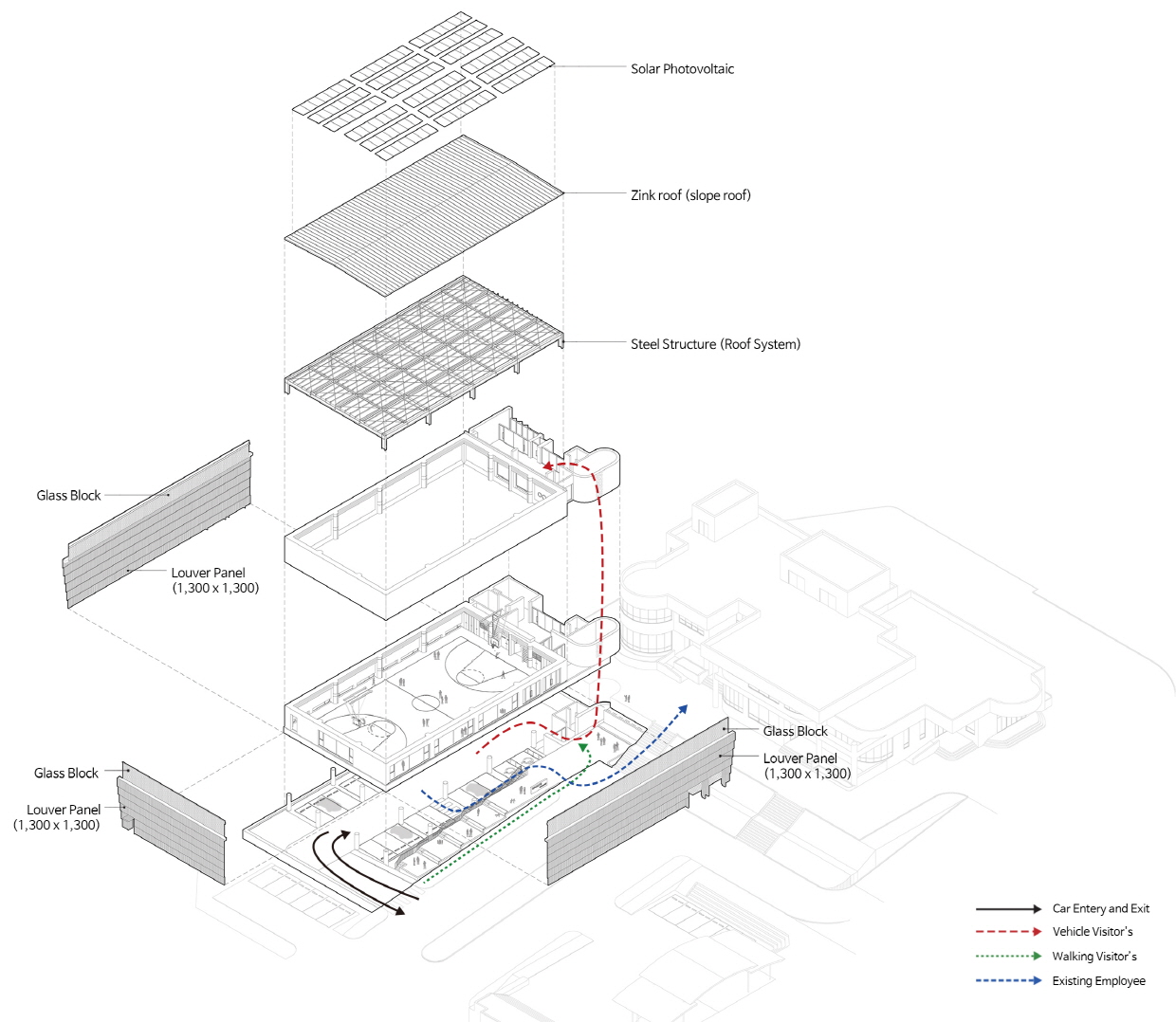
기존 경사를 이용해 계획한 필로티 주차장은 완벽한 보차분리가 되고, 보행자는 외부계단과 실내 엘리베이터, 휴게마당 등을 통해 안전하고 자연스럽게 시설에 진입할 수 있다. 메인레벨의 도로와 진입마당은 체육관으로 확장되어 각종 지역행사나 운동경기 등 많은 사람들이 밀집될 때 충분한 오픈스페이스를 제공한다. 체육관 동측 양개문은 평소에는 벽처럼 닫혀 있다가 특정 행사가 있을 때만 활짝 열어 마당과 깊게 연결시켜 주는 역할을 한다. 기존 행정복지센터에서의 진입은 북측 진출입구로 홀과 바로 연결되고, 관리/사무실로도 바로 연결되어 효율적인 관리체계가 가능하게 고려하였다. 관리/사무실 안에는 내부 홀과 진입마당, 체육관 내부를 동시에 관찰, 관리할 수 있는 세 개의 창이 있다. 다목적실, 휴게실과 접해있는 북측 후정은 행정복지센터 기존 직원들도 편하게 이용하는 포켓마당으로 계획하였다.
STEP 01. Stabilize the ground
The existing parking lot site is a land (soft ground) made by stacking soil, and construction costs are incurred to secure support and expand the ground. We planned to shave some soil to form the bottom of the piloti parking lot about 1.3m below the current parking lot average level.
STEP 02. Securing soil power, freeing from pressure
A piloti parking lot was planned at the lowest level of the road facing within the planned area. As a result, the overall height of the building can be lowered, and the pedestrian and vehicle movements are completely separated. In addition, it is possible to plan a low volume with a high sense of intimidation.
Step 03. Placement Strategy (Limits of Local Districts)
The site spans two local districts, and the building was placed using the building rate within the possible limit in consideration of physical (distance) interference with the administrative welfare center, and the physical distance from the gym (noise group) was solved by zoning of the program.
Step 04. Zoning of the program
Efficient zoning was planned by compressing the program to fit the vertical and horizontal modules. The noise group (gym) is separated by the hall, connects the gym and the existing administrative welfare center around the overlapping main hall, and has a skylight on the upper part of the hall to induce natural light.
Step 05. Organic flow planning
The piloti parking lot planned using the existing slope separates the perfect walking and vehicle movements, and pedestrians can enter the facility safely and naturally through external stairs, indoor elevators, and rest areas. The main-level road and access yard are expanded to the gym, providing sufficient open space when many people are concentrated, such as various local events and sports events. The east door of the gym is usually closed like a wall, but it opens wide only when there is a specific event to connect it deeply to the yard. Entry from the existing administrative welfare center was directly connected to the hall through the North entrance and also directly connected to the management/office to enable an efficient management system. Inside the management/office, there are three windows for simultaneous observation and management of the interior hall, the entrance yard, and the inside of the gym. The northern yard, which is adjacent to the multipurpose room and lounge, was planned as a pocket yard that existing employees of the administrative welfare center could use comfortably.
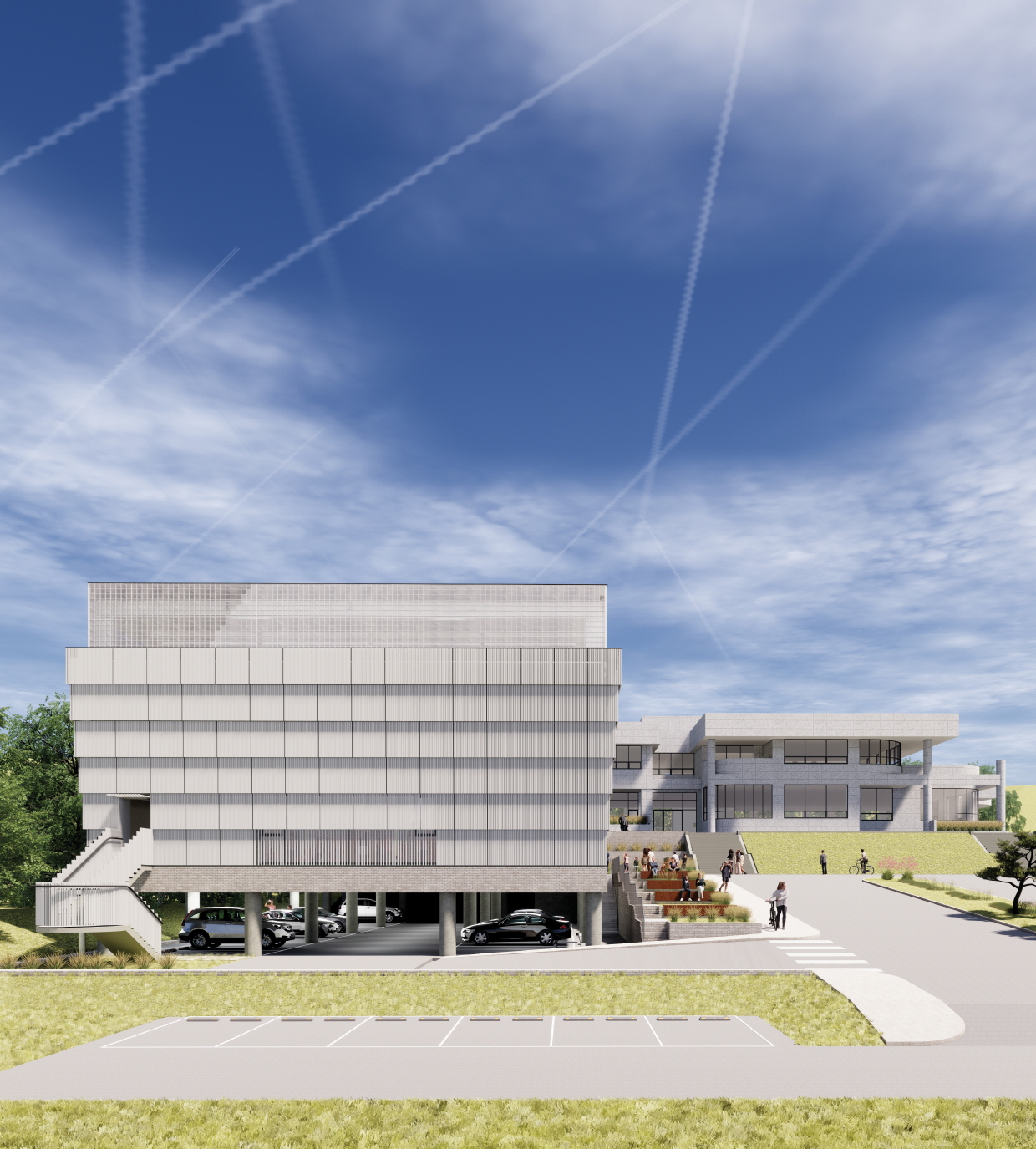

step 06. 입면계획
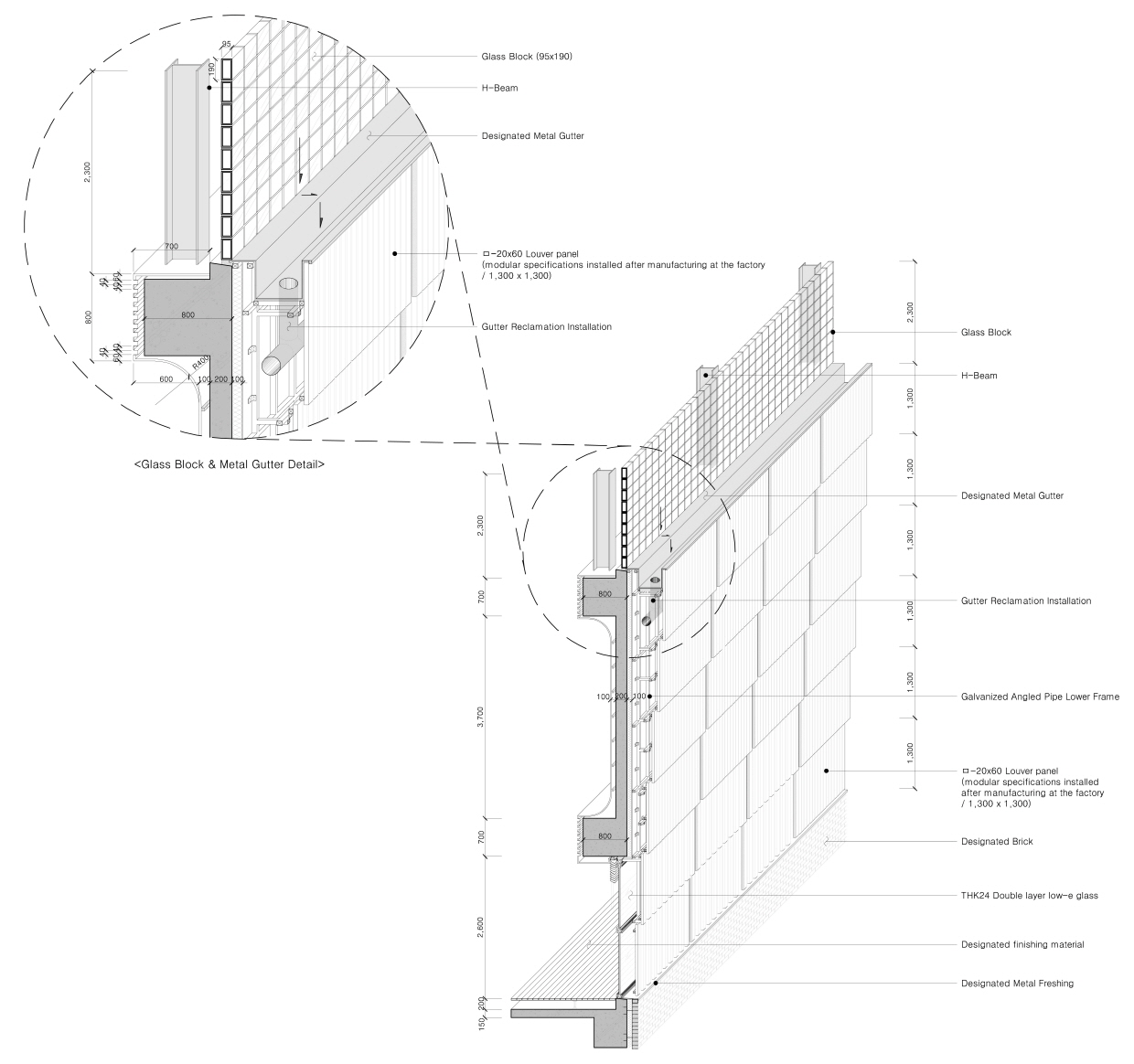
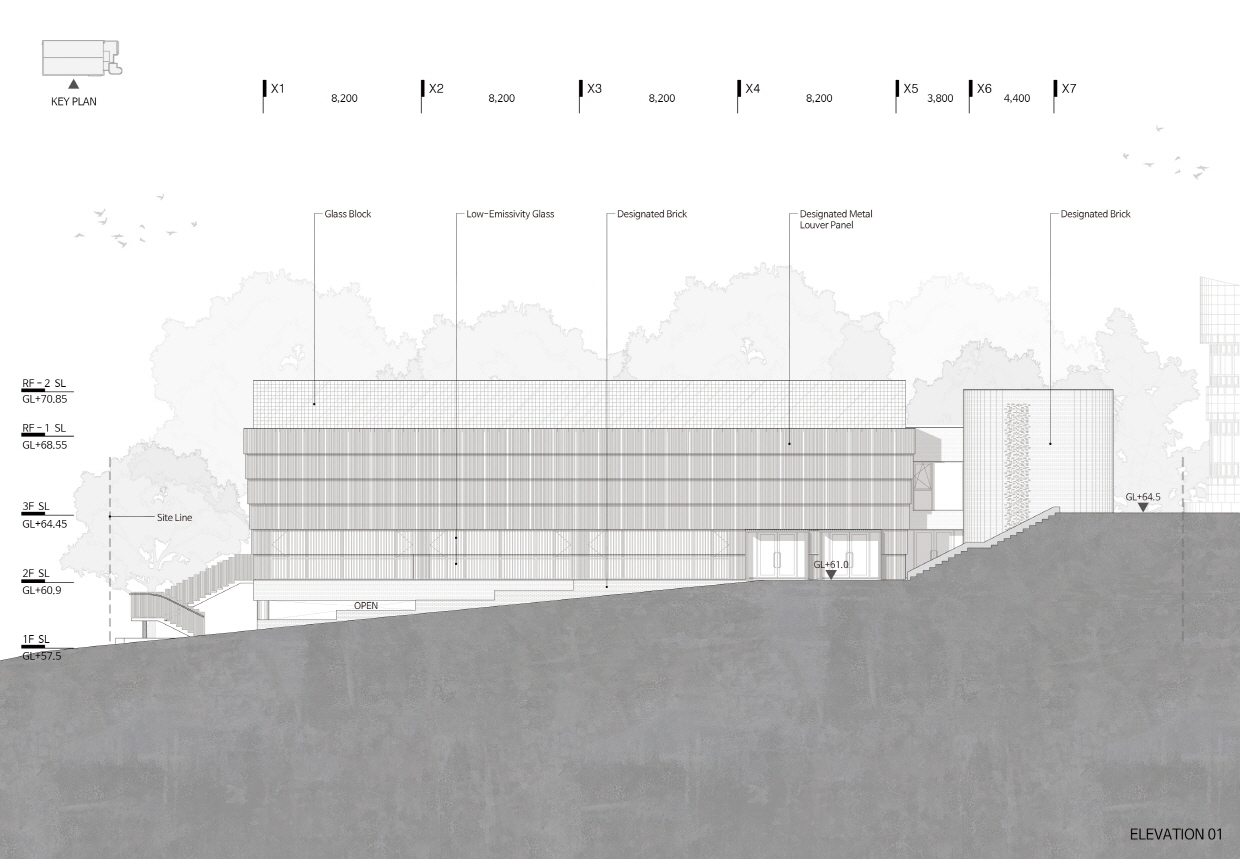
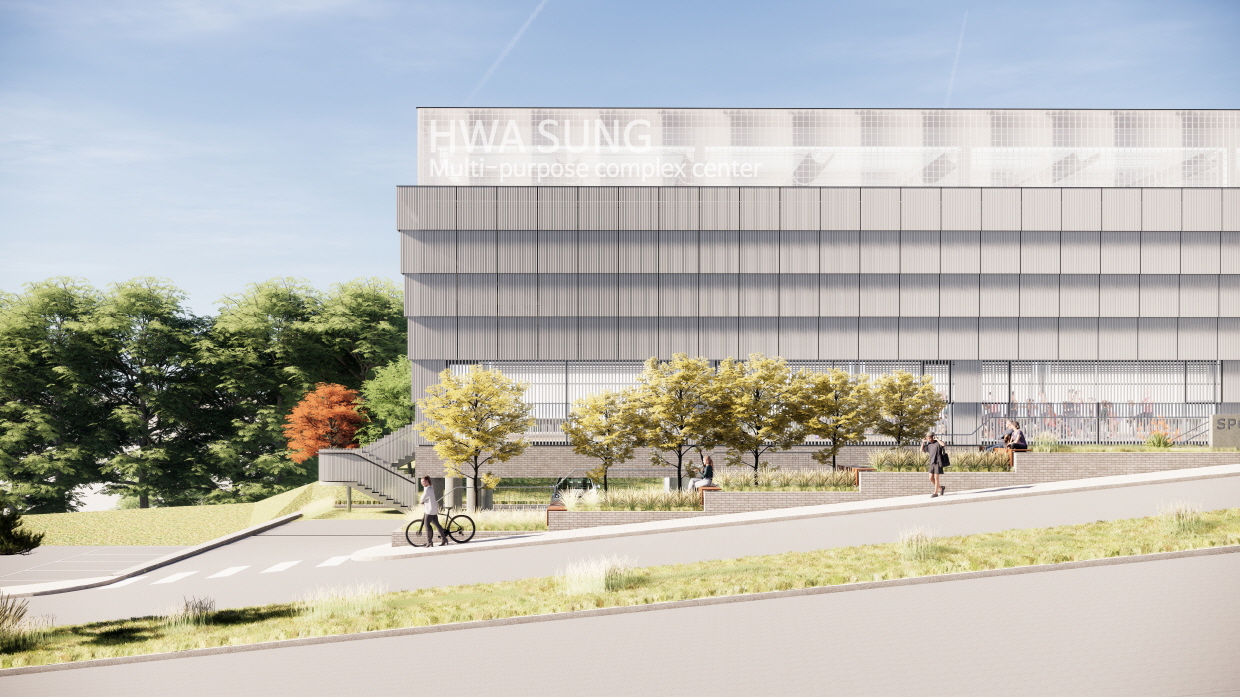
체육관과 나머지 시설군의 조닝을 기준으로 큰매스를 분절하고, 분절된 사이는 주 진입동선으로 자연스럽게 인식되게 하였다. 큰 입면적을 차지하는 체육관의 파사드는 상하부로 나누어 진다. 상부는 유리블록이 우유빛깔의 반투명 형태로 채워져 내부에 은은한 빛을 들인다.
하부는 (1,300×1,300) 균질하게 나누어진 루버 패널로서 하나의 셀은 다시 작은 루버로 채워진 형태이다. 셀들은 상부로 점진적으로 돌출되어 적층 되고, 적층 된 패널은 큰 틈과 작은 틈들로 인해 계절과 시간에 따라 빛과 그림자가 드리워져 변화되는 입면을 가지게 된다.
step 07. 인테리어계획
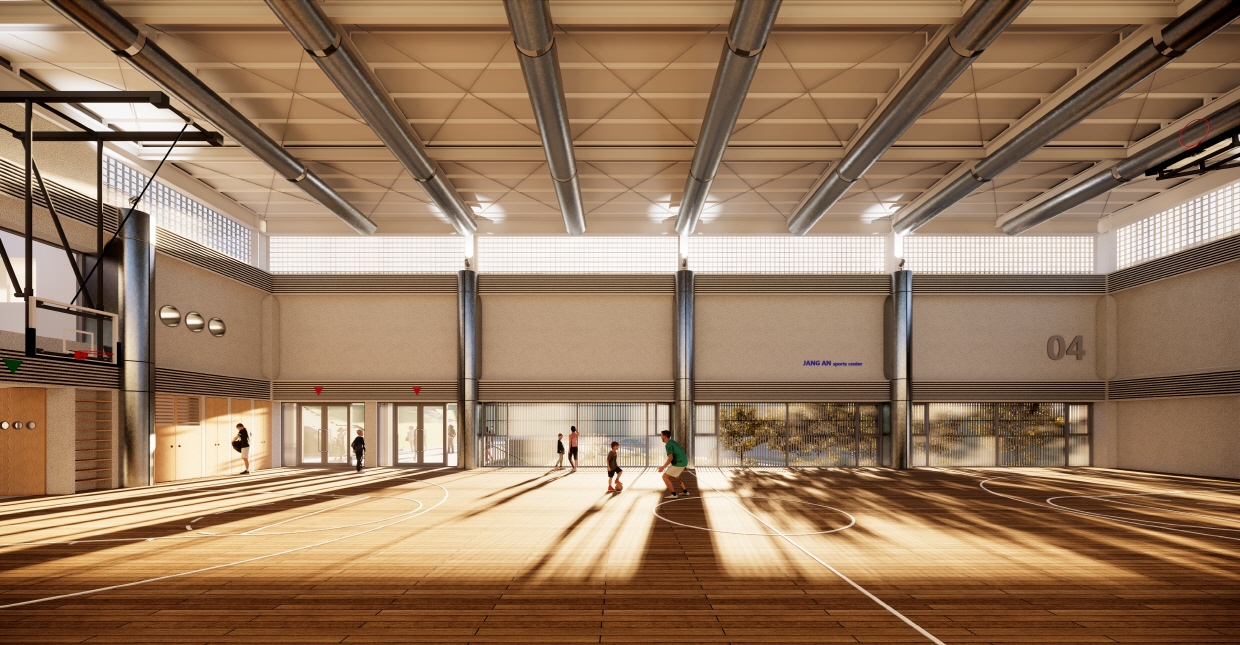
체육관을 지탱하는 기둥을 체육관 내부의 주요 디자인 요소로 정하고, 나머지 면들은 질감 있는 도장으로 계획하였다. 붙박이로 계획된 에어컨집과 도어, 각종 장들만을 방염 자작합판으로 계획 하였고, 일부 포인트는 금속을 사용했다. 이미 건축에서 만들어진 창밖으로 보이는 루버와 그 사이 부서진 빛의 조각들, 눈높이 시선으로 보이는 조경의 초록빛으로 안팎의 경계를 넘나드는 인테리어를 완성하게 하였다.
step 08. 구조계획
콘크리트 기둥구조에 내력벽으로 계획하고, 최소한의 체육관 높이를 지켰다. 상부는 철골구조로 기본에 충실했다. 고측창은 직사광을 피하기 위해 반투명 빛의 산란을 도울 수 있는 유리블록을 사용했다. 토목공사는 꼭 필요한 부분에(북서측) 보강토 옹벽으로 계획하였다. 지하를 파낸 것처럼 보여도 실질적으로 들어갈 콘크리트 물량은 일반계획과 비슷하다.
step 09. 조경계획
대지의 레벨차에 따라 자연스럽게 조성된 휴게마당에 레벨을 극복할 최소한의 계단과 휴식을 위한 벤치를 계획하였다. 이 마당에 조성될 식재(기존식재 재이식)들을 통해 체육관 내부 시선 높이에서 식재의 푸르름을 눈높이에서 마주하게 된다. 기존에 사용하던 파고라는 북측 휴게마당에 옮겨 사용하게끔 계획하였다.
step 10. 신재생에너지
과도한 천창 계획을 지양하고, 고측창을 계획하였다. 지붕 상부에는 태양광 패널을 계획하였고, 단열재 성능을 제로에너지건축물 기준에 맞춰 계획한다. 자연채광과 환기에 유리한 설계를 통해 패시브하고, 에너지절감을 가능케 하는 친환경계획을 하였다. Bems 또는 원격 검침 전자식 계량기 등을 통해 전기/설비 에너지 관리를 계획하였다.
Step 06. Elevation plan
Based on the zoning of the gym and the rest of the facility group, the large mass was segmented, and the segmented relationship was naturally recognized as the main entry route. The facade of the gymnasium, which occupies a large elevation area, is divided into upper and lower parts. The upper part is filled with glass blocks in a milky translucent form, giving a subtle light inside. The lower part is a uniformly divided louver panel (1300×1,300), and one cell is filled with a small louver again. The cells gradually protrude upward and are stacked, and the stacked panel has an elevation that changes with light and shadow depending on the season and time due to large and small gaps.
Step 07. Interior planning
The pillars supporting the gym were designated as the main design elements inside the gym, and the rest of the sides were planned with textured stamps. Only air conditioner houses, doors, and various cabinets planned to be built-in were planned as flame-resistant self-plywood, and some points were made of metal. The louver already made in architecture, pieces of broken light in between, and the green light of the landscape seen at eye level completed the interior that crosses the boundaries inside and outside.
Step 08. Structural plan
It was planned as a bearing wall in the concrete column structure and kept the minimum height of the gym. The upper part was steel-framed and faithful to the basics. High windows used glass blocks that could help scatter translucent light to avoid direct sunlight. The civil engineering work was planned as a reinforced earth retaining wall in the essential part (north-west). Like digging underground Although visible, the amount of concrete to be used is similar to the general plan.
Step 09. Landscape plan
According to the level difference of the land, a minimum staircase and a bench for rest were planned to overcome the level in the naturally created rest yard. The greenness of the planting will be encountered at the eye level at the height of the gaze inside the gym through the planting (Utilize existing planting) to be created in this yard. The previously used Pagora was planned to be moved to the North Korean rest yard.
Step 10. Renewable energy
Excessive ceiling were avoided and high windows were planned. Solar panels are planned on the upper part of the roof, and insulation performance is planned according to the standards of zero-energy buildings. An eco-friendly plan was made to enable passive and energy saving through a design favorable to natural lighting and ventilation. Electrical/facility energy management was planned through Bems or remote meter electronic meters.