
프롤로그
건축주 부부는 쌍둥이 아들을 키우며 셋째를 뱃속에 품은 채 우리를 찾았다. 늘어나는 가족, 커져가는 웃음에 비해 아파트라는 공간은 점점 더 많은 제약으로 다가왔다. 자라날 아이들을 위해 더 안전하고 따뜻한 집을 짓기로 결심한 부부는 인근 지구단위계획구역 내 택지를 분양받아 구체적인 계획을 그려가게 되었다. 특히 아이들이 마음껏 뛰놀 수 있는 마당과 수영장이 있는 집을 상상했고, 우리는 그들의 바람을 단순히 수용하는 데에 그치지 않고, 아이들이 자라나는 시간 속에 변해 갈 삶의 풍경을 담아낼 수 있는 유연한 구조와 가족 구성원 각자의 일상에 조응할 수 있는 집을 만들고자 했다. 우리는 그 출발점으로 대지를 깊이 이해하고, 지구단위계획구역을 연구하여 그 장소에 가장 적절한 건축적 해법을 찾고자 했다.
Project – 笑 滿 齊 Somanjae – A House Filled with Laughter
Location – Jijeong-myeon, Wonju-si, Gangwon-do
Programme – Single-family house
Site area – 441.1㎡
Building area – 224.14㎡
Gross floor area – 342.84㎡
Building scope – 2F
Height – 8.61m
Parking – 2
Structure – RC
Duration: 2023.05 – 2024.10
Architect – 아키도형건축사사무소 acdo architects
Photo – 노경
Prologue
The clients, a couple raising twin sons and expecting their third child, came to us seeking a new home. As their family grew and laughter filled their lives, their apartment increasingly felt restrictive. Determined to build a safer and warmer home for their children, they acquired a plot within a nearby district planning area and began envisioning concrete plans. They especially imagined a house with a yard and a swimming pool where their children could play freely. We aimed not only to accommodate these wishes but also to create a flexible structure capable of capturing the evolving landscape of family life over time, while responding to the daily routines of each family member. As a starting point, we sought to deeply understand the site and study the district planning regulations to devise the most appropriate architectural solution for this place.

고요한 벽 너머의 초록
The Green Beyond the Silent Wall
내재화된 자연, 대지 뒷편의 동산을 일상으로 들이는 방법에 대하여
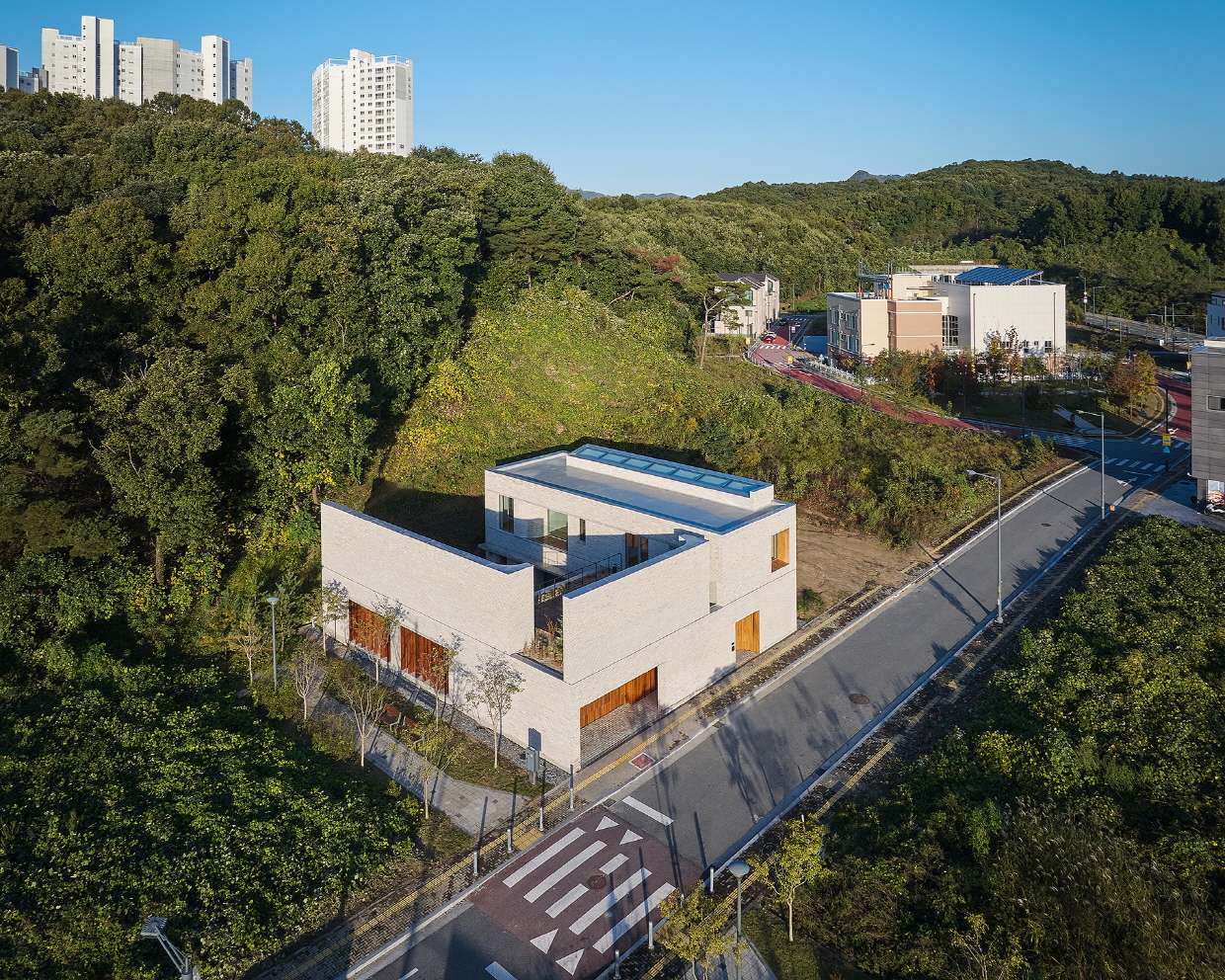
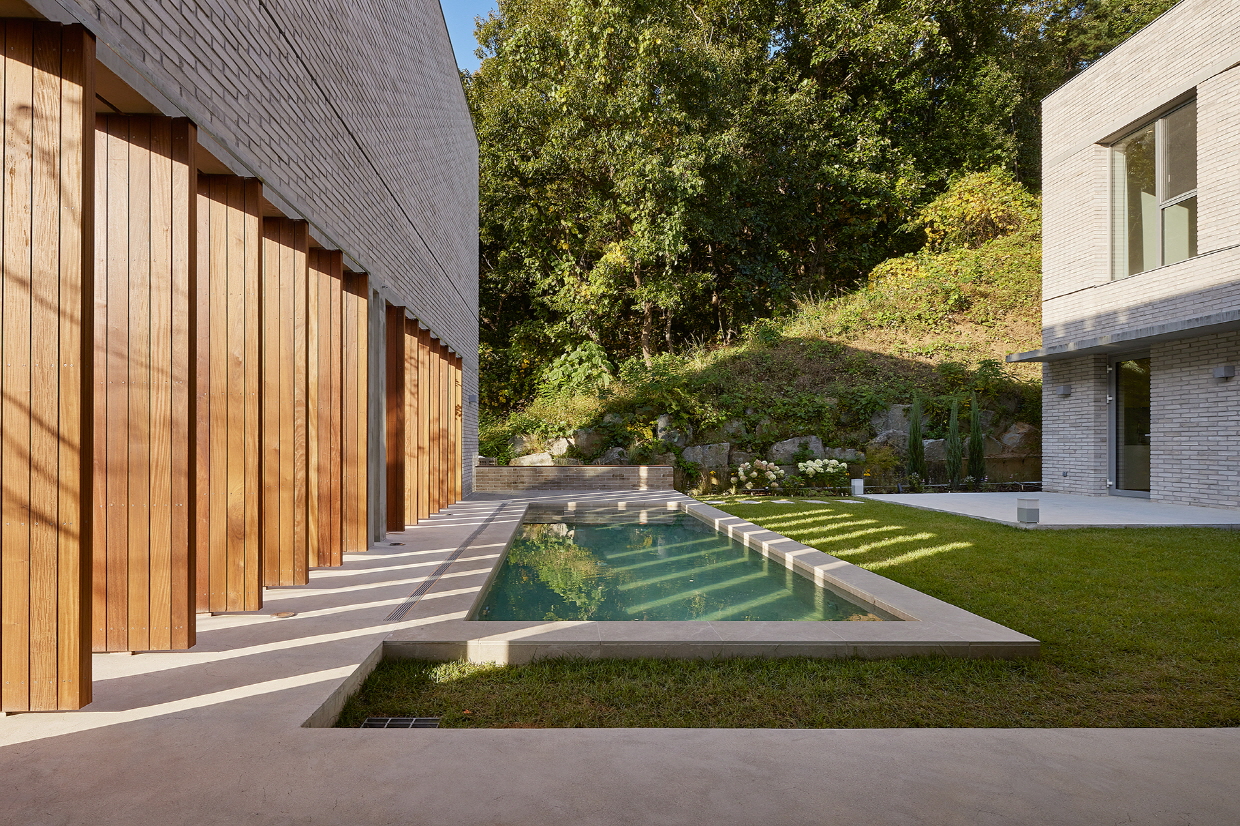
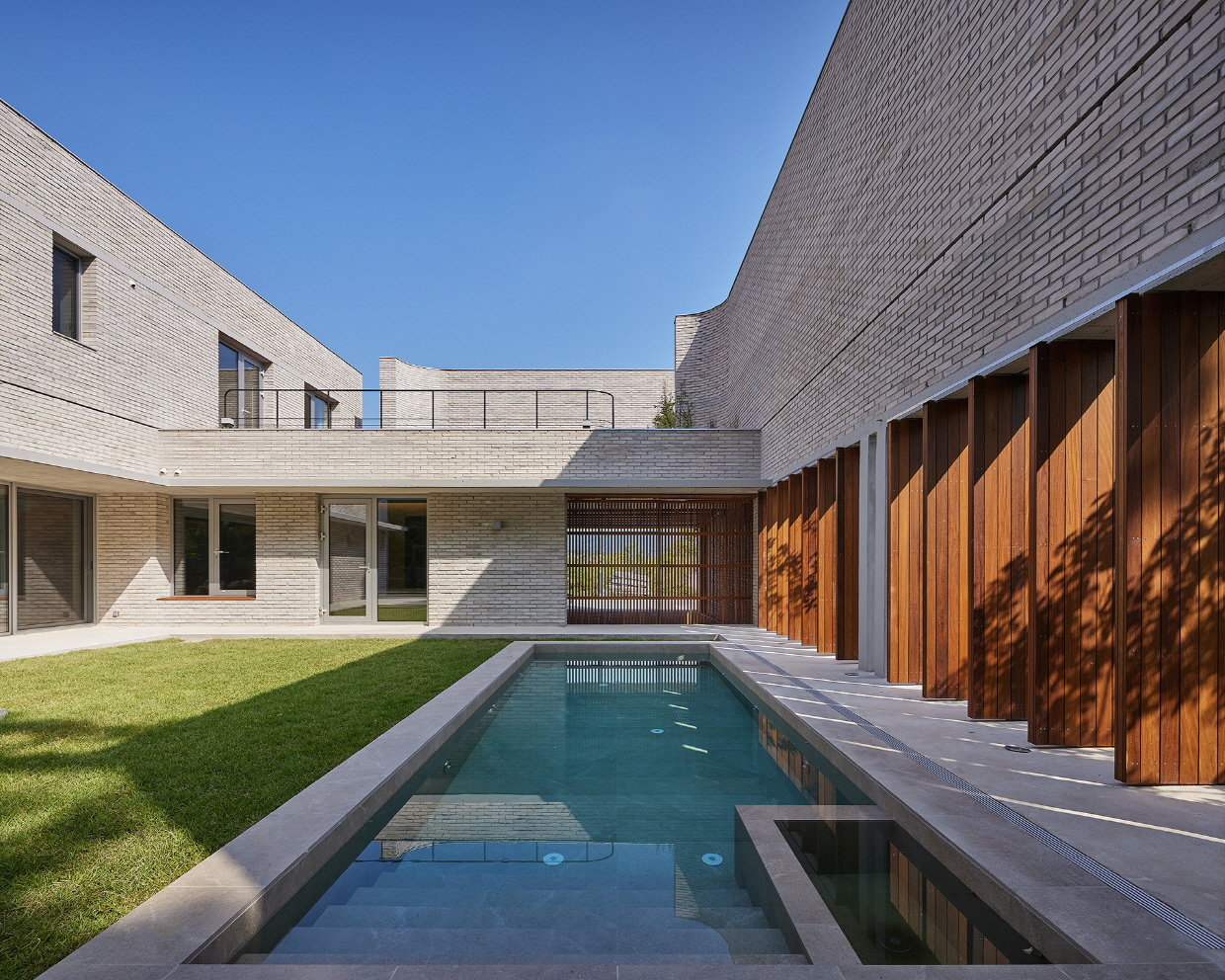
건축가는 땅이 가진 가능성에 대한 답을 구해야 한다. 처음 본 대지는 아직 채워지지 않은 허허벌판으로, 지구단위계획구역의 여느 택지와 크게 다르지 않았다. 우리는 존재하지만 보이지 않는 가상의 선들을 의식하며 대지에서 단서를 찾고자 했고, 미래에 조성될 도시의 모습도 상상했다. 그중에서도 대지 뒤편에 마주한 초록의 동산은 계획의 방향성을 빠르게 설정하는 근간이 되었다. 반듯한 사각형 대지 위에 과하지 않되, 단단하고 위요된 주택을 그리며 설계를 이어 나갔다.
Internalized Nature: Bringing the Hills Behind the Site into Daily Life
An architect must seek answers in the potential of the land. The site, as we first saw it, was an empty expanse, not much different from other lots within the district planning area. We looked for clues on the site, consciously acknowledging invisible, imagined lines, and envisioned the future shape of the surrounding urban fabric. Among these, the green hill at the back of the site quickly became the foundation for setting the direction of the design. On this perfectly rectangular plot, we continued the design, aiming for a house that was solid and grounded yet subtle, without excess, harmonizing with the natural backdrop.

닫히고 열린 중간에 서서
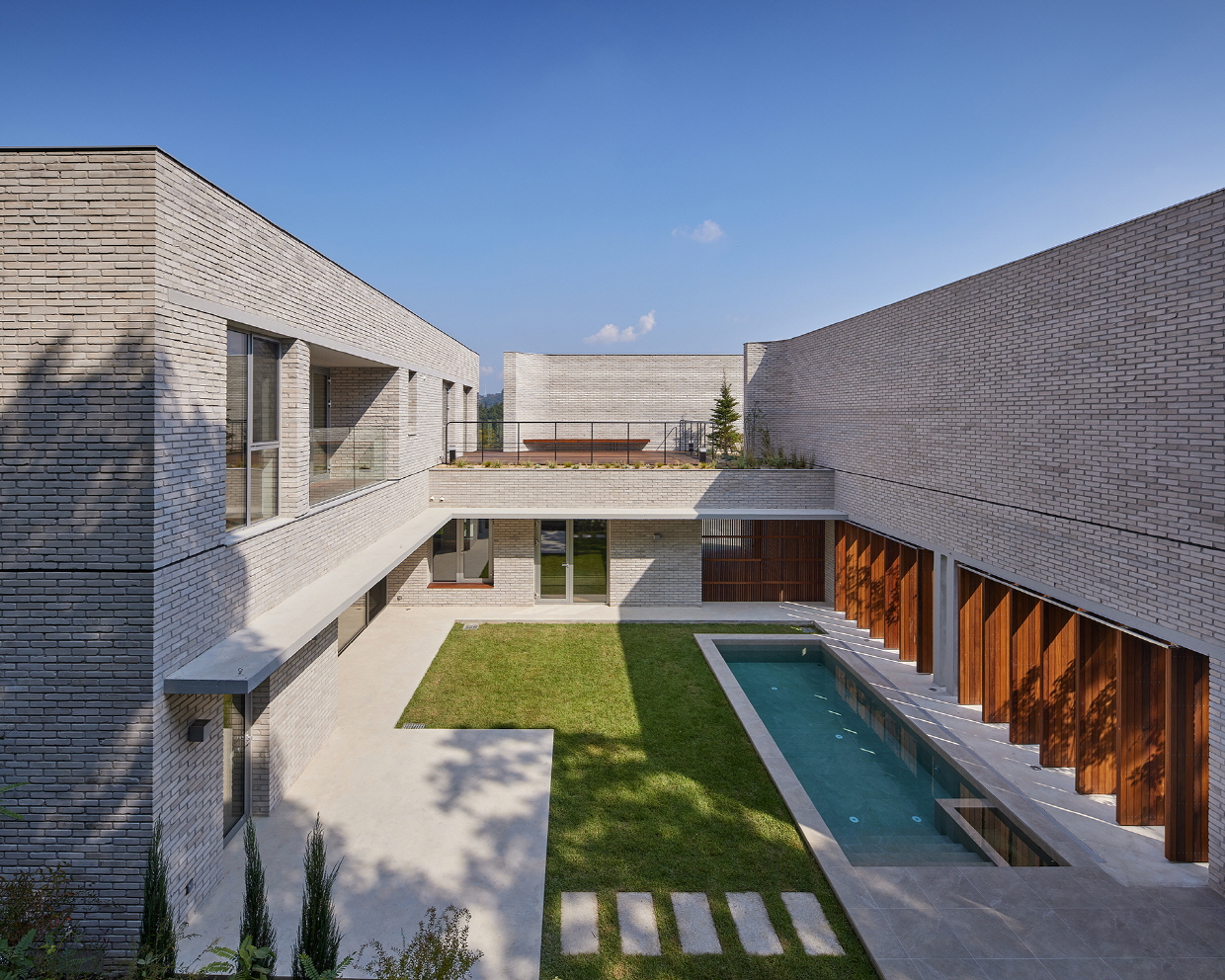
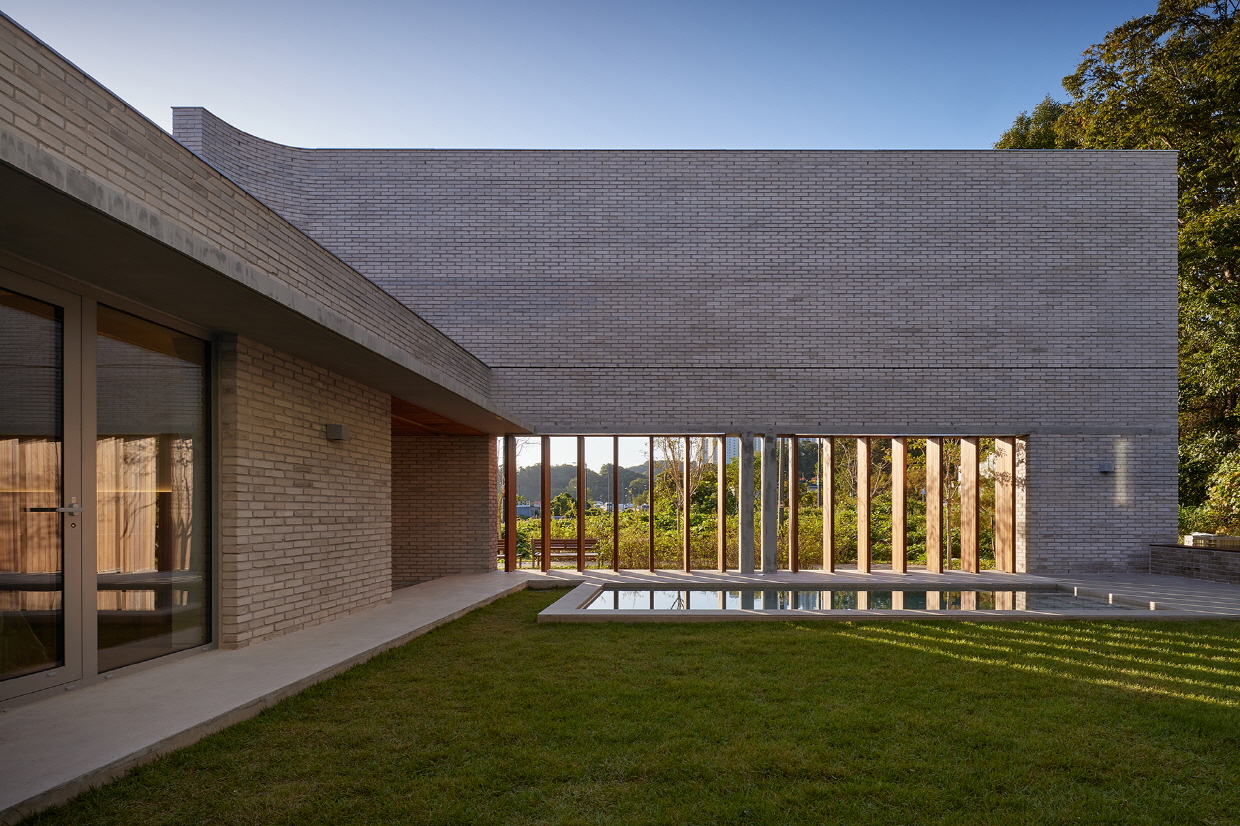
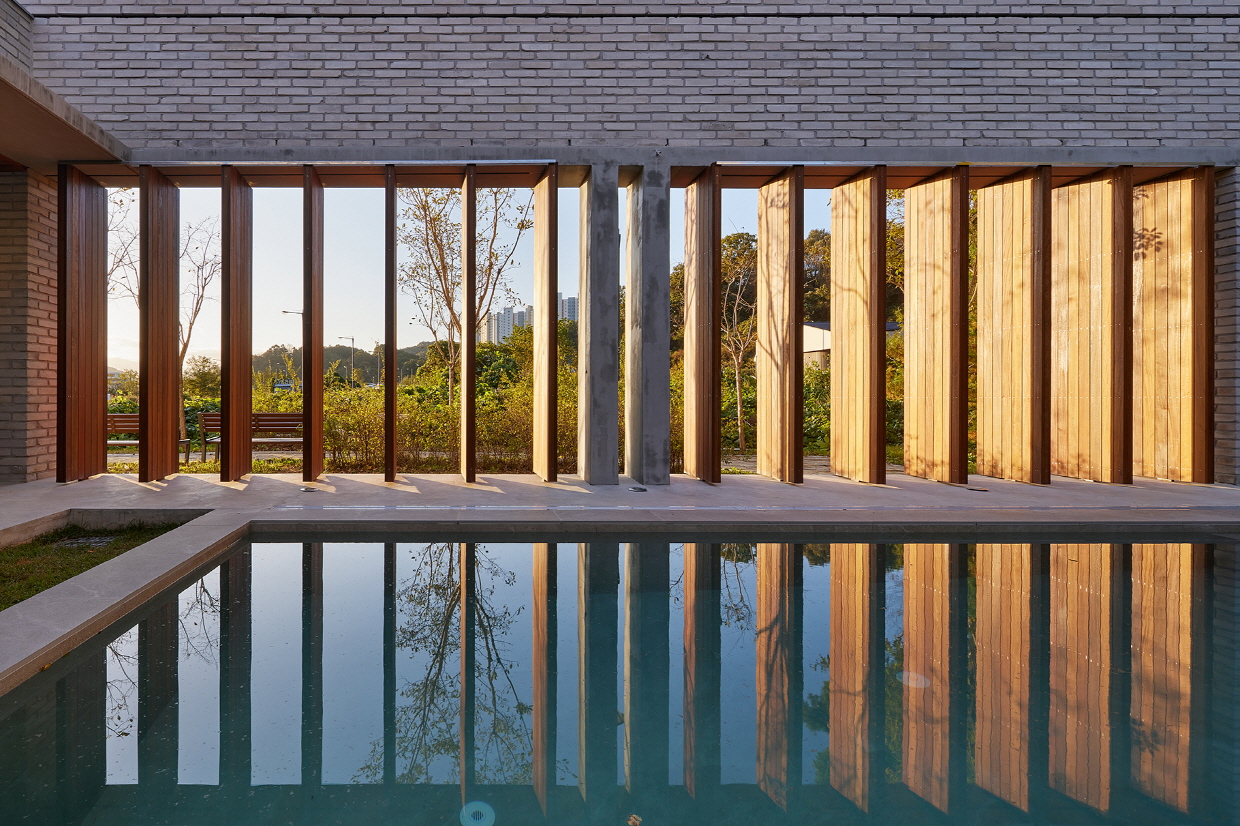
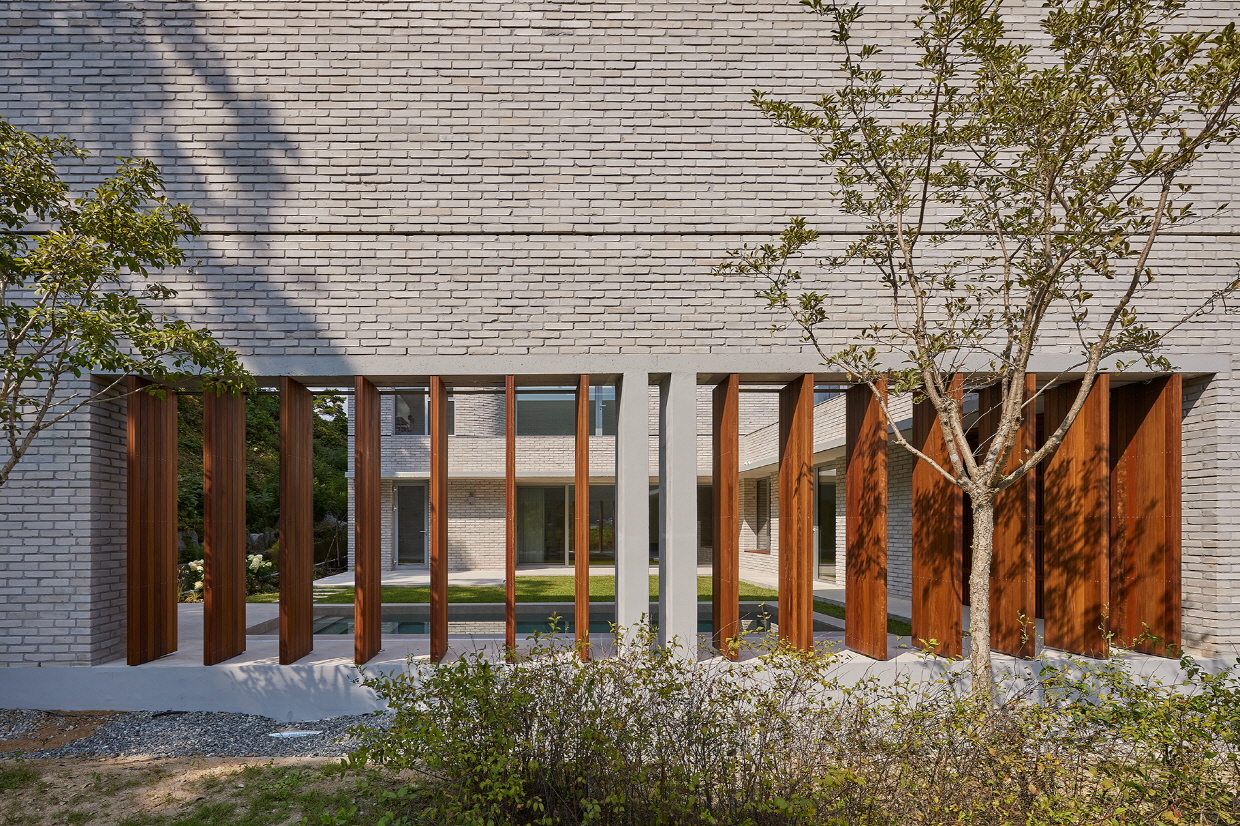
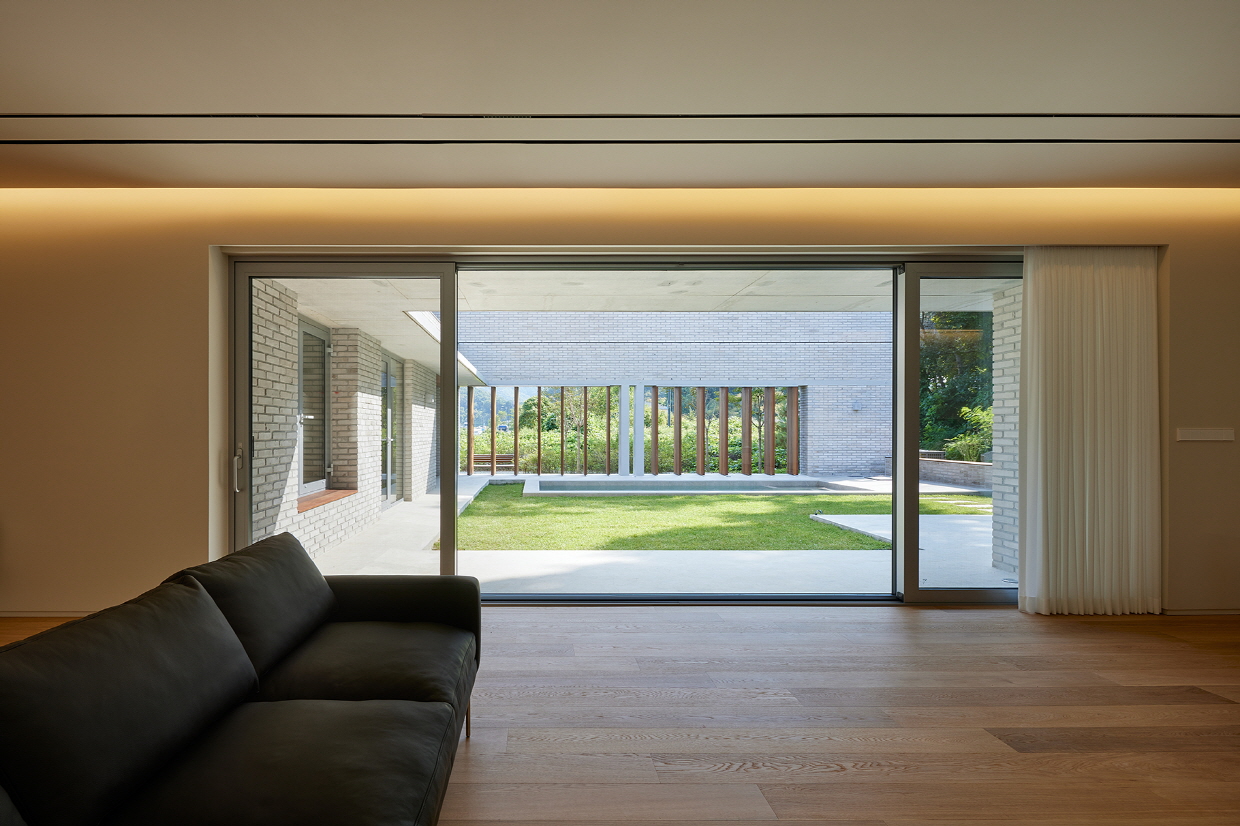
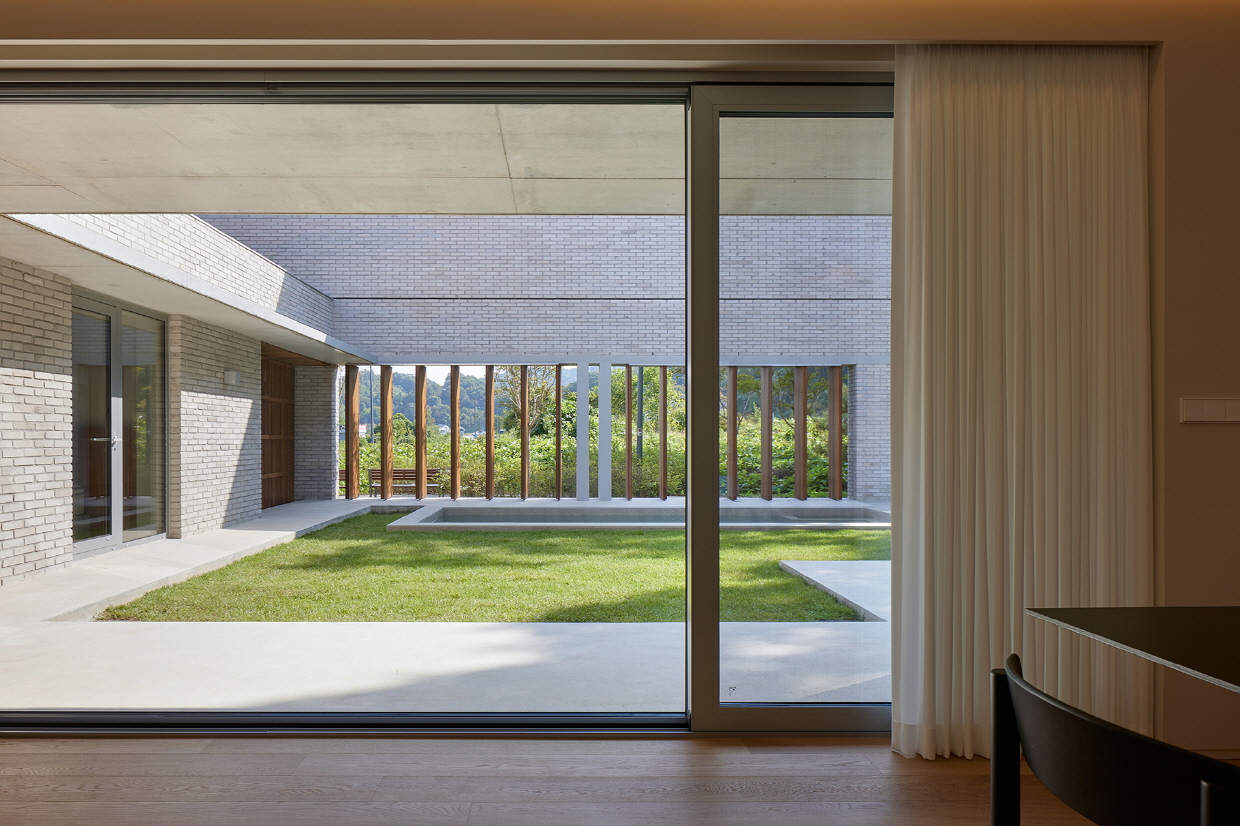
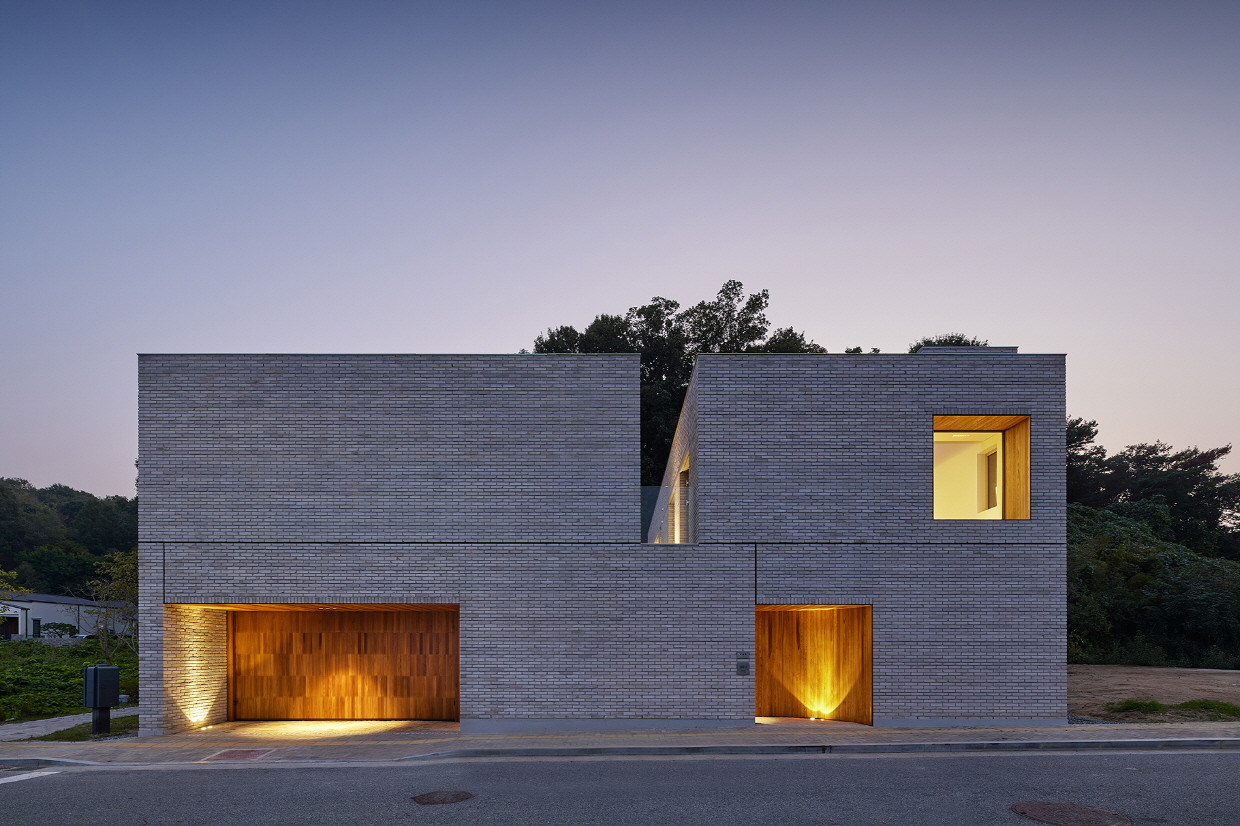
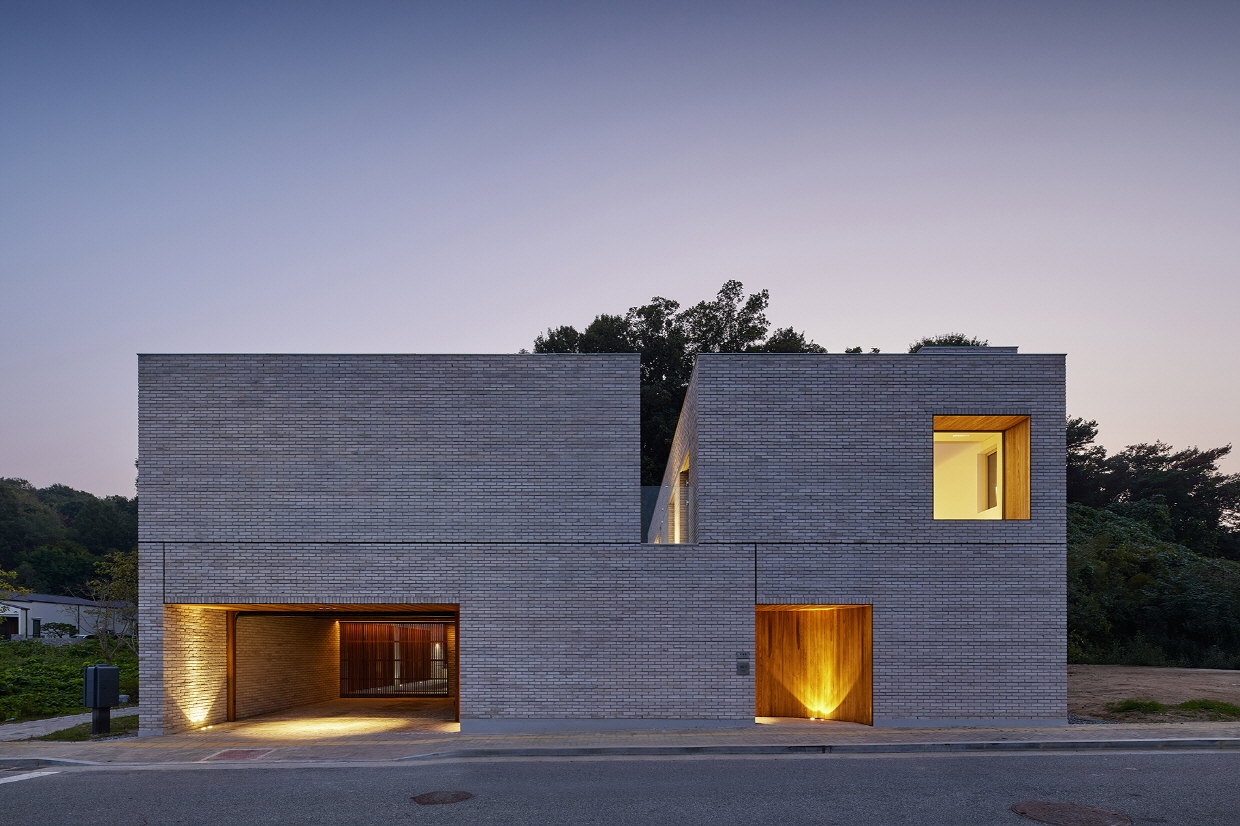
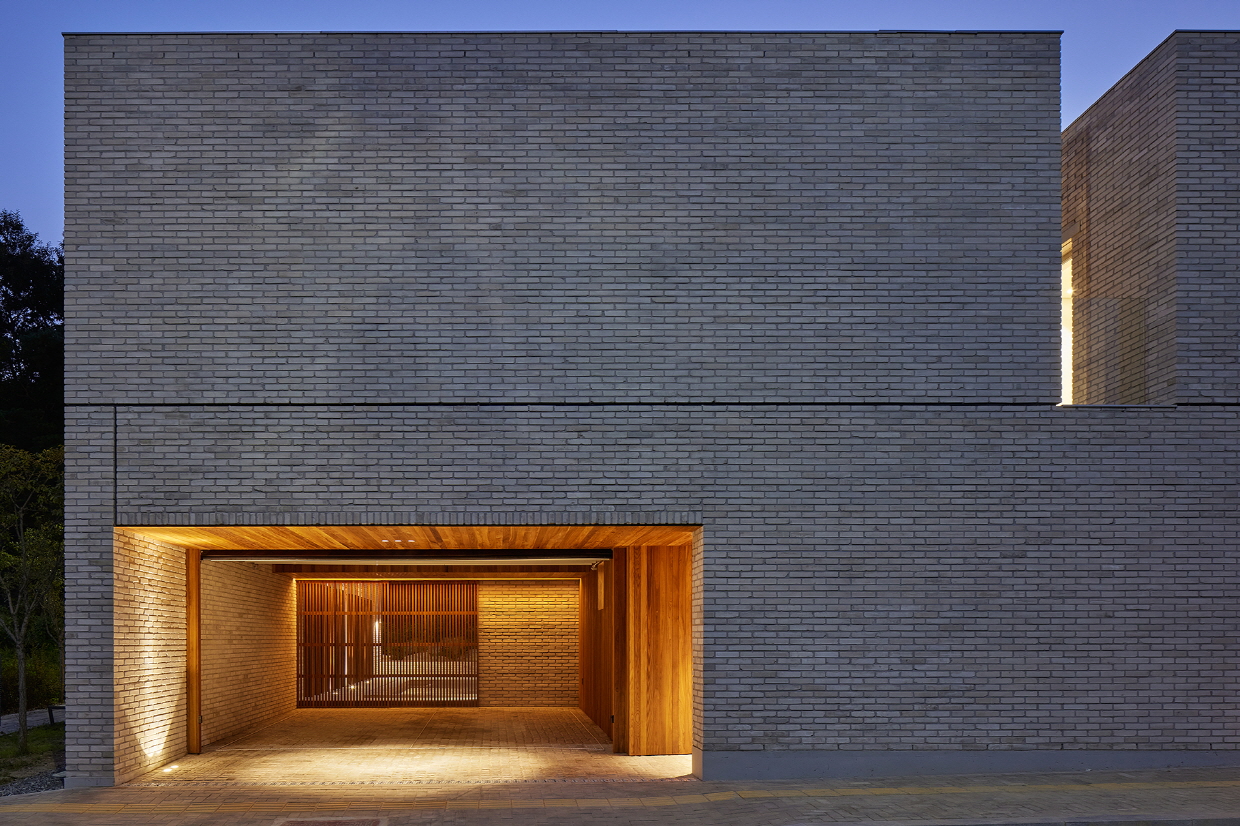
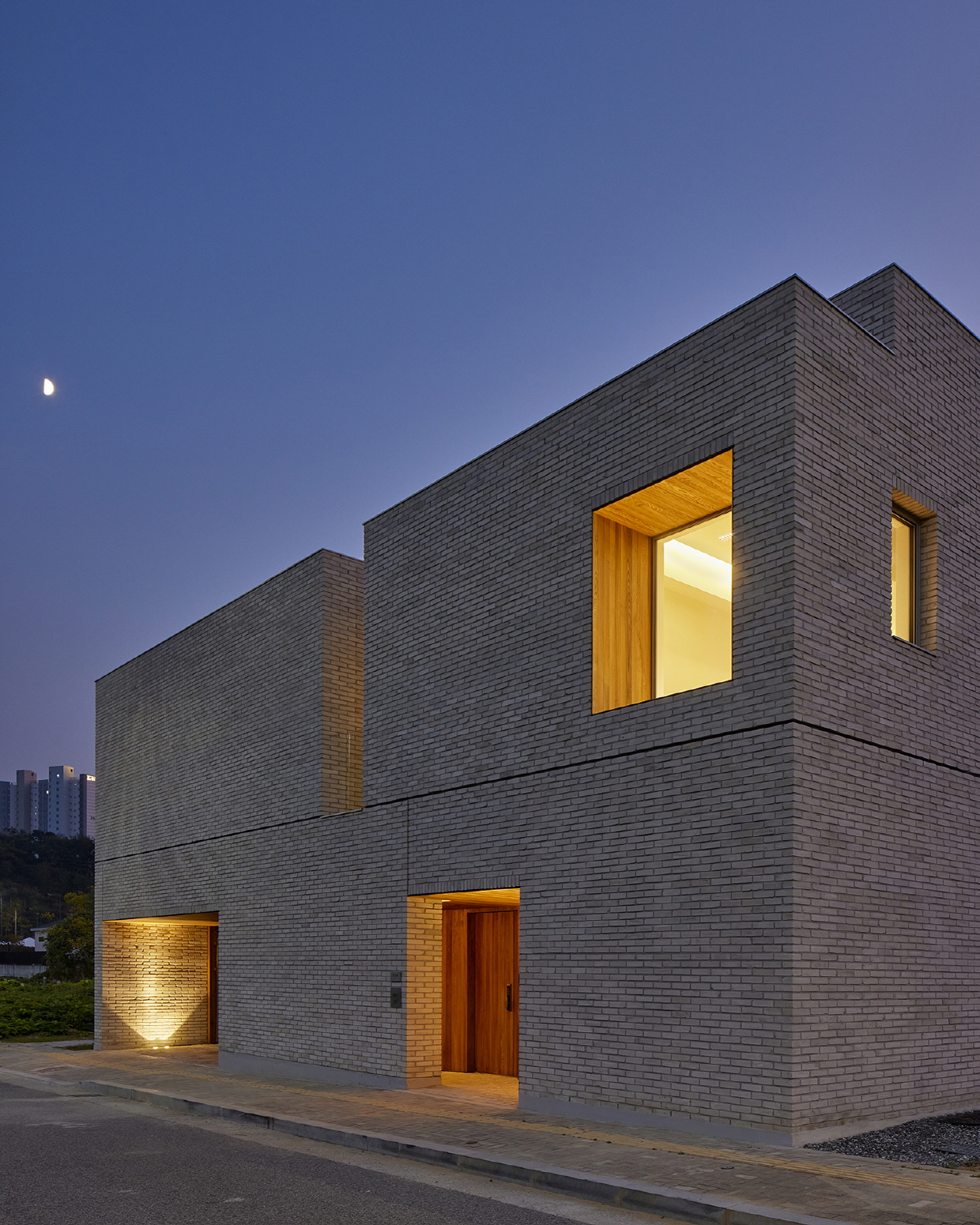
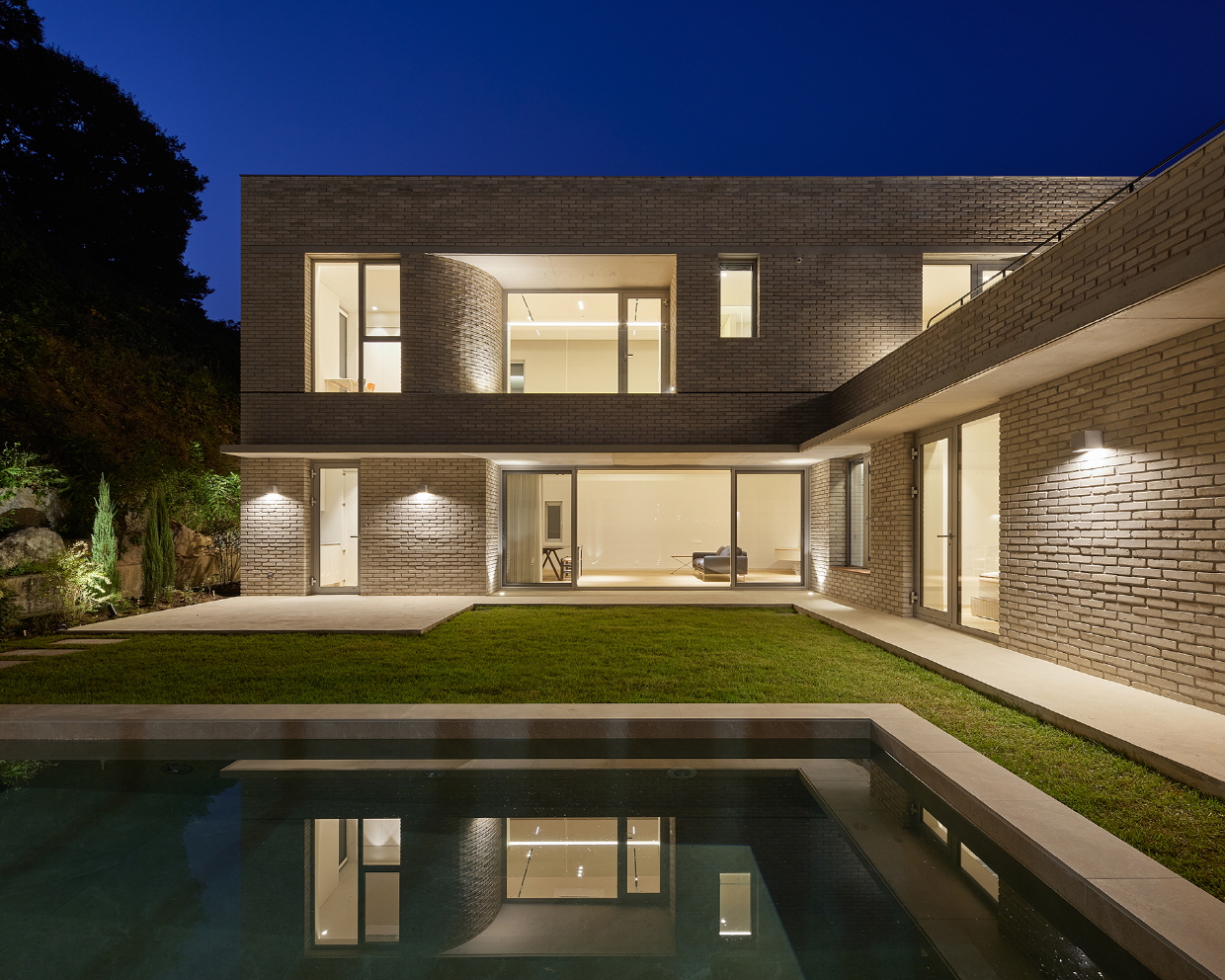
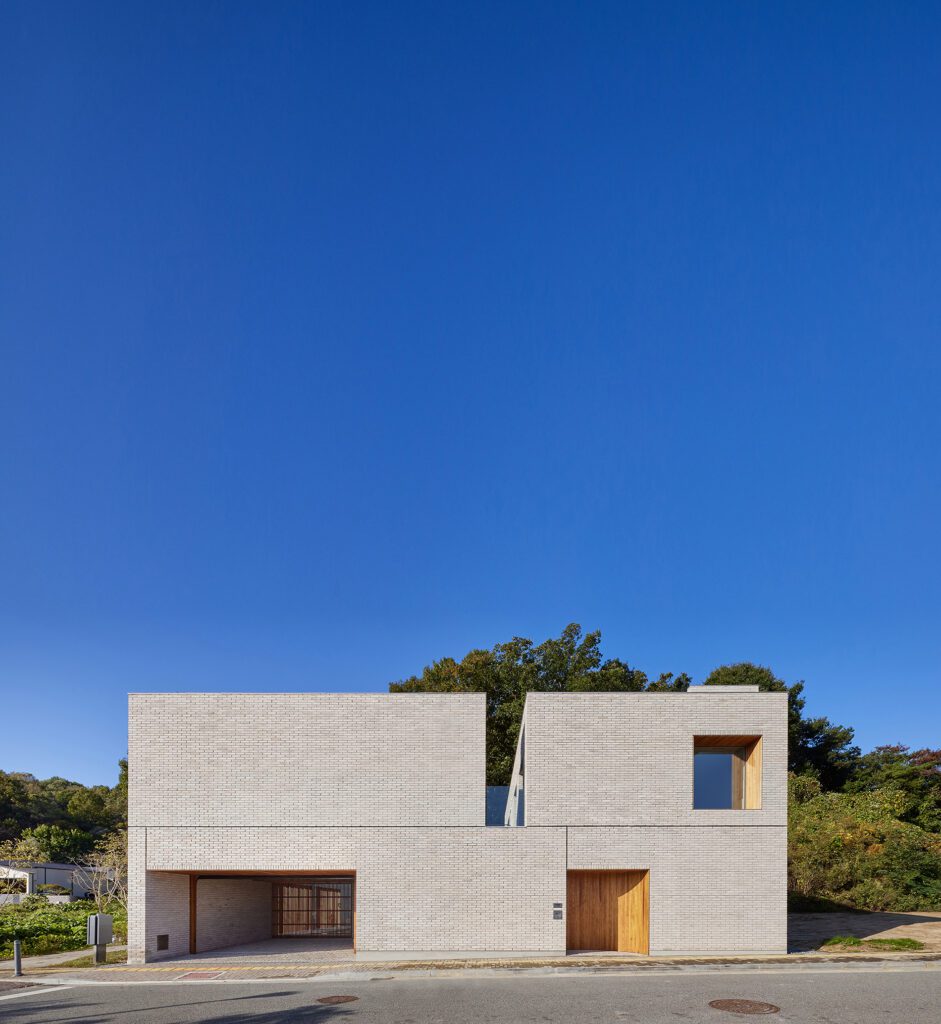
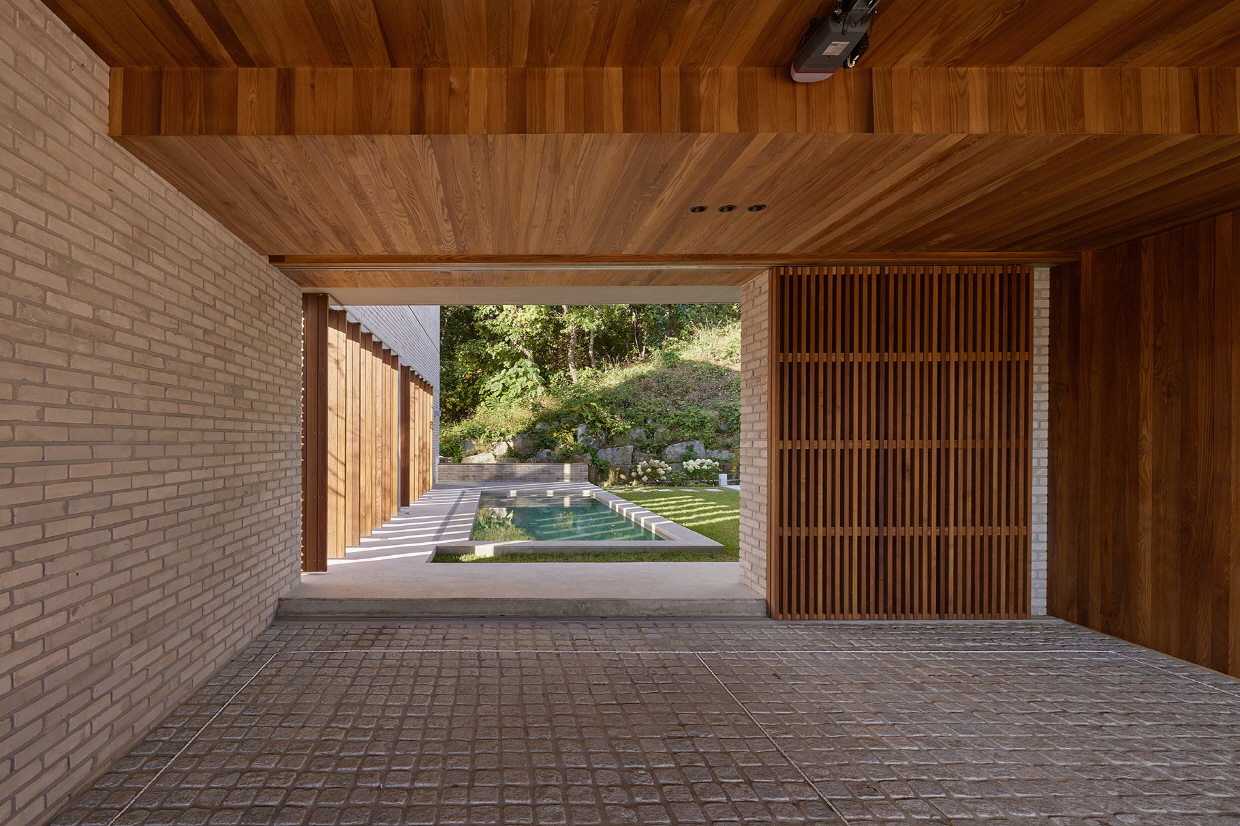
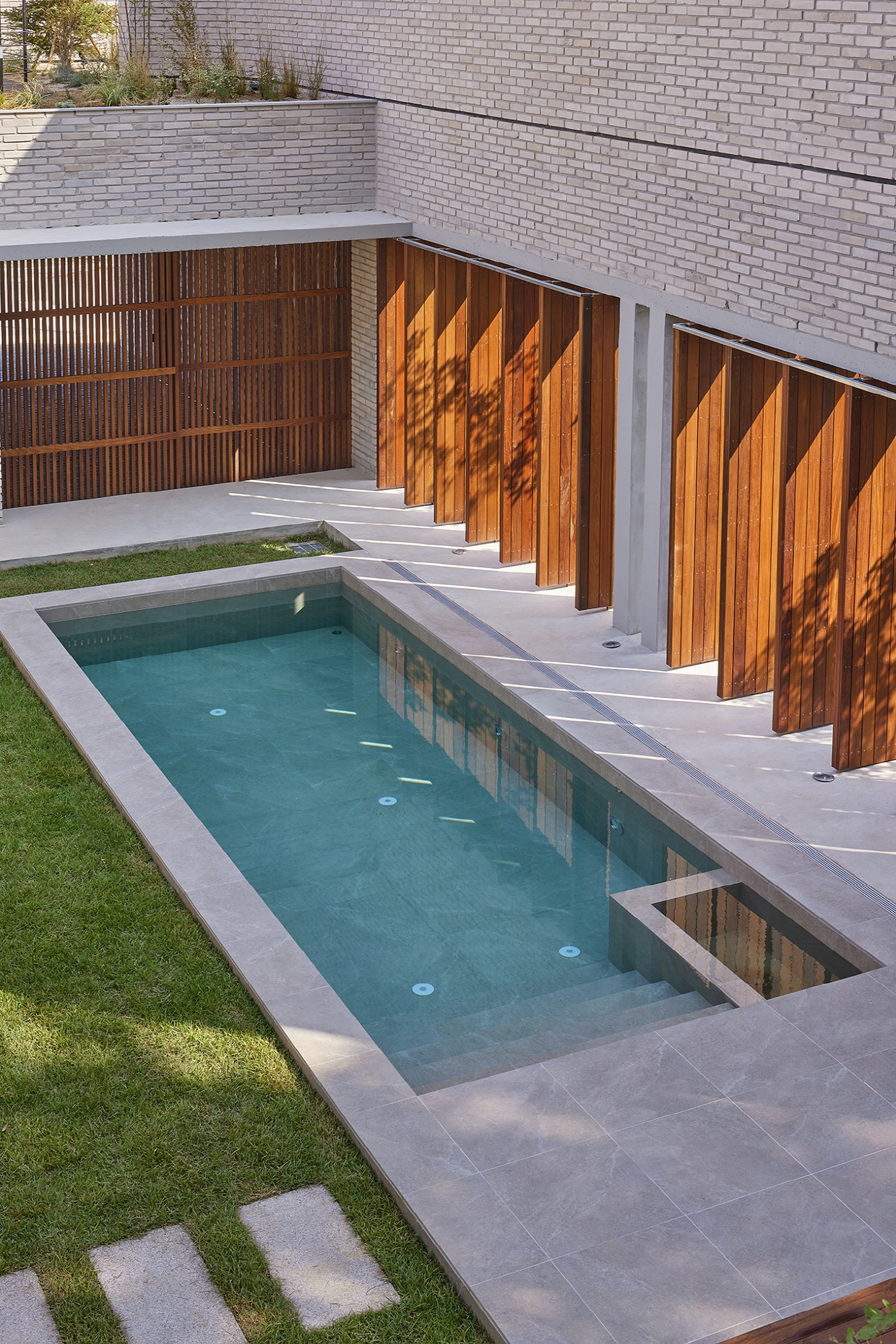
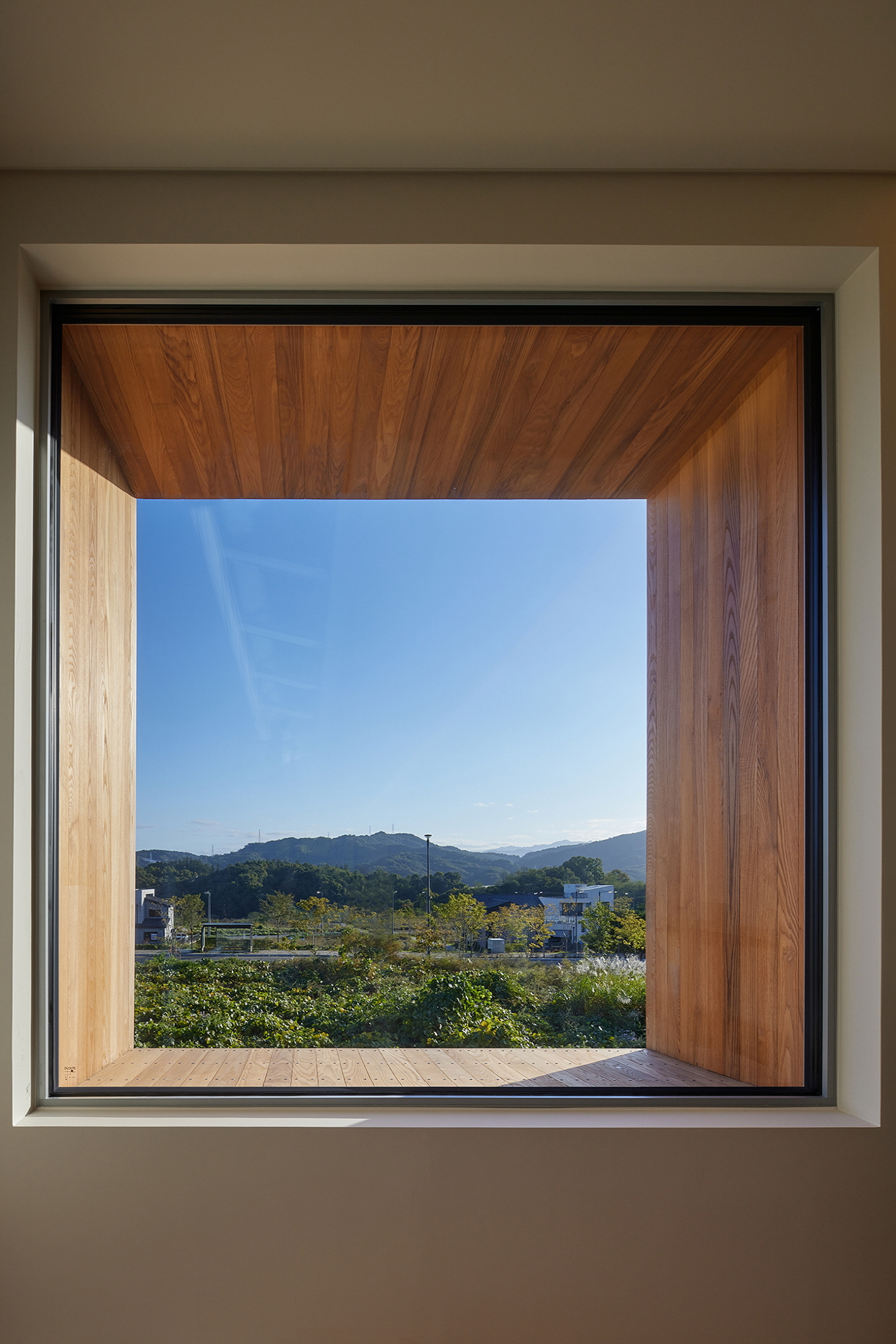
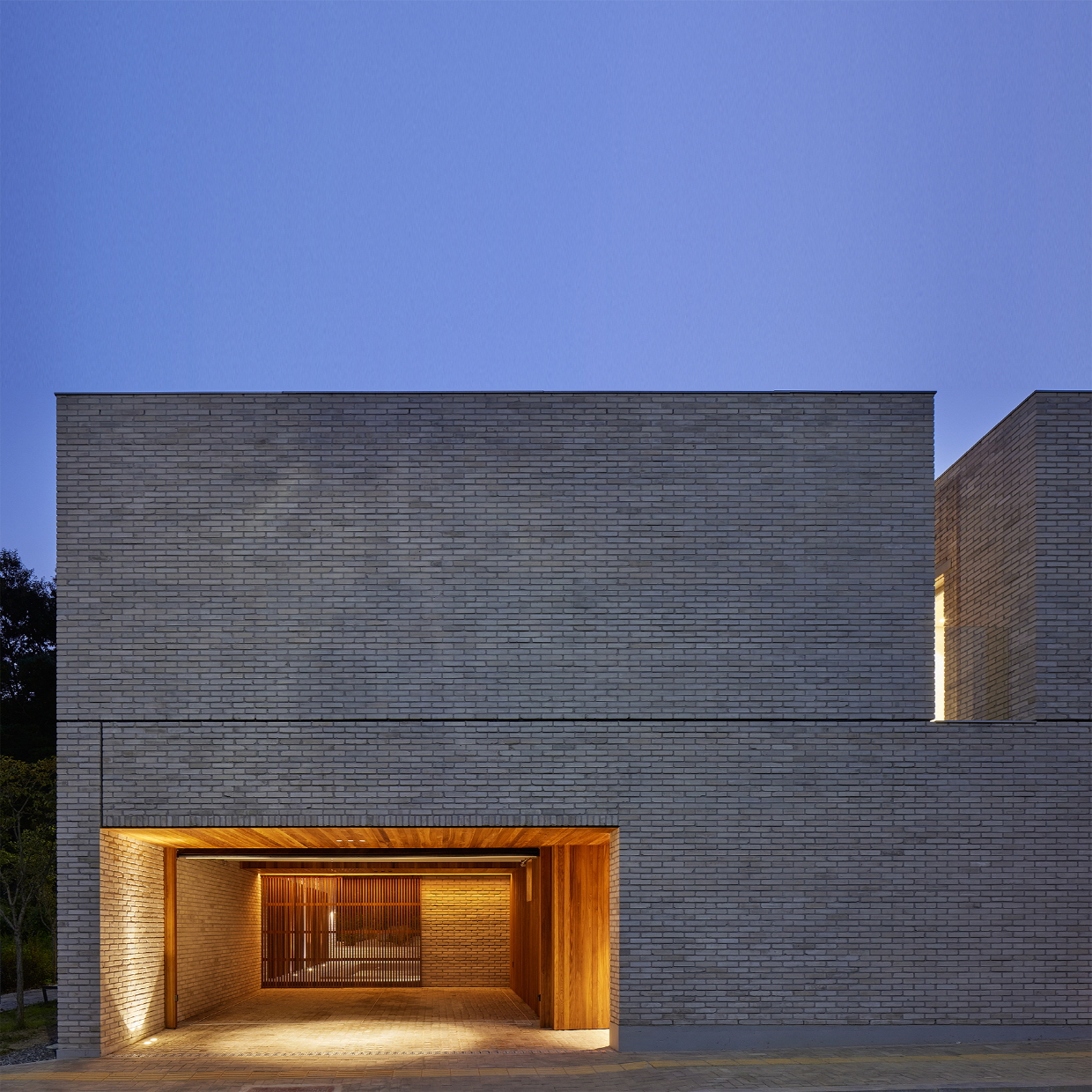
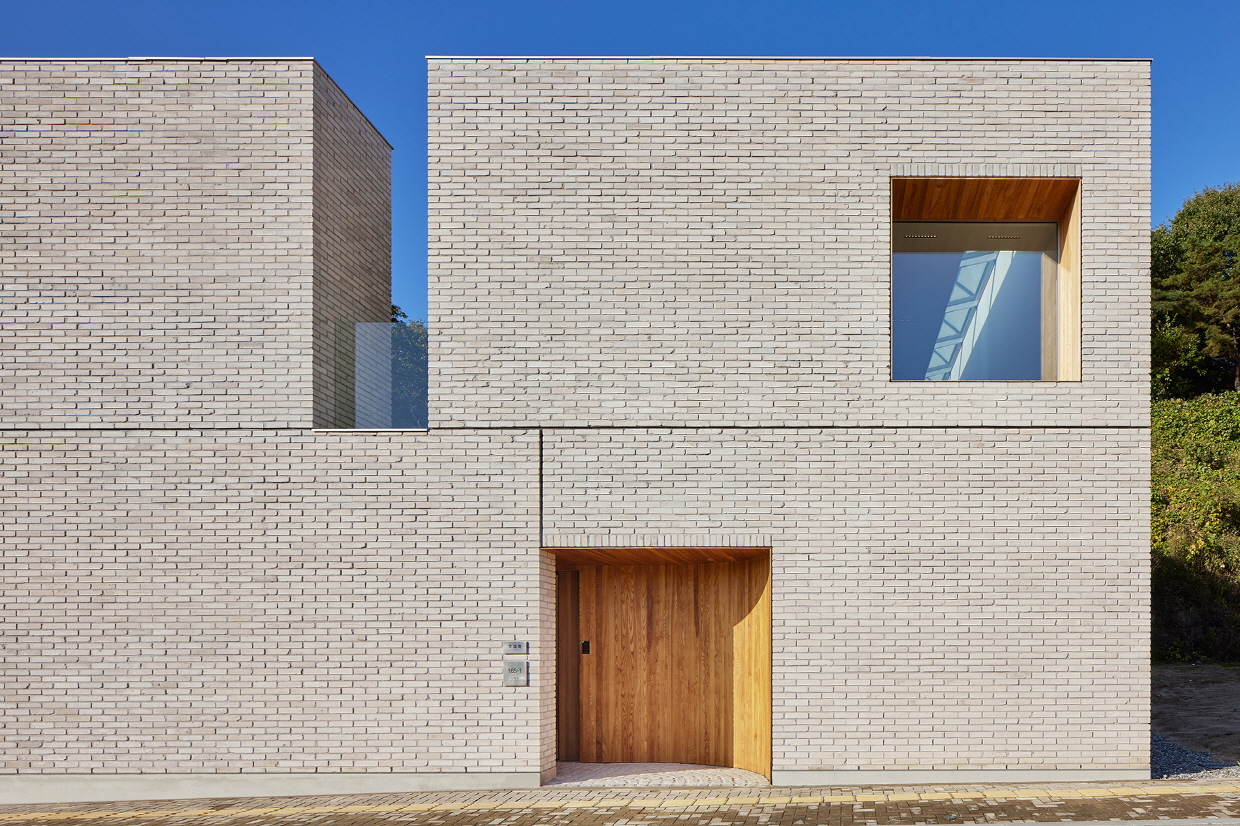
주변을 완전히 차단하지 않고, 필요한 만큼 열어 도시와 관계를 맺어야 한다. 외부로부터 보호받도록 구성된 소만재의 위요된 입면은 절제된 미학을 추구하지만, 영구적인 조망을 고민하여 여러 특징적인 개구부를 만들었다. 남측 1층에는 마당과 수영장을 관통하는 가변형 터닝 도어를 설치해 필요에 따라 열고 닫을 수 있게 했다. 남측 2층에는 도시 구조를 바라볼 수 있도록 길을 향해 열려 있고, 동측 정면에는 멀리 매봉산 군두봉까지 보이는 오프닝을 내어 주변 환경과 조응한다. 열어둔 벽체는 시계를 확장시키기도 하지만 바람이 지나고, 햇살이 스미는 자리다. 당위성을 갖춘 형태는 자연스레 기능이 되고, 언제든지 닫힘이 있어야 열림이 돋보이며, 직선이 있어야 곡선이 살아난다. 막혀 있되 필요한 만큼 열어 도시와 관계를 맺는다.
Standing Between Closed and Open
The building must engage with the city without fully blocking its surroundings, opening only as much as necessary. The restrained façade of the small-scale house seeks a subtle aesthetic, yet considers permanent views by incorporating several distinctive openings. On the south side of the first floor, a flexible turning door passes through the courtyard and swimming pool, allowing it to be opened or closed as needed. The south-facing second floor opens toward the street to capture the urban structure, while the east façade includes an opening framing distant views of Maebong Mountain and Gundoobong, responding to the surrounding environment. The opened walls expand one’s perception of time, while allowing wind and sunlight to permeate the space. Forms with inherent purpose naturally serve a function; openness is accentuated by the possibility of closure, and curves come alive against the presence of straight lines. The design balances enclosure and openness, engaging with the city just enough without fully shutting it out.
비구조 요소와, 유지관리
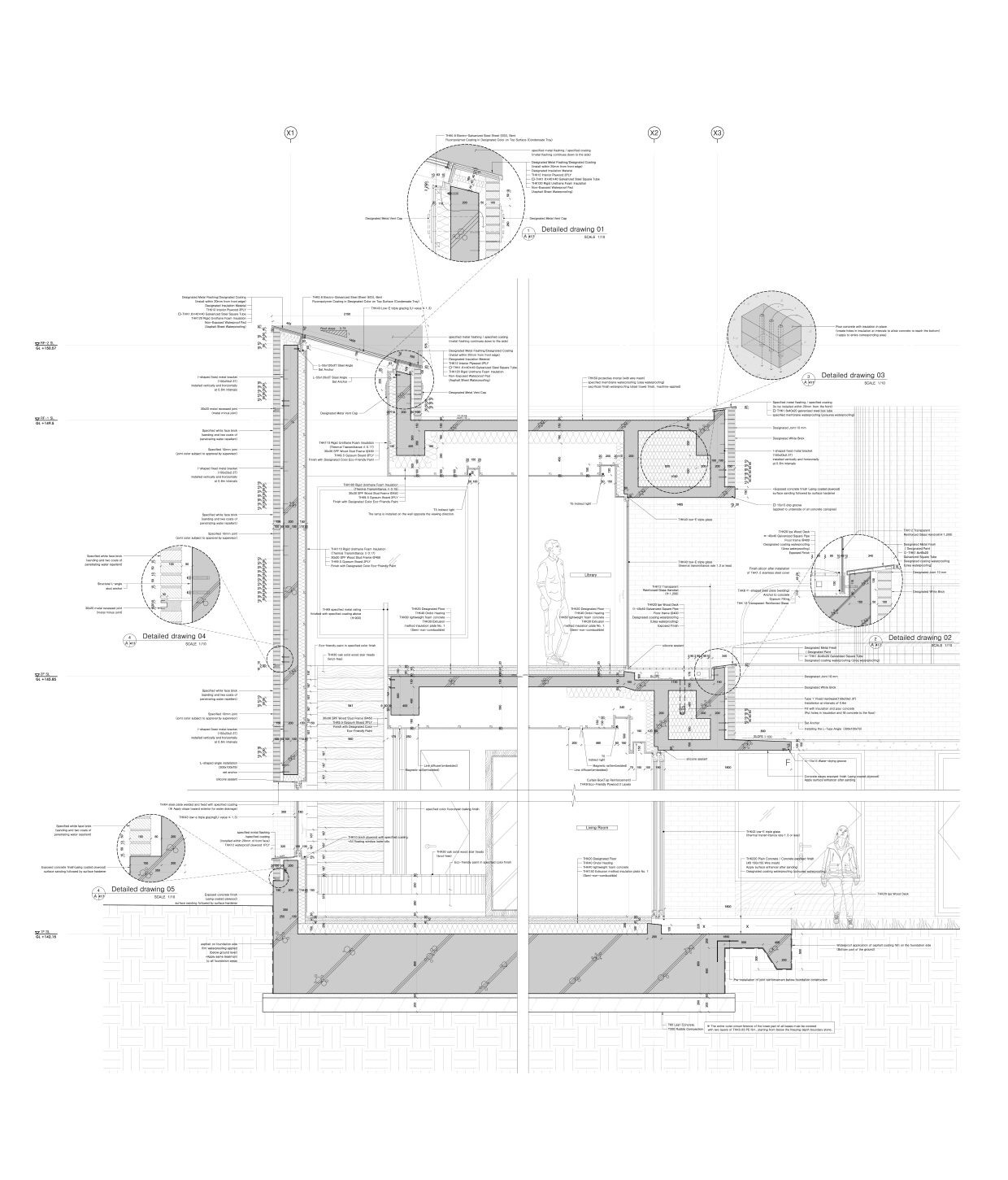
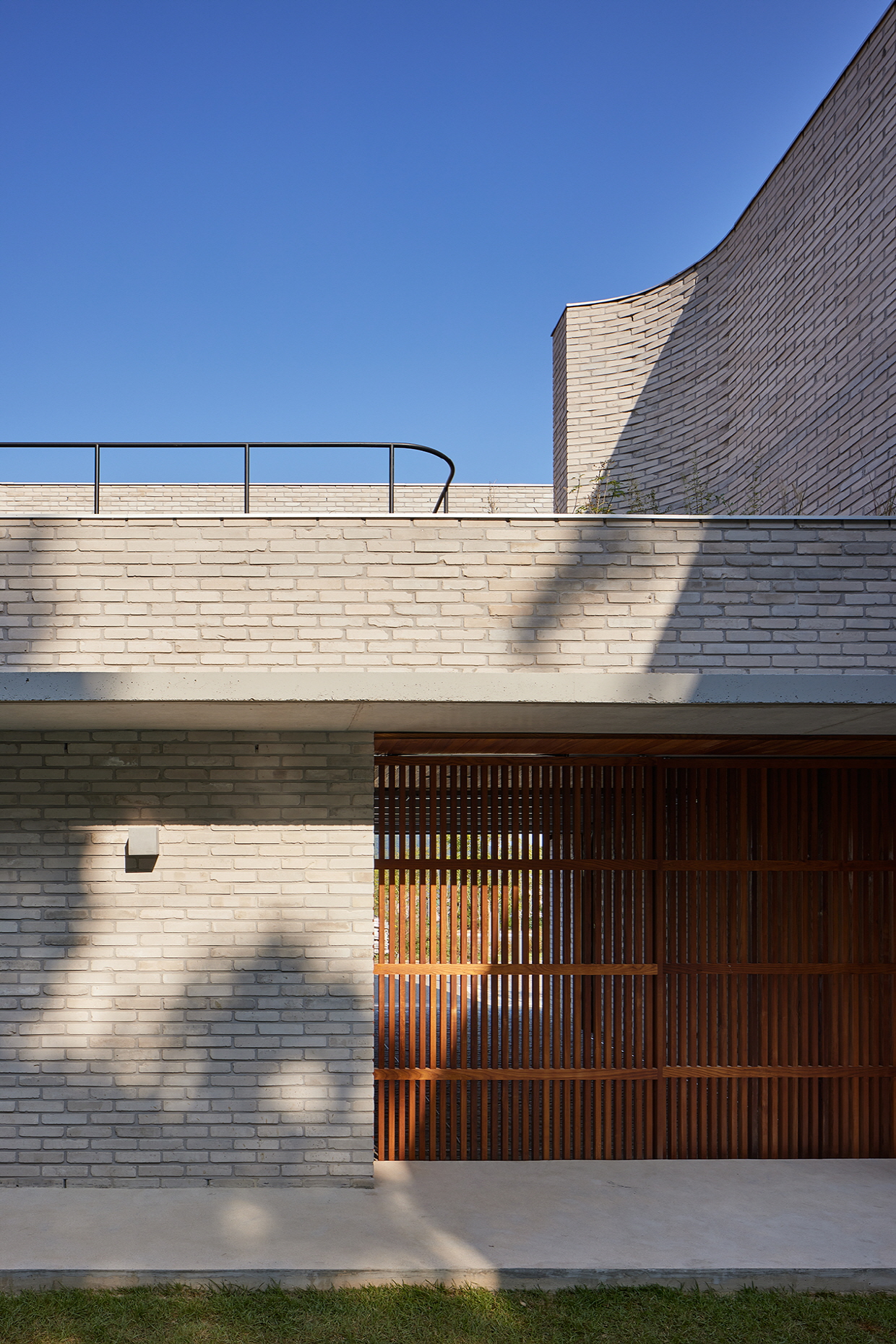
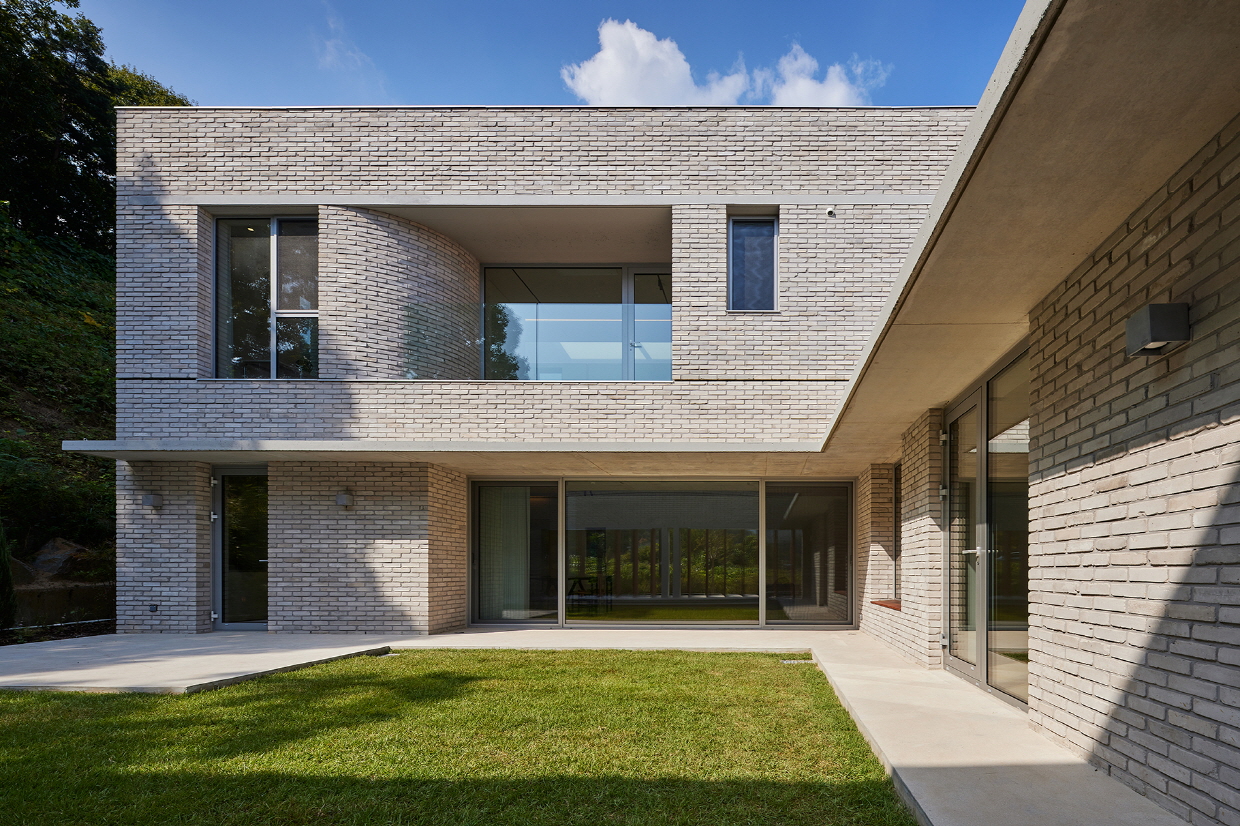
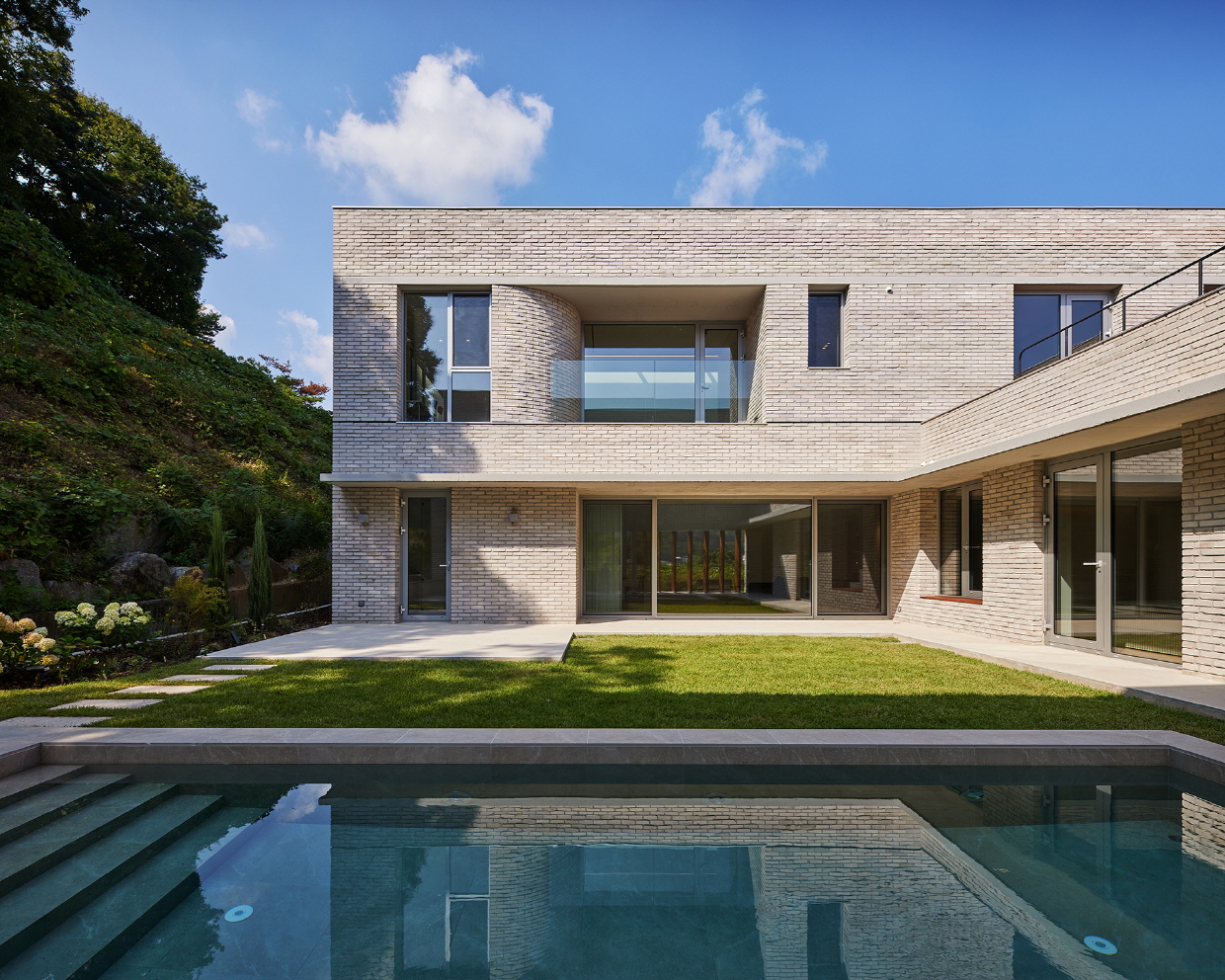
건축에서 중요한 것들은 크게 눈에 띄지 않는다. 구조적 안전성과 내구성, 유지 관리에 유리하도록 설계 단계부터 많은 노력을 기울였다. 벽돌벽의 하단부 오염을 방지하기 위해 지면에서부터 벽돌을 들어 올려 구체 받침을 설치한 점, 비구조 요소인 벽돌의 하중을 분산시키기 위해 벽체 중간 높이에 노출 콘크리트 구체로 일체 타설된 인방을 설치하고, 이를 그대로 드러내어 구조적 안전성과 입면 디자인을 동시에 구성한 점 등이 있다. 또한 입면의 면 분할을 가능하게 한 얇은 금속 매지는 전체 벽체의 1/2 지점의 벽돌을 받치는 L-형강 자리에 스텐 철판을 ㄷ자 절곡시켜 음각으로 넣었다. 일부 외장재로 쓴 애쉬 탄화목 판재는 목재 특유의 분위기를 유지하면서도 직접 비를 맞아 변형되지 않도록 처마 안쪽 깊숙한 부분에 사용하고, 바닥에서 띄워 습기에 유리하게 한 점 등이 그 예다.
Non-Structural Elements and Maintenance
In architecture, the most important aspects are often those that go unnoticed. From the design stage, considerable effort was devoted to structural safety, durability, and ease of maintenance. To prevent staining at the base of the brick walls, the bricks were raised above ground level using concrete supports. To distribute the load of the non-structural brick walls, a cast-in-place concrete lintel was installed at mid-wall height and left exposed, serving both structural safety and façade design simultaneously. Additionally, the thin metal “masonry joints” that allow division of the façade were carefully detailed: stainless steel plates were bent into a U-shape and inserted in a recess at the L-shaped steel position supporting bricks at roughly half the wall height. Some exterior materials, such as ash charred wood panels, were installed deep under the eaves to preserve their natural wooden texture while protecting them from direct rainfall, and raised from the floor to reduce exposure to moisture. These are examples of design decisions that prioritize both aesthetic integrity and practical maintenance.

법규의 틈으로 태어난 집
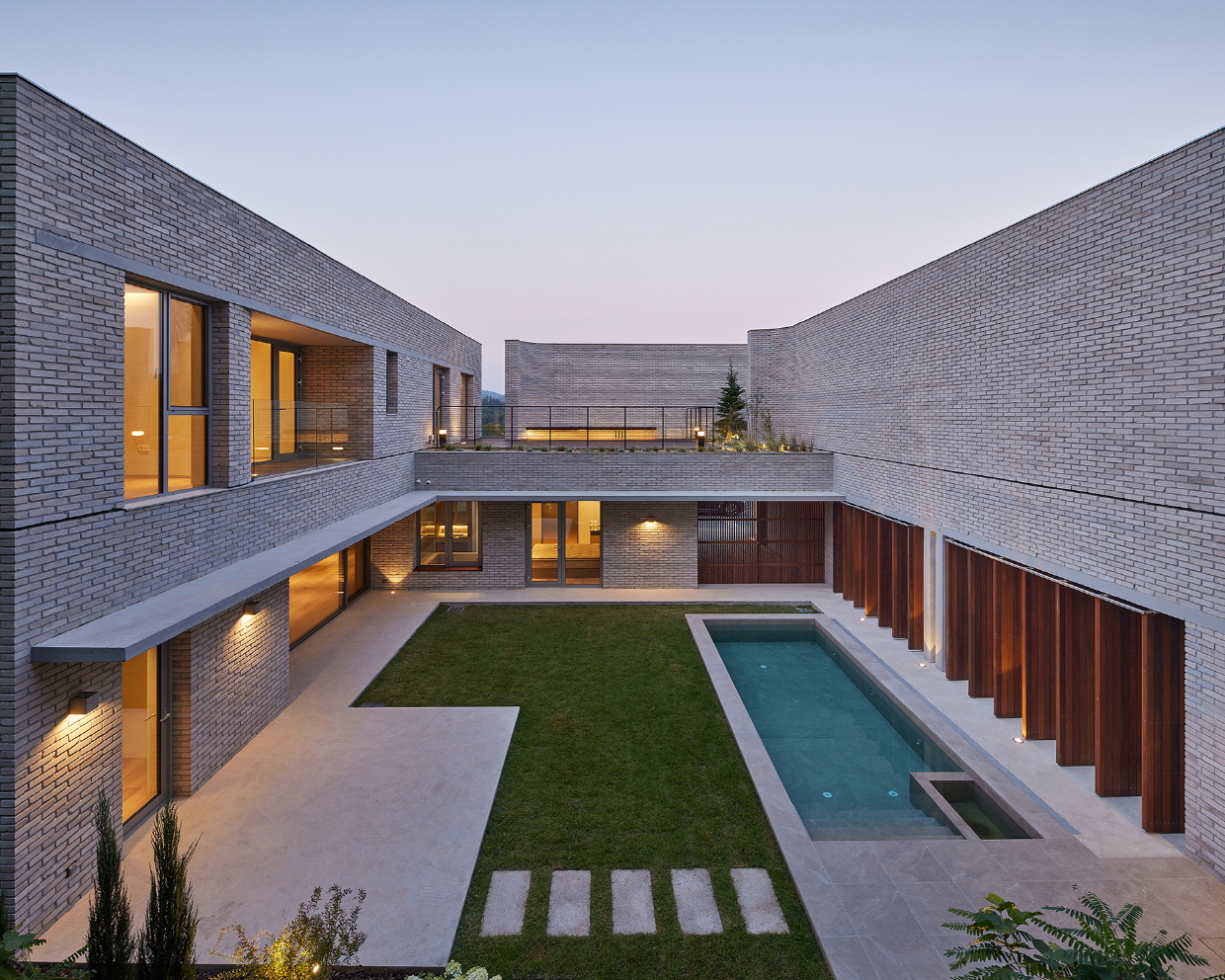
판교에서 시작되어 전국으로 확산된 지구단위계획지침은 전국의 신도시와 택지 개발지에서 하나의 전형으로 자리 잡았다. 형태와 배치, 담장 색채, 심지어 지붕의 형태까지 통제하는 규정은 획일화된 도시 풍경을 만들어냈지만, 동시에 이를 잘 해석하고 유연하게 재구성할 수 있는 여지를 남겨두기도 한다. 우리는 조밀하게 건물로 채워질 지구단위계획구역 내에서 가족의 프라이버시를 온전히 지키고, 동시에 자연으로 활짝 열린 개방감을 확보할 수 있도록 고민했다.
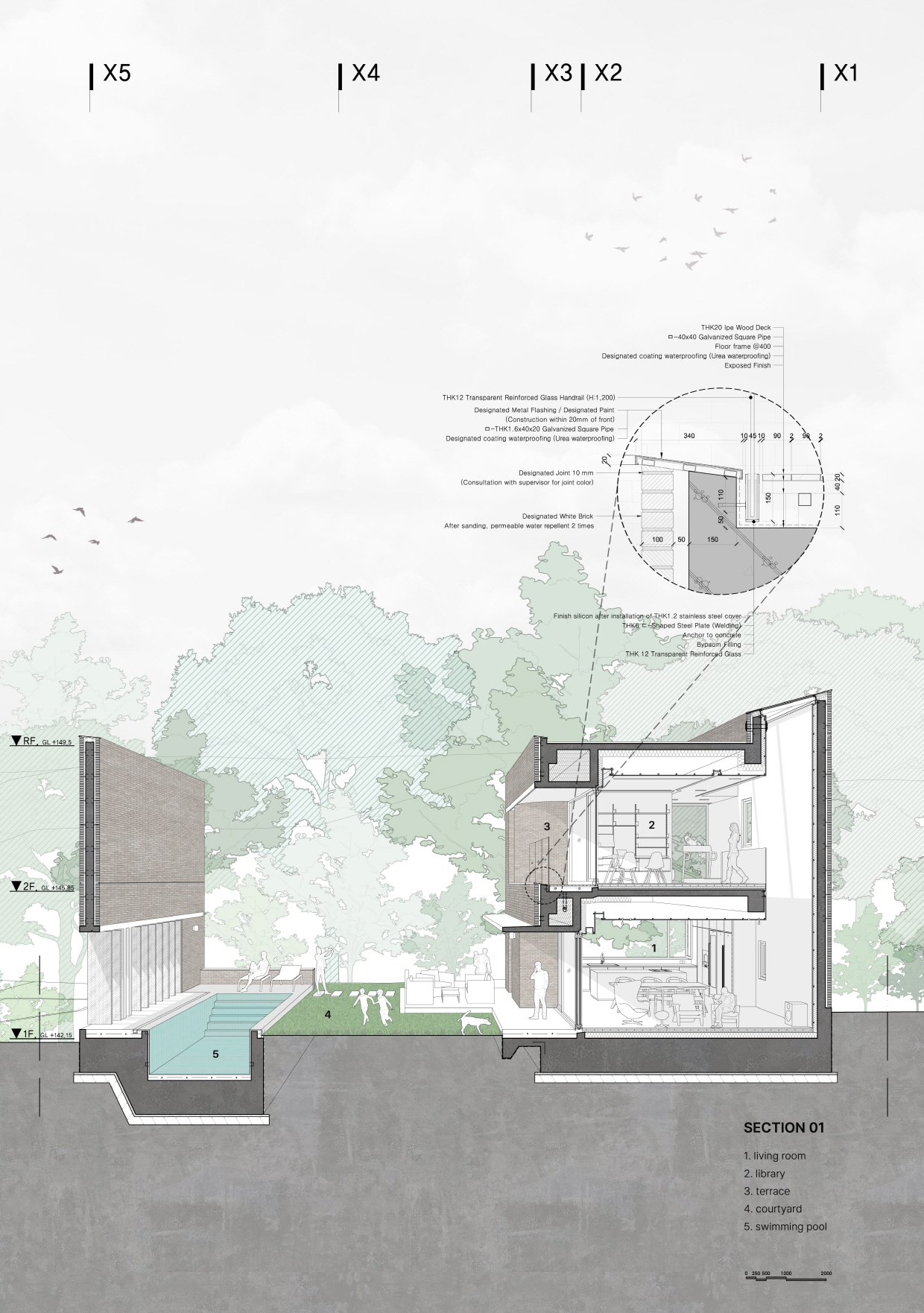
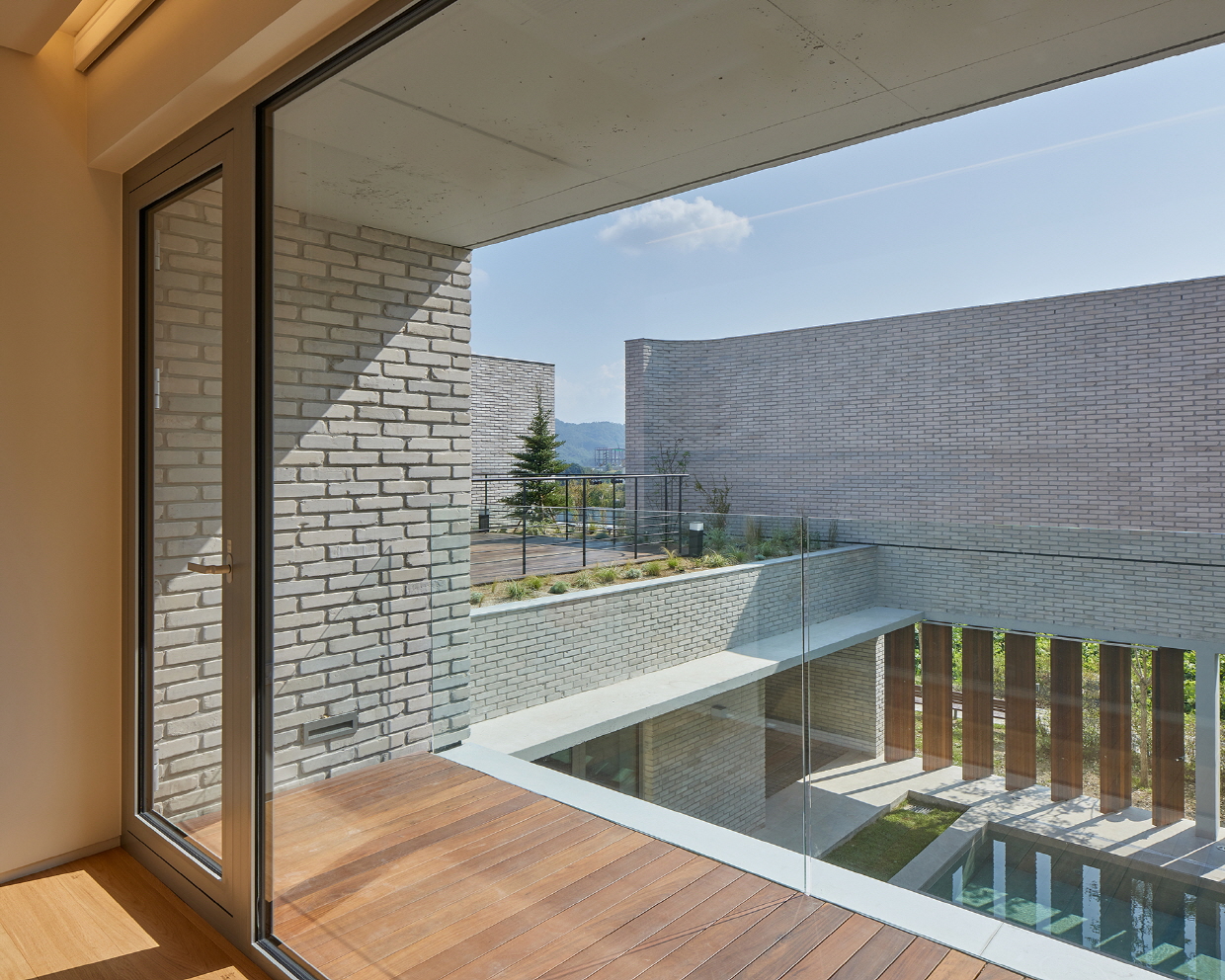
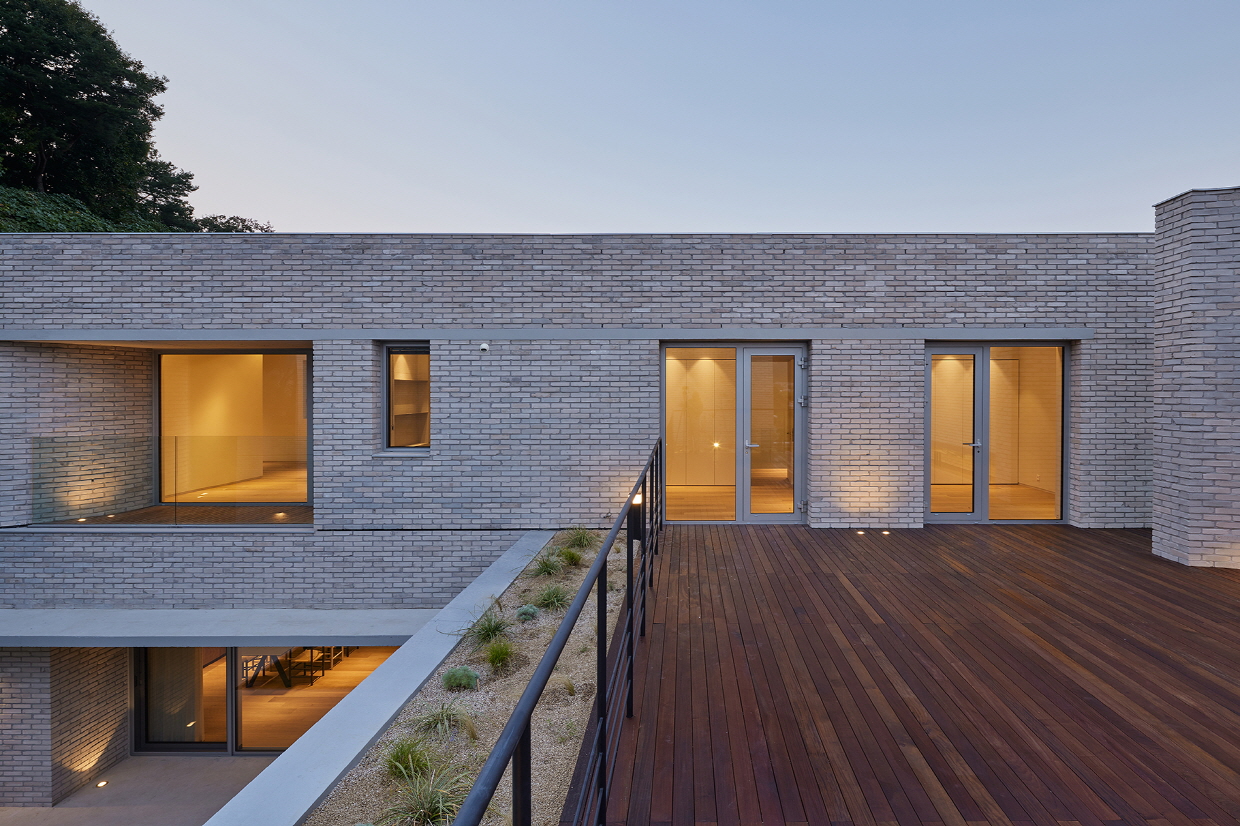
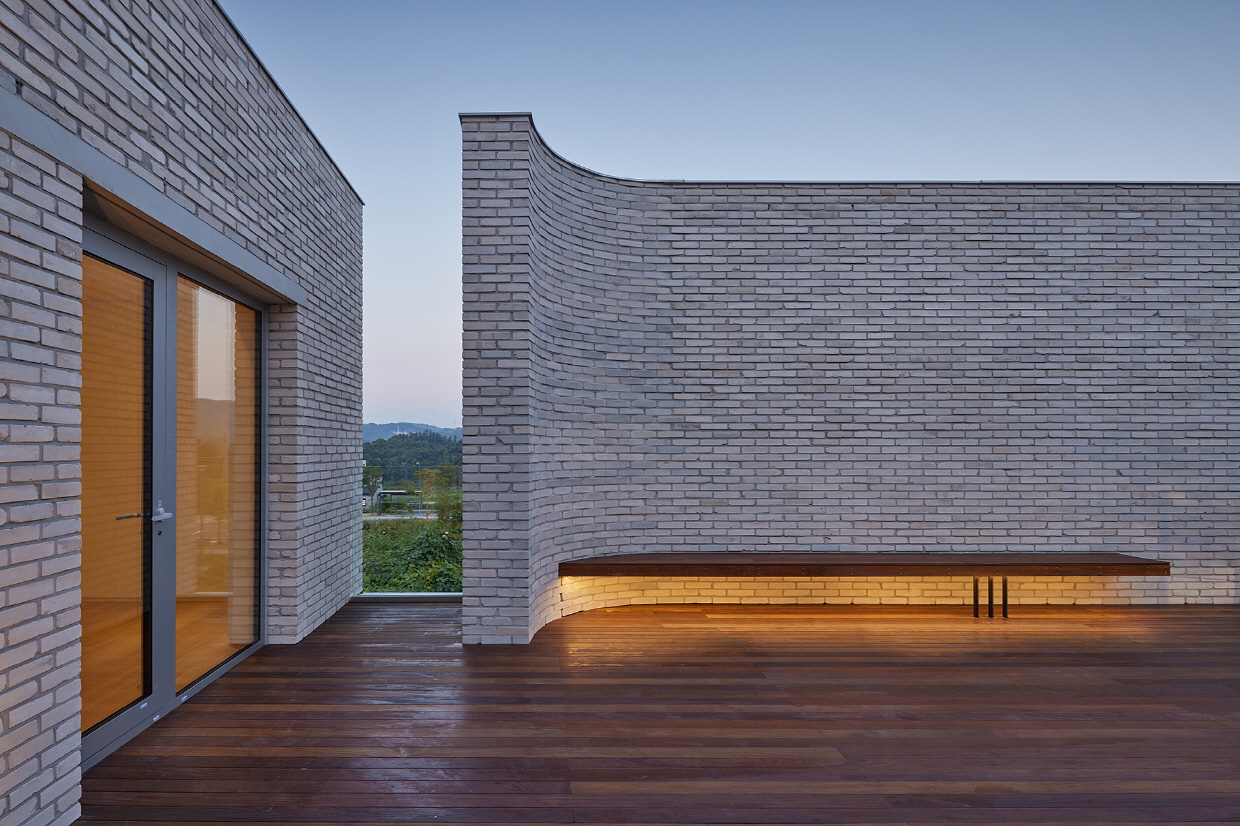
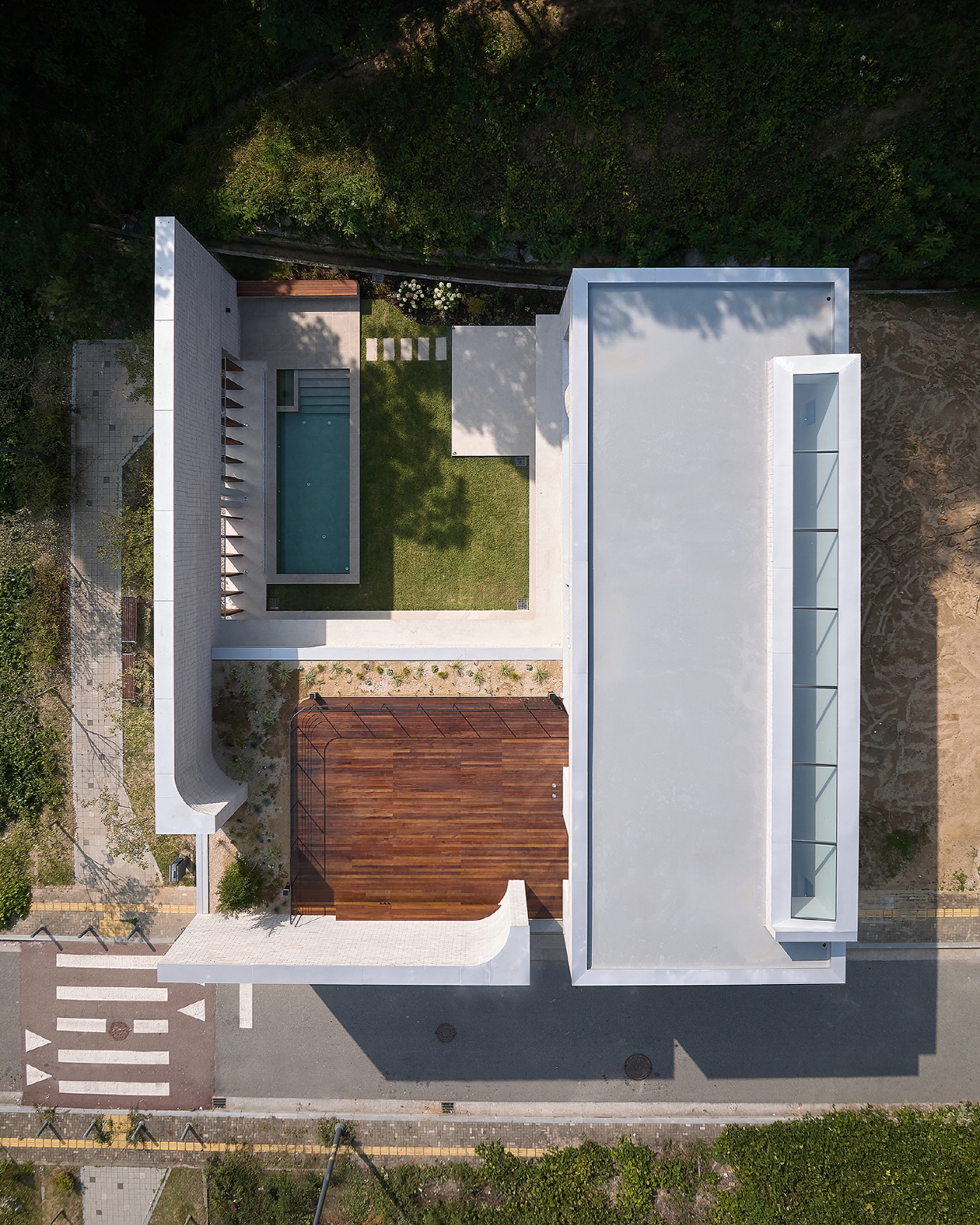
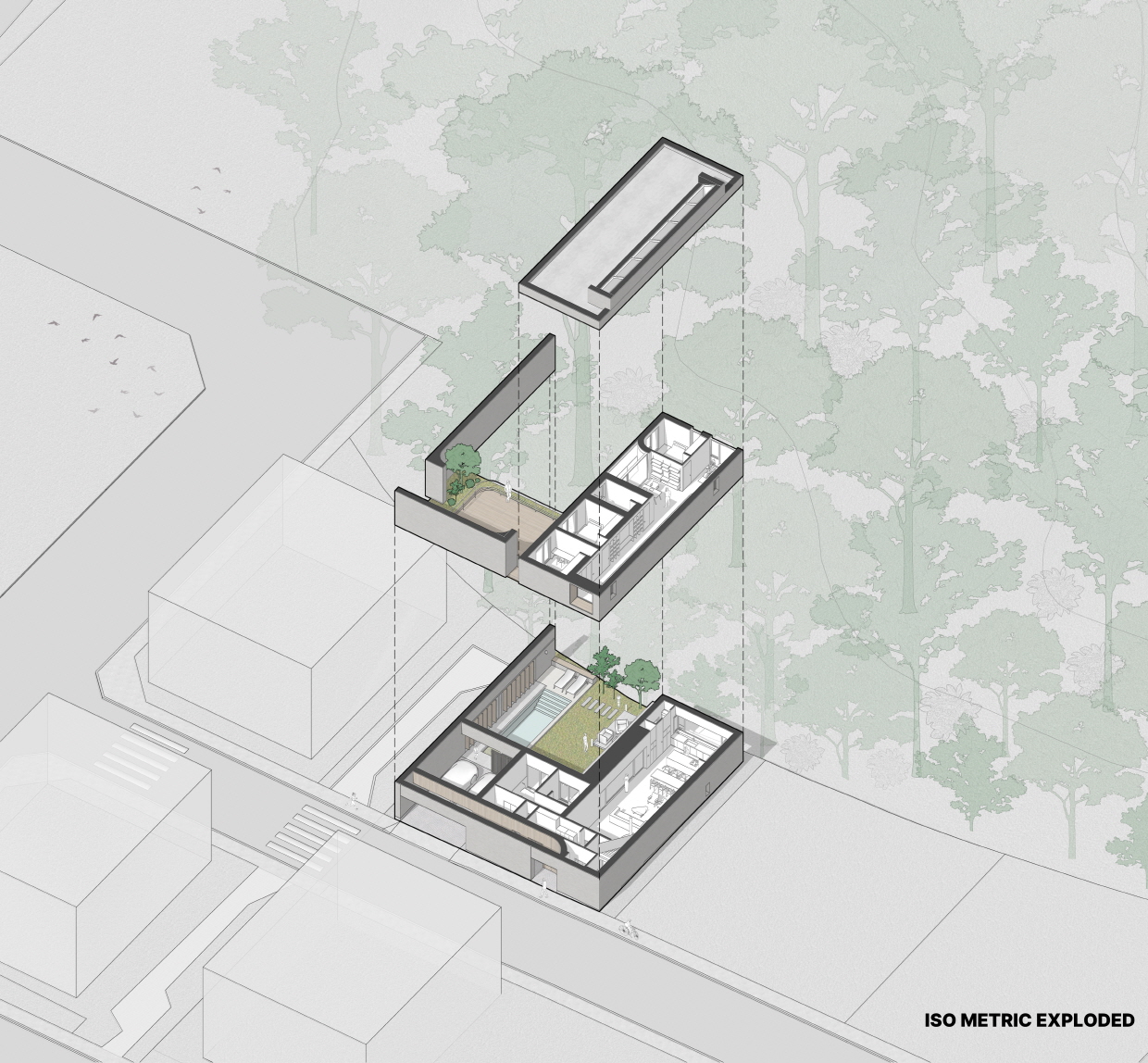
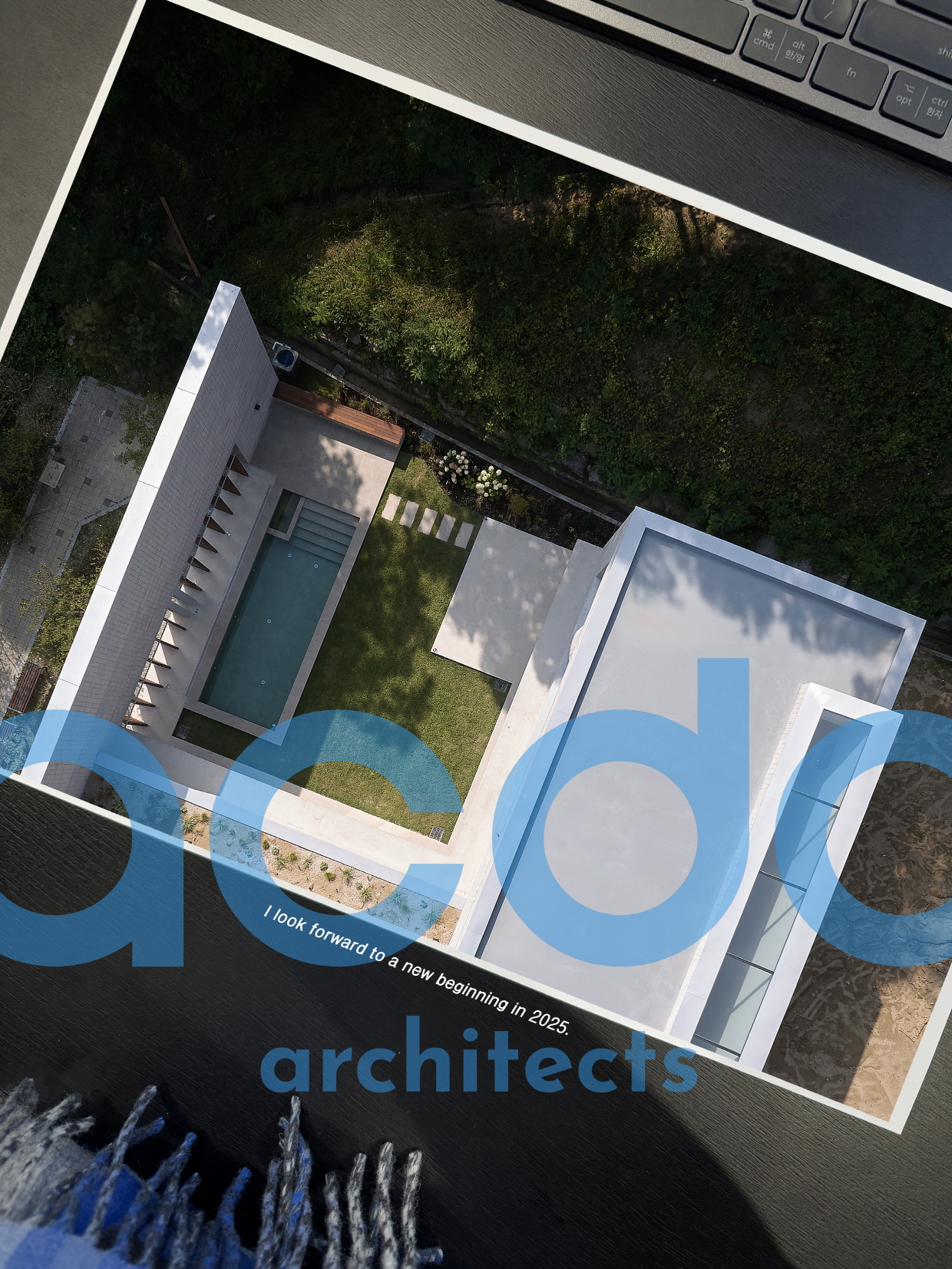
‘담장 설치 금지’ 조항은 ‘담장의 건축화’로 치환하여, 남측에 실제 구조체로 계산된 건축벽을 길게 연장시켰다. 길어진 남측 벽은 뒷동산을 내부로 끌어안고 가족만을 위한 중정의 일부가 된다. 또한 2층 테라스까지 자연을 끌어올 방법을 모색하면서, ‘경사지붕 설치’라는 의무 조항은 ‘옥상 조경 설치 시 평지붕 허용’이라는 예외 규정을 근거로 평지붕 역보 방식으로 옥상 조경을 계획했다. 이는 토심을 보 하부로 내려 2층 바닥 레벨에서 테라스, 그리고 조경 영역까지 하나의 연속된 수평 풍경으로 이어지게 한다. 이 프로젝트에서 법규는 장애물이 아니라 건축적 해법을 만들어가는 단서로 사용되었고, 그 법의 틈에서 가족의 삶과 땅의 풍경을 만들 수 있었다.
A House Born from the Gaps in Regulations
The district planning guidelines, which began in Pangyo and spread nationwide, have become a standard model in new towns and residential developments across the country. Regulations controlling form, layout, wall colors, and even roof shapes have created uniform urban landscapes—but they also leave room for thoughtful interpretation and flexible reinterpretation. Within a densely built district planning area, we sought to fully preserve the family’s privacy while simultaneously securing an openness that embraced nature.
The clause prohibiting walls was reinterpreted as “architectural walls,” allowing us to extend a structurally calculated wall along the south side. This elongated southern wall embraces the hillside behind the site, forming part of a private courtyard for the family. We also explored ways to bring nature up to the second-floor terrace. The mandatory sloped roof requirement was addressed using the exception for “flat roofs allowed when rooftop landscaping is installed,” enabling us to plan a flat rooftop for landscaping. By lowering the soil depth toward the lower level, the terrace and landscaped areas at the second-floor level seamlessly continue as a single horizontal landscape. In this project, regulations were not obstacles but clues for architectural solutions. Through these gaps in the law, we were able to shape both the family’s life and the landscape of the land.

쓰임에 이로운 집
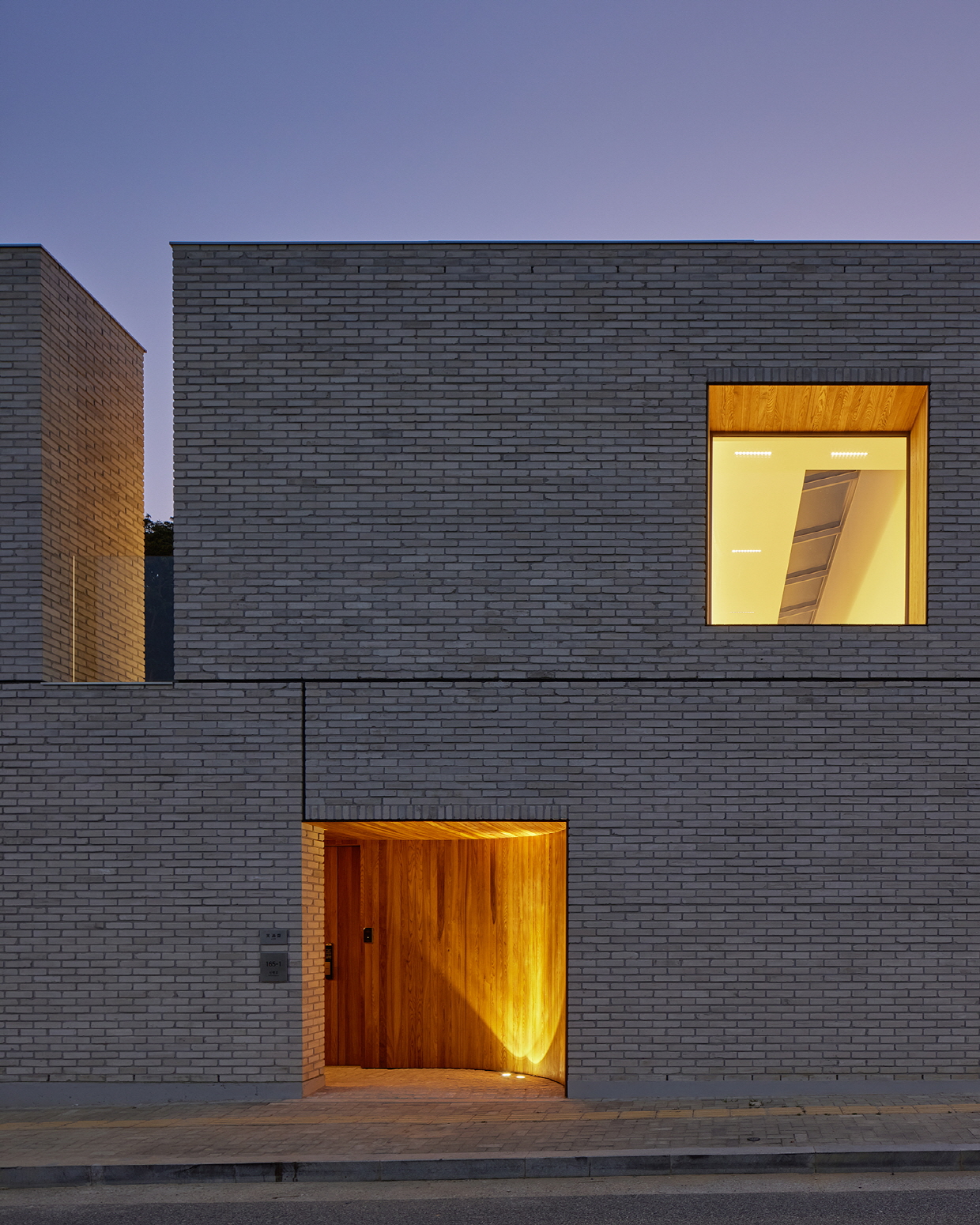
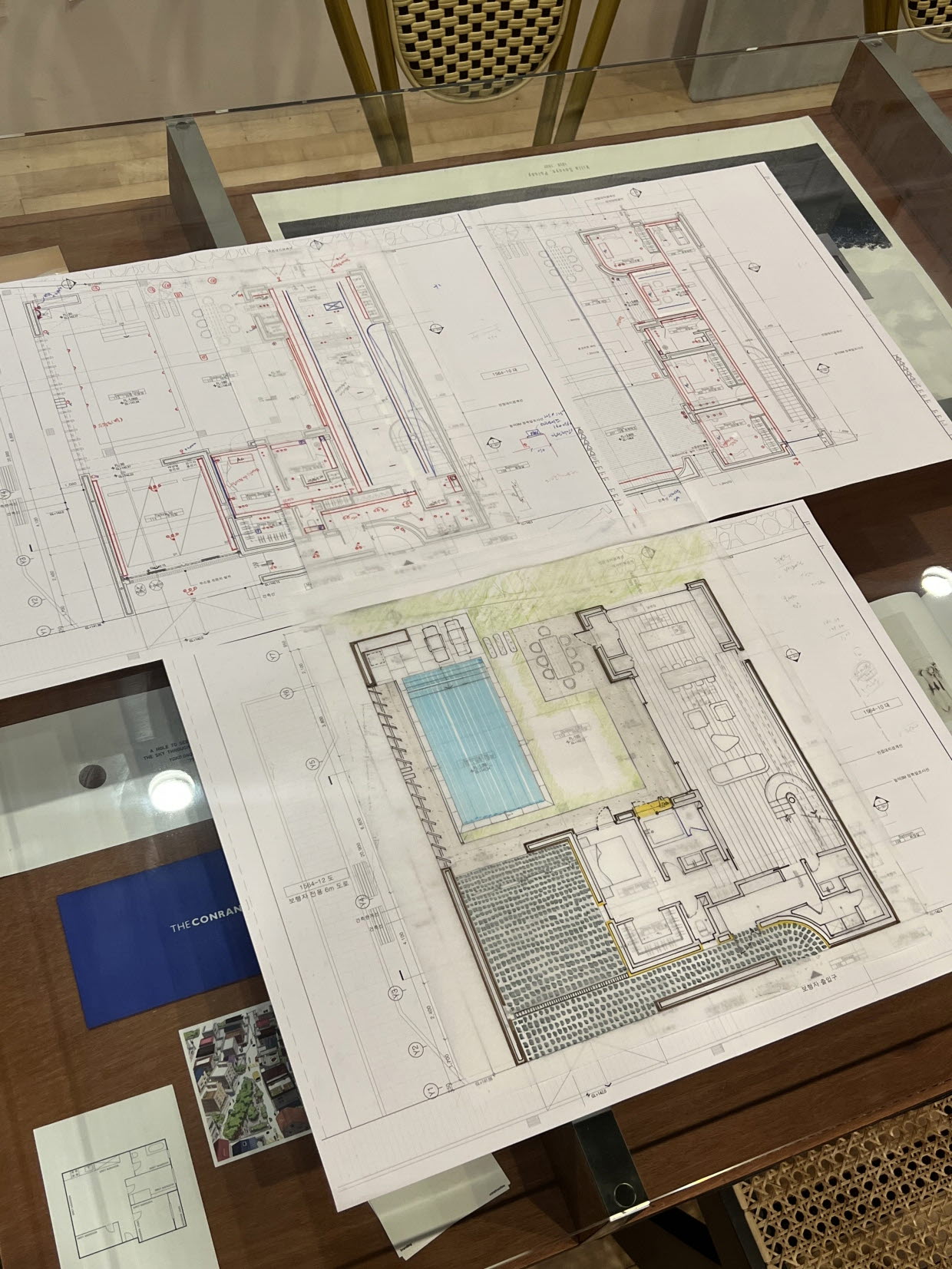
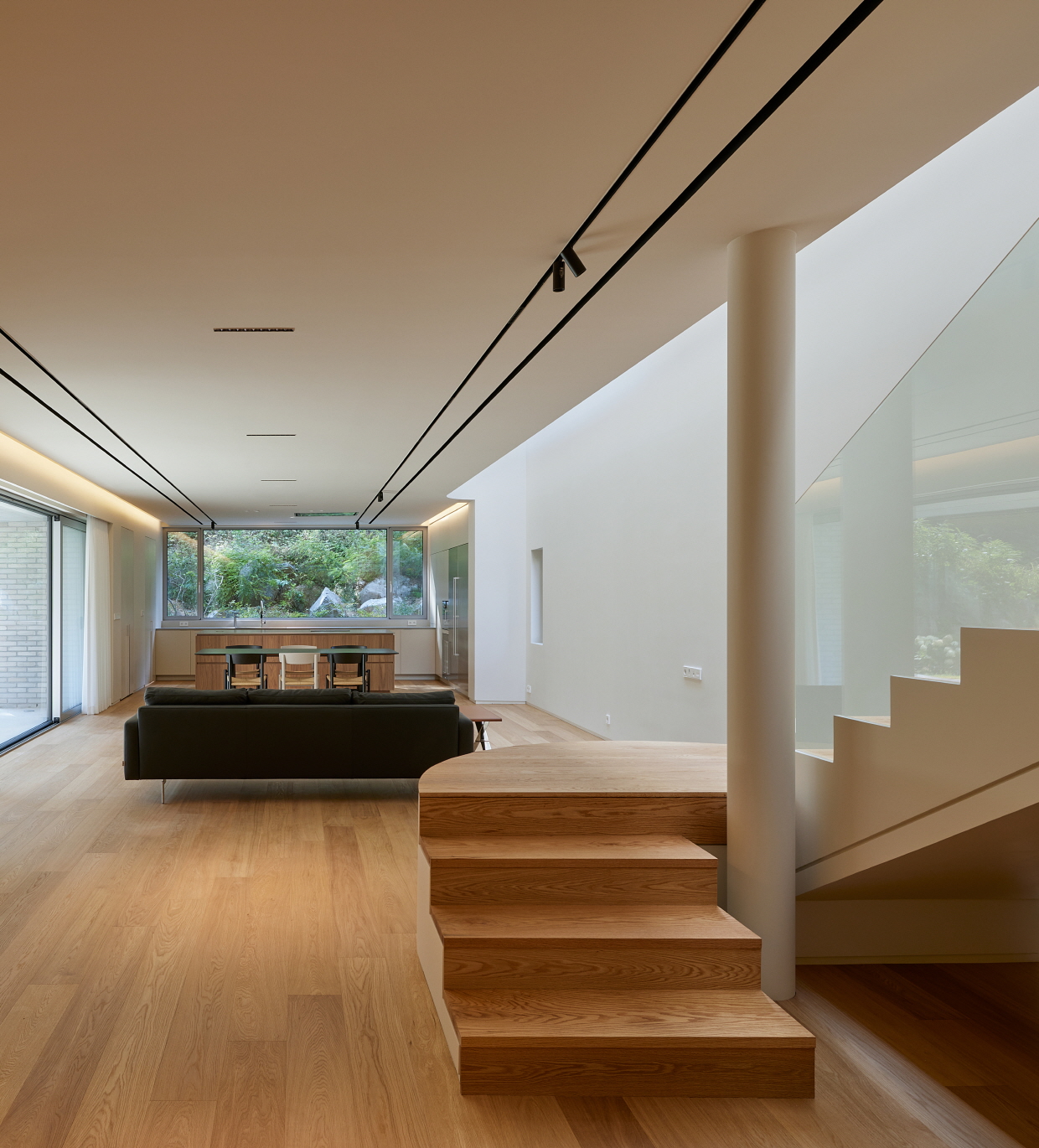
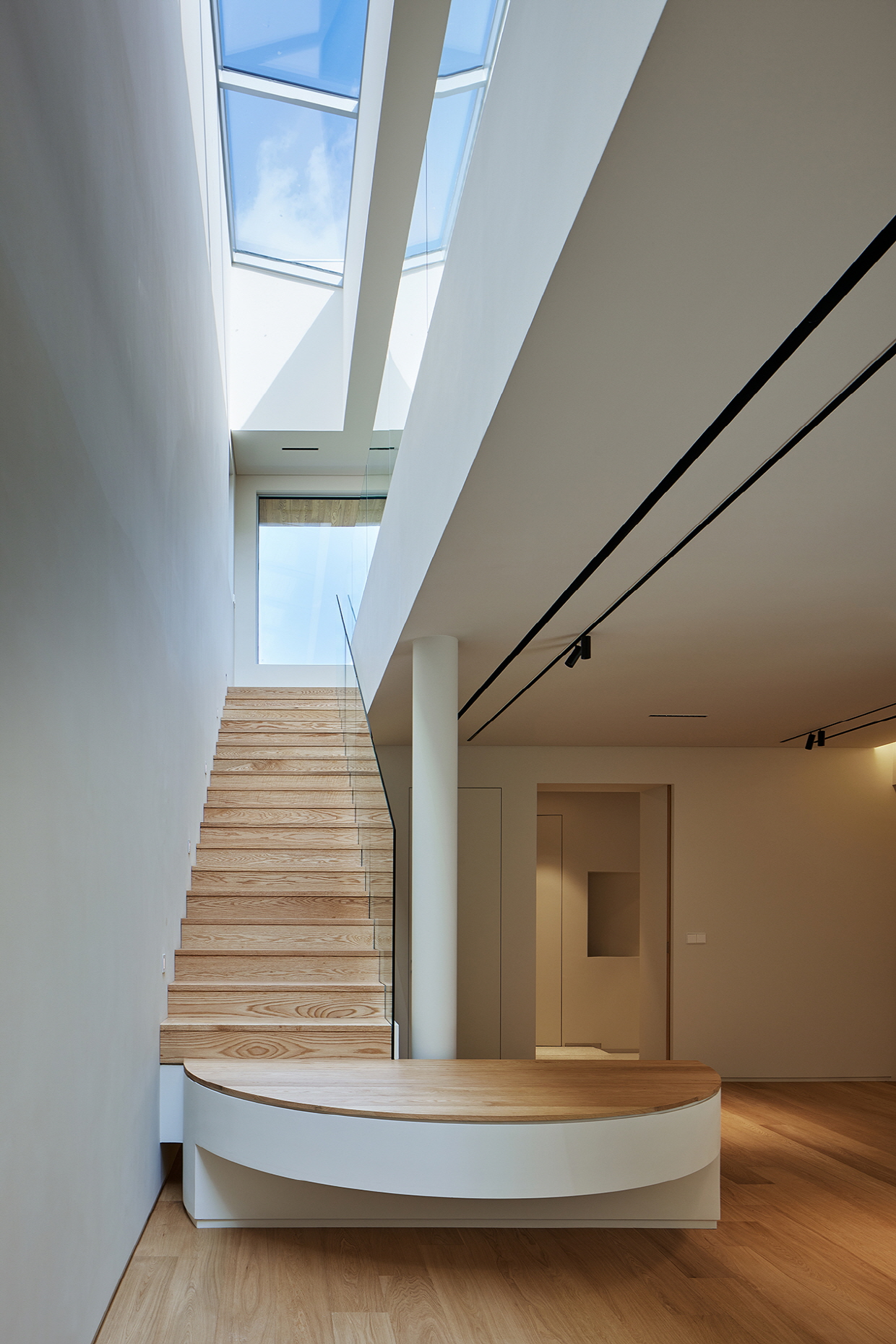
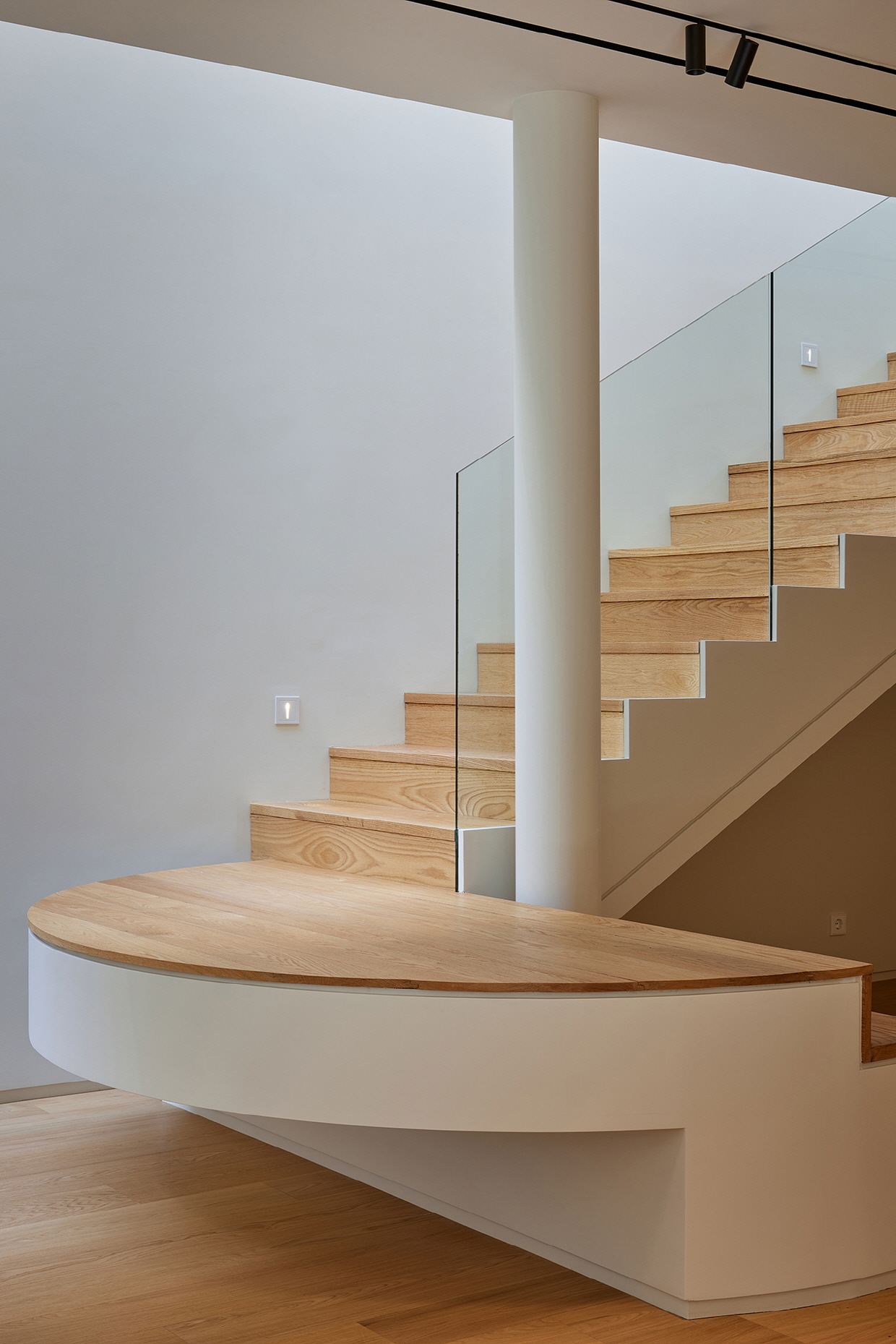
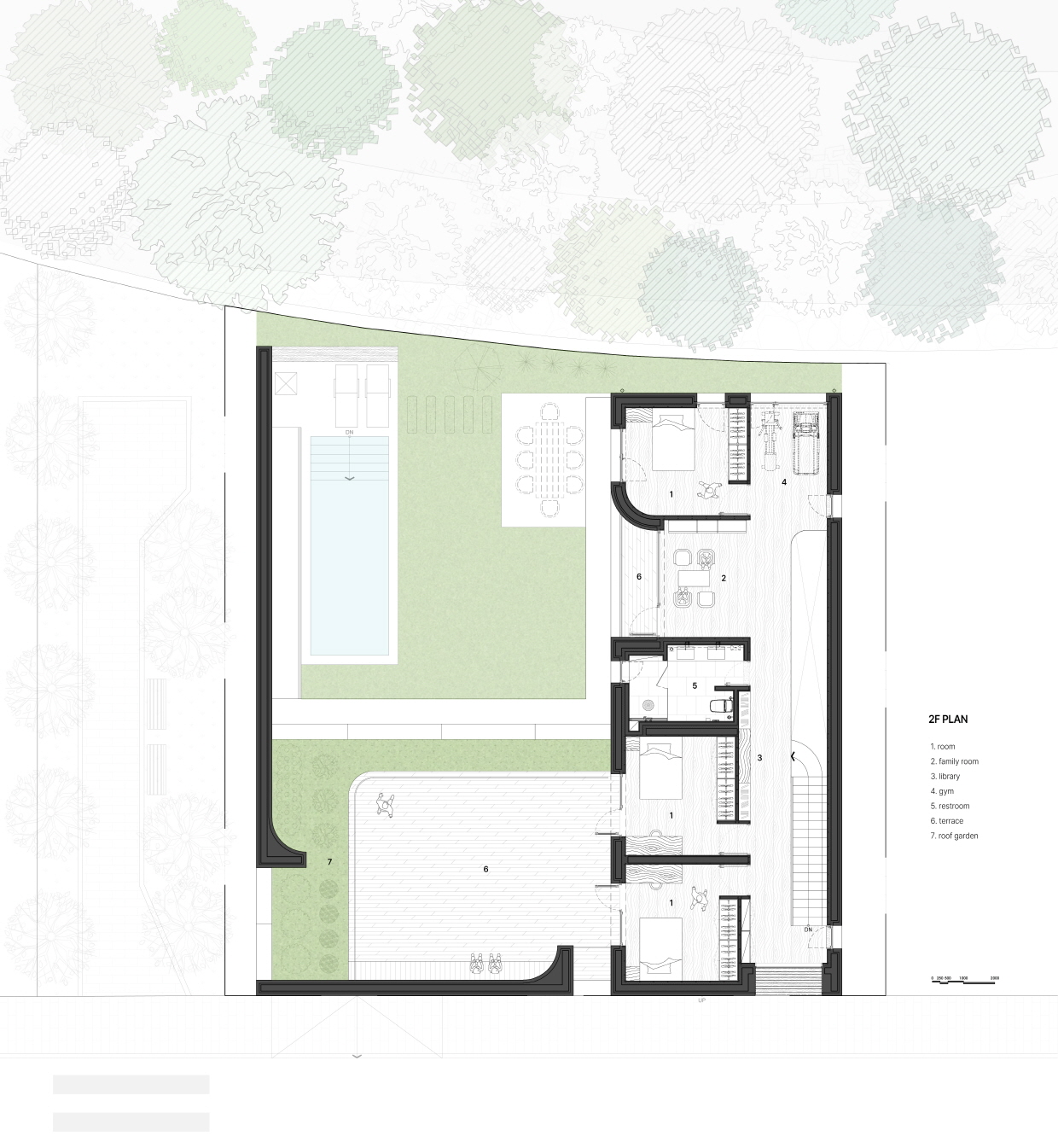
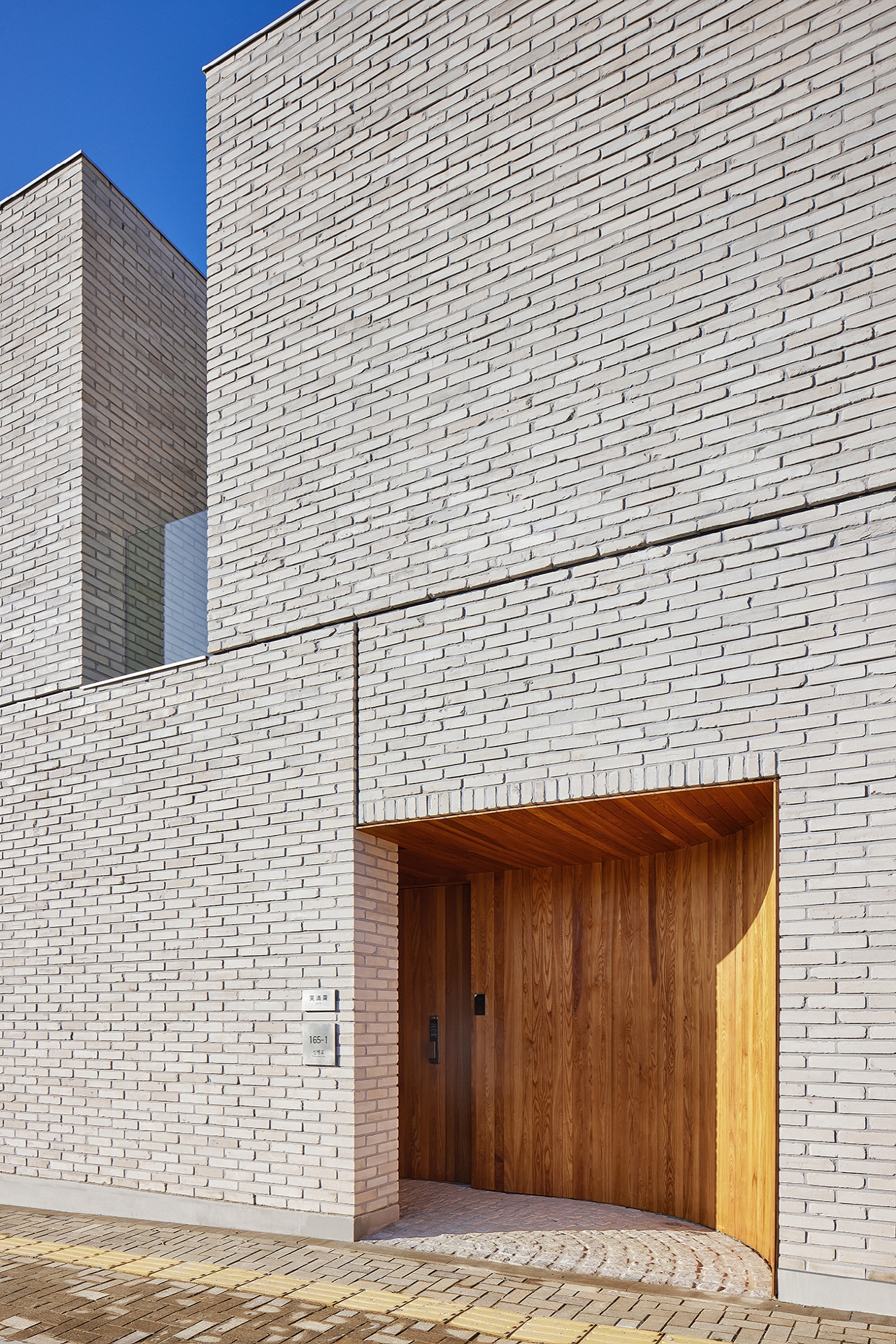
거주자가 생활하는 데 편리하도록 동선과 평면 구성에 공을 들였다. 주차를 마치고 집 안으로 이동하는 중에 비를 맞지 않도록 긴 처마 공간을 안팎으로 두었다. 현관문은 외부에서 한 켜 안쪽, 주차장 처마와 이어진 긴 입구 공간에 배치해 현관문이 도로에 직접 노출되지 않도록 했다. 그렇게 점진적인 공간 변화를 느끼며 현관, 전실을 지나 중문을 열고 실내로 들어서면 1층에서 2층으로 이동할 수 있는 계단이 바로 보인다. 층간 이동을 유기적이고 효율적으로 연결한 부분이다. ㄴ자 형태로 꺾인 1층은 사적인 부부 영역(침실, 욕실)과 주방 및 거실이 연결된 큰 공용 공간으로 구분된다. 현재는 자녀가 어려 1층에서 온 가족이 생활하고 있지만, 아이들이 성장한 후에 사용할 개인 방과 취미방을 2층에 배치했다. 주차장의 경우, 필요에 따라 마당과 연결해서 사용할 수 있게 경계면에 넓은 슬라이딩 간살 도어를 설치했다. 이는 수영장을 이용하거나 마당을 이용할 때 주차 면에 대한 시각적 차단을 가능하게 한다. 삶의 변화와 쓰임을 고려해 설계한 이런 작은 요소들이 삶을 보다 편리하고 윤택하게 만든다고 믿는다. 형태에 대한 욕심을 덜어내고 합리적인 매스와 공간 구성으로 앞으로 살아갈 가족들의 이야기를 담아내고자 노력했다.
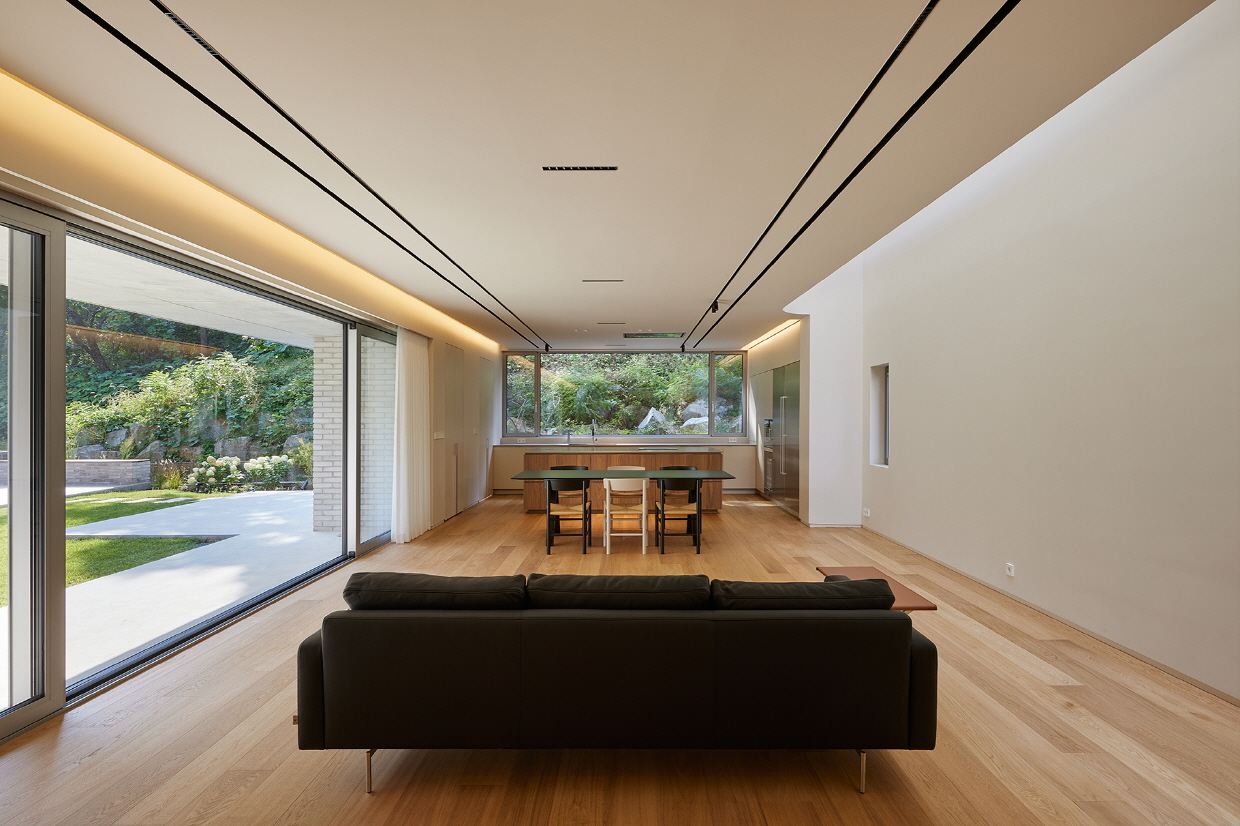
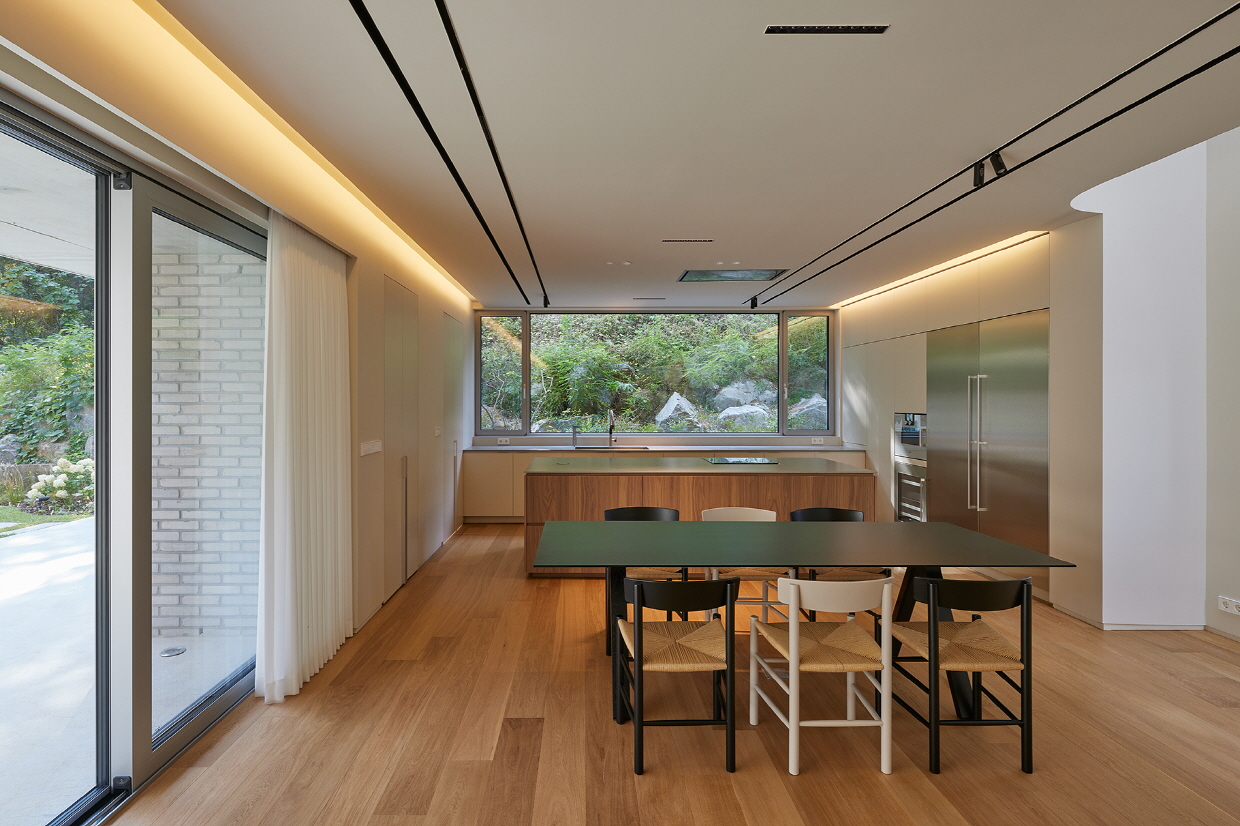
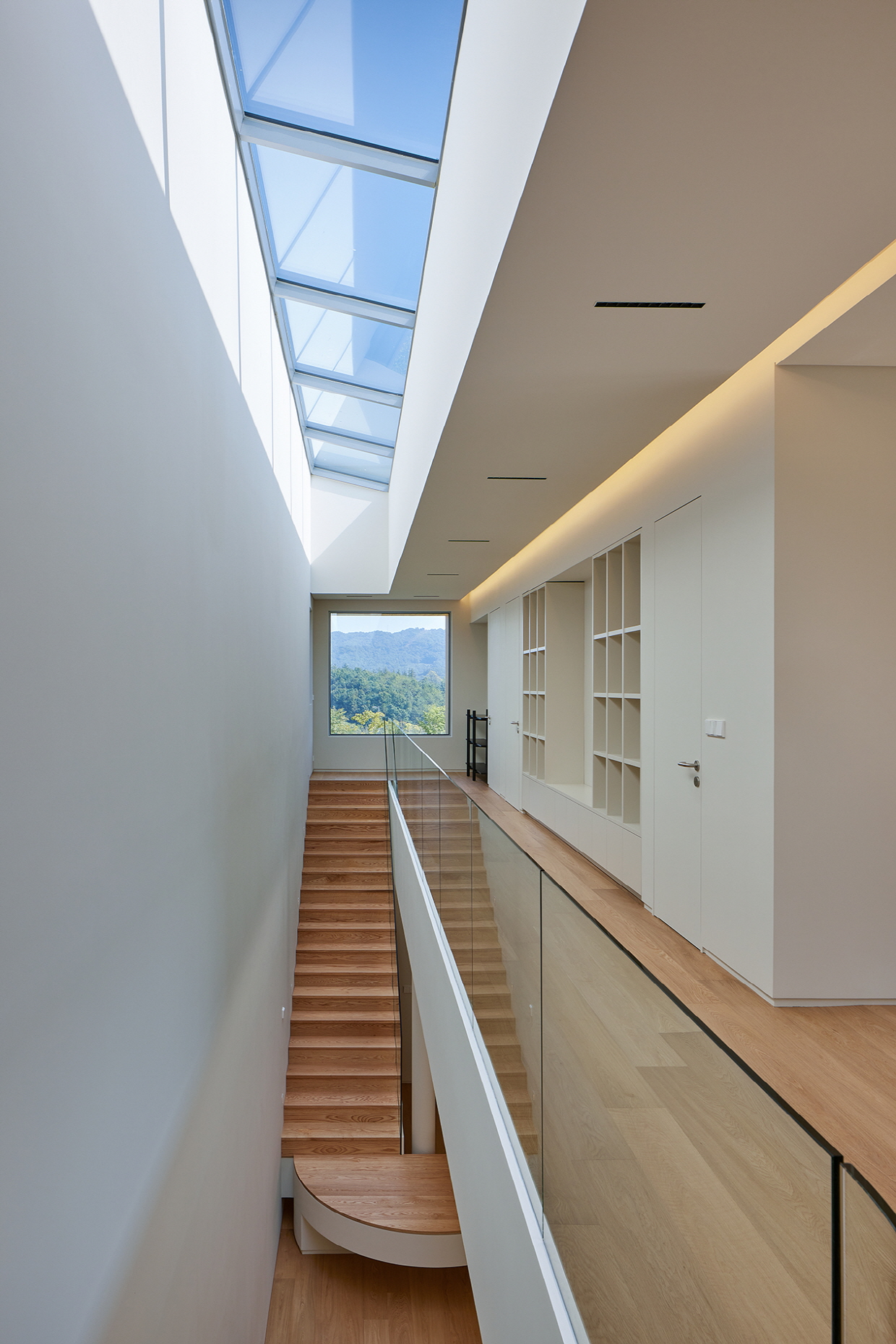
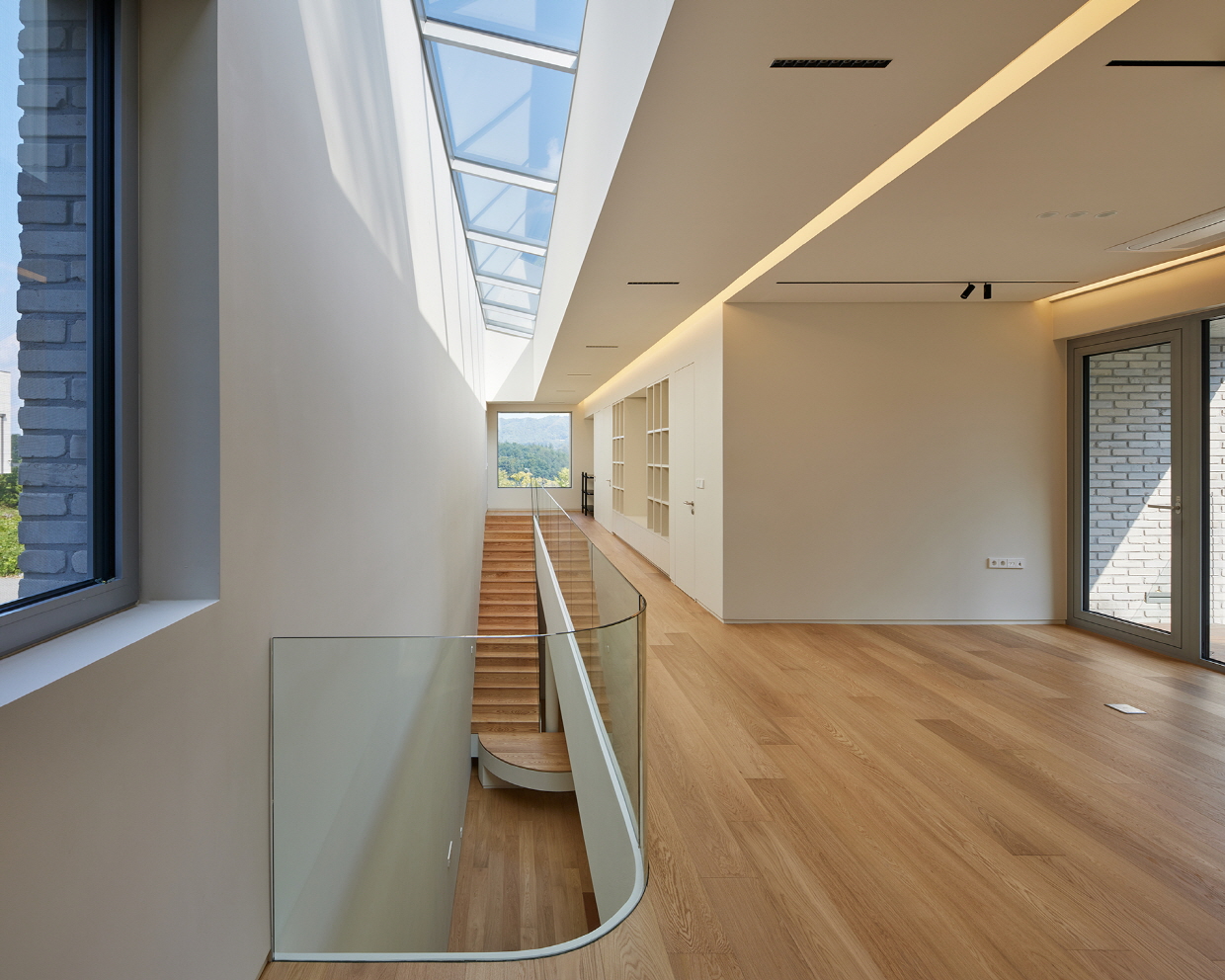
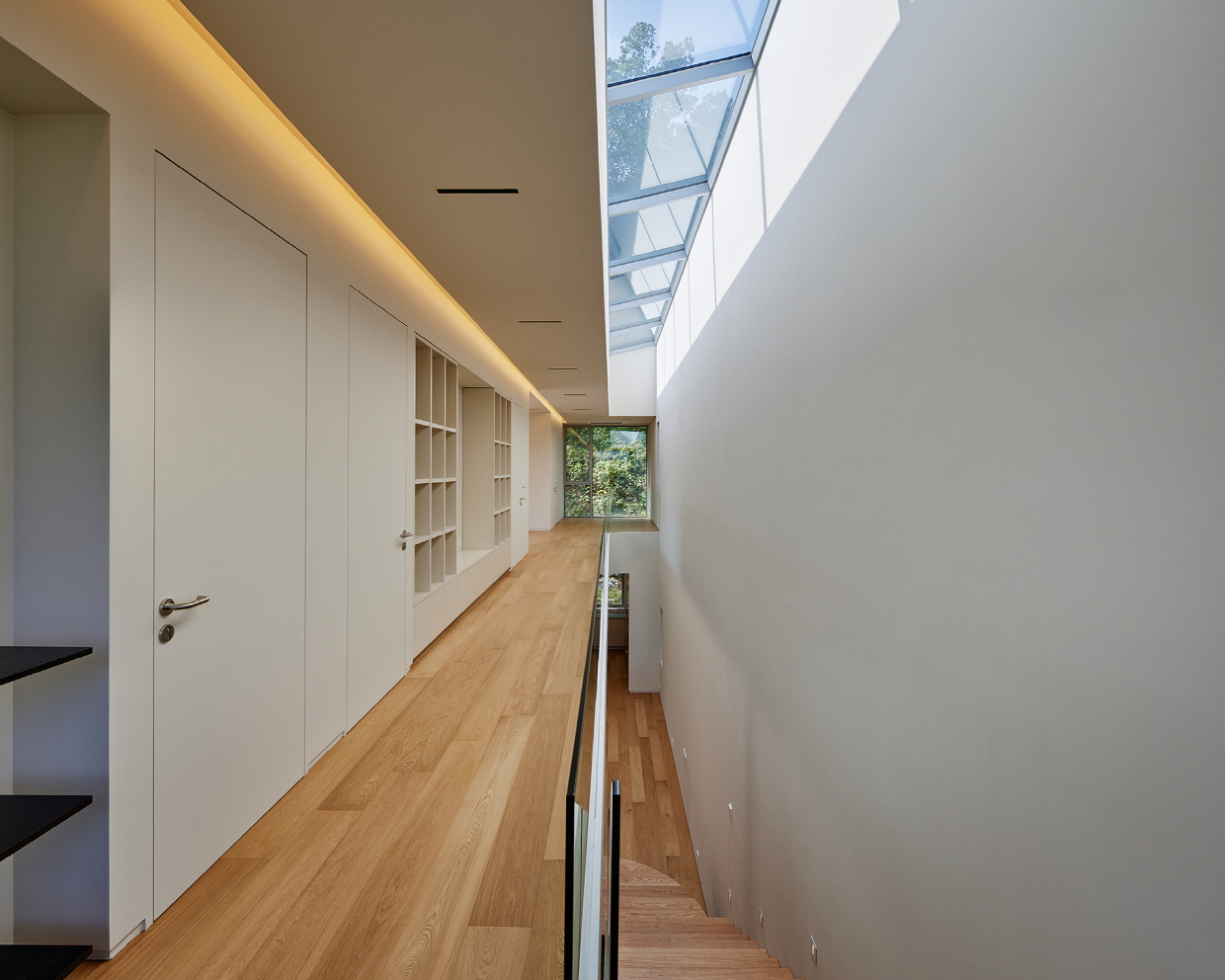
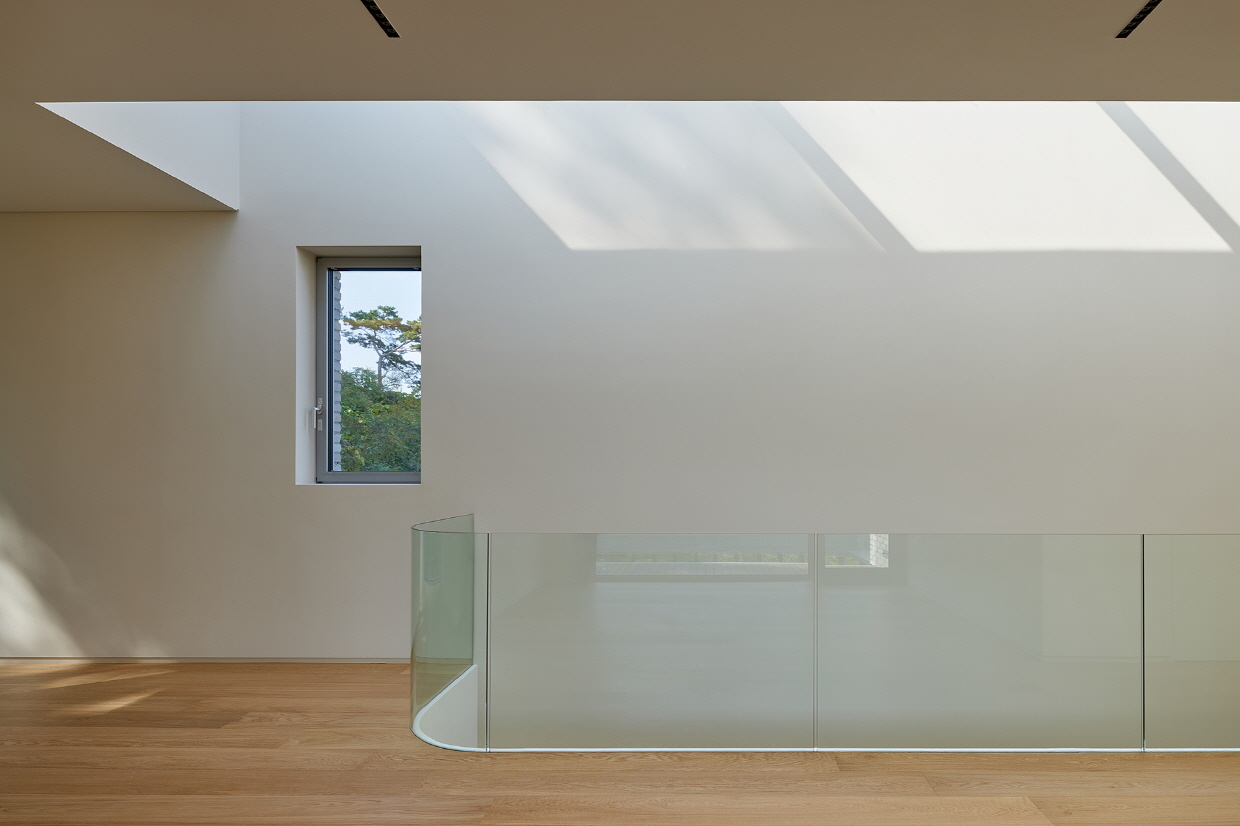
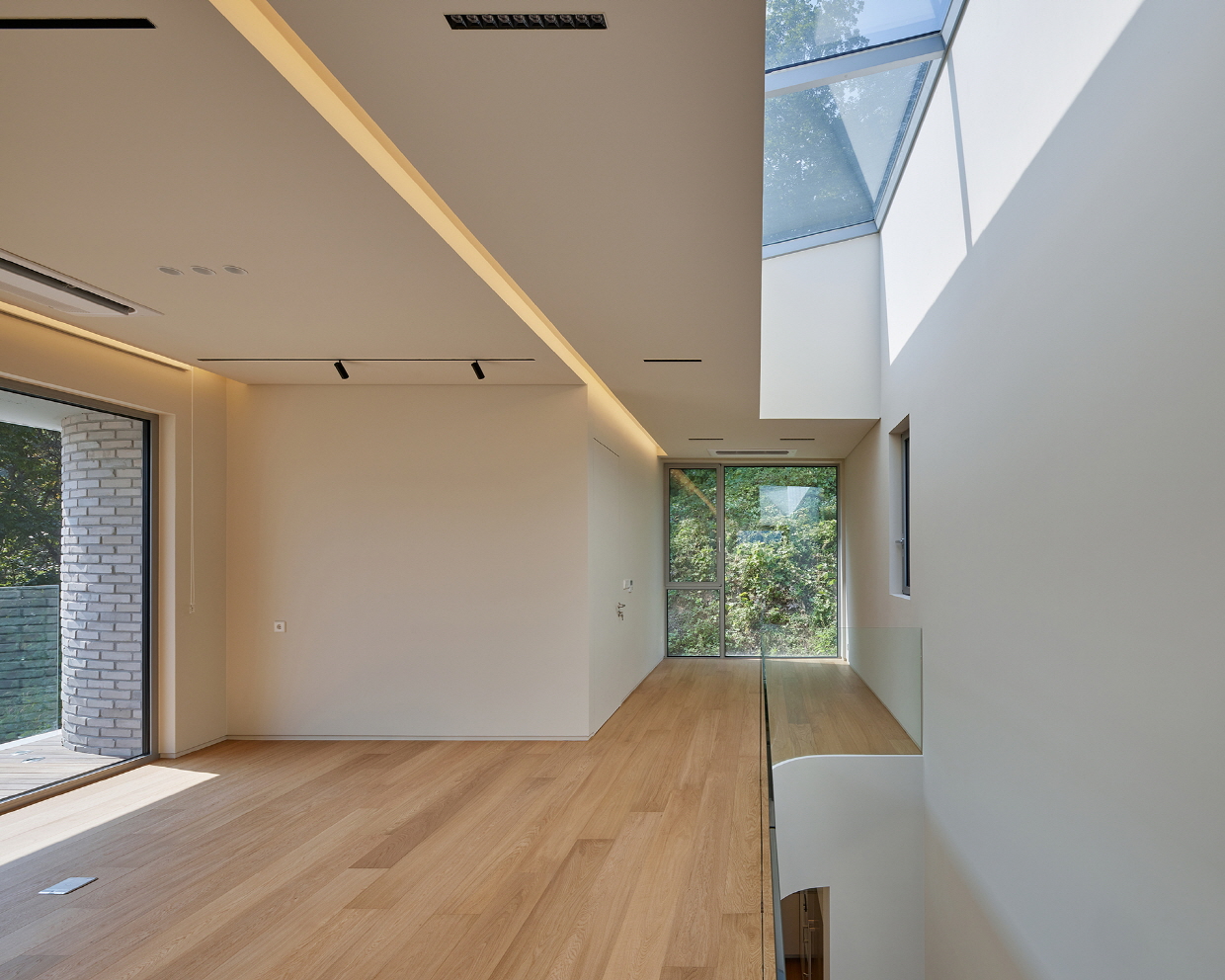
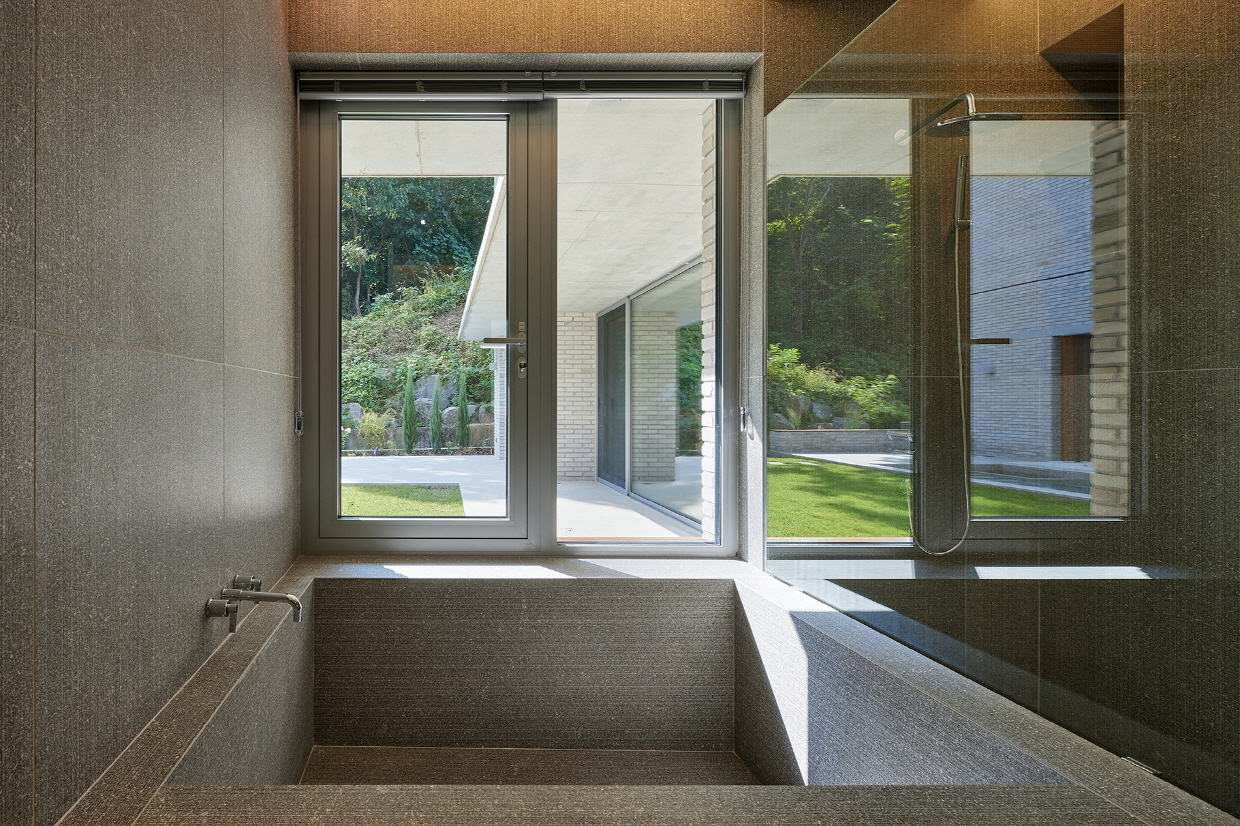
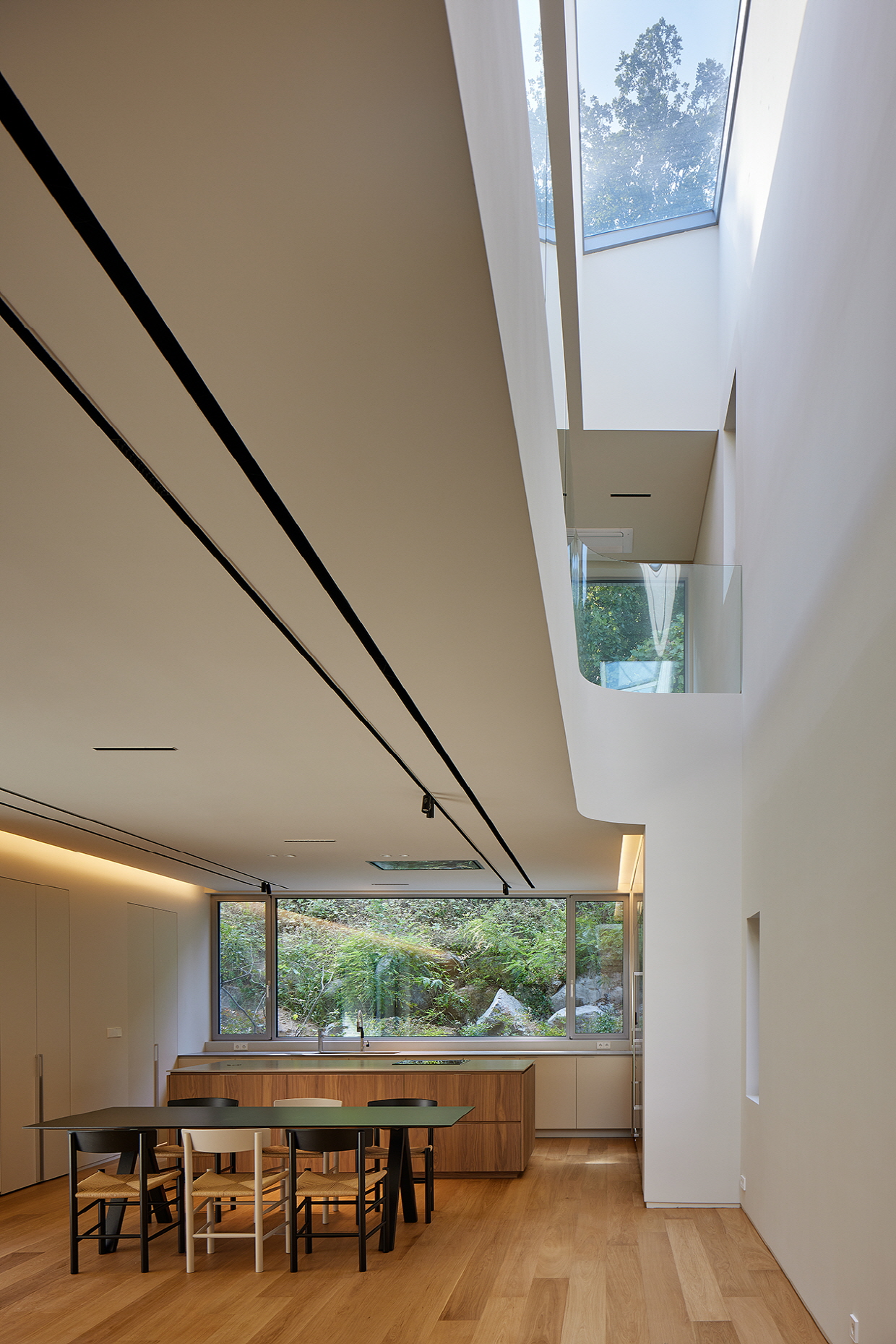
집은 밖에서 바라보는 것 이상으로 거주자가 안에서 밖을 보는 것이 중요하다. 실내의 풍경, 내부 시선의 끝을 따라가면 언제든지 외부와 관계하는 창을 내어 시야를 확장하고 집이 숨 쉴 수 있는 바람길을 만들었다. 15m 긴 천창을 통해 들어오는 빛은 집 안 깊숙이 변화하는 빛과 그림자를 드리우고, 녹음이 무성한 뒷동산을 바라보는 주방 통창은 사계절 내내 실내 분위기를 바꾸는 액자가 된다. 계절과 시간에 따라 변화하는 자연의 변주를 집 안 가득 느낄 수 있도록 의도한 것이다. 고요한 벽 너머 마주한 초록은 자연을 들이고 그 속에 시간과 계절을 담아내며, 아이들이 자라날 일상의 무대가 될 것이다.
A House Designed for Practical Living
Considerable attention was given to circulation and layout to ensure the home functions conveniently for its residents. Long eaves extend both inside and outside to shelter occupants from rain as they move from the parking area into the house. The main entrance is set one layer inward from the exterior, connected to the long entryway beneath the parking eaves, preventing the door from being directly exposed to the street. Moving through the gradual transition of spaces—from entrance to foyer, past the inner door—one arrives inside where the staircase to the second floor is immediately visible, providing an organic and efficient connection between levels. The L-shaped first floor is divided into private areas for the couple (bedroom and bathroom) and a large shared space that connects the kitchen and living room. Currently, the family spends most of their time on the first floor with young children, while the second floor is planned for private rooms and hobby spaces for the children as they grow. For the parking area, a wide sliding door along the boundary allows visual separation when the courtyard or pool is in use, offering flexibility in the space. Small design elements like these, conceived with changes in daily life in mind, enhance convenience and enrich the quality of living. The design intentionally prioritizes rational massing and spatial organization over excessive formal expression, allowing the house to accommodate the unfolding story of the family.
Equally important is the view from inside looking out. Windows were placed to expand sightlines and create natural ventilation paths, enabling the house to “breathe.” Light streaming through a 15-meter skylight casts shifting patterns deep within the home, while the full-height kitchen window frames the verdant hillside outside, transforming with the seasons like a living picture frame. The house is designed to immerse its inhabitants in the rhythms of nature, bringing in greenery beyond the quiet walls, capturing the flow of time and seasons, and providing a stage for the children’s everyday life as they grow.
조율된 구축 / 절제의 미감에 대하여
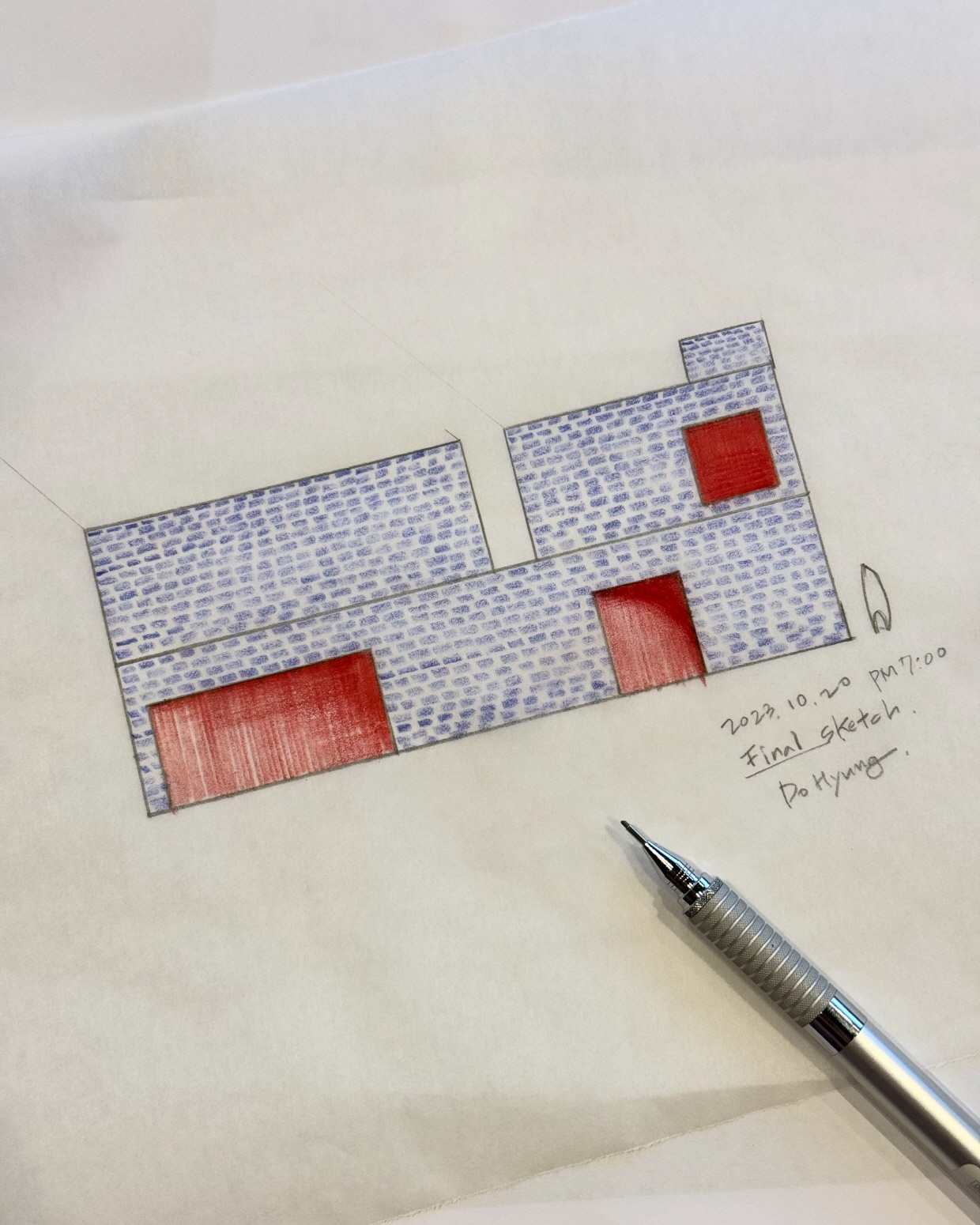
우리는 주변과 조화를 이루며 도시 구조와 함께 어우러지는 담백한 입면을 고민했다. 과하지 않은 스케일로 단단한 벽돌 텍스처 속 깊이와 비례를 고려한 개구부는 벽돌을 떠받치는 콘크리트 인방과 얇은 금속 매지의 섬세한 분할을 통해 큰 입면적을 조각하듯 나눈다. 이는 물성 간의 충돌(간섭)이 아닌, 서로가 엮이고 조율되는 방식으로 작동한다. 개구부와 인방, 후레싱, 매지 등 각 부분들은 치밀하게 계산되어 설계되었고, 긴 호흡의 산물인 건축은 이를 구현하기 위해 현장과의 치열한 대화와 협의를 필수로 요구했다. 우리는 재료와 공간, 맥락과 감각 사이의 미세한 균형을 탐색하고, 그 안에서 작동될 질서와 정서를 절제된 방식으로 구현하고자 하였다.
Harmonized Construction / The Aesthetic of Restraint
We sought a restrained façade that harmonizes with its surroundings and integrates seamlessly with the urban structure. Openings carefully proportioned within the solid brick texture, at a modest scale, are divided across the large façade through concrete lintels supporting the bricks and finely detailed thin metal joints, effectively “sculpting” the surface. This approach does not create clashes between materials but rather allows them to interweave and operate in coordination. Each element—openings, lintels, flashings, joints—was meticulously calculated and designed, and realizing this architectural vision demanded intensive dialogue and collaboration with the construction site over an extended period. We explored the delicate balance between materials, space, context, and sensory experience, aiming to implement the order and emotion inherent in the design in a manner defined by restraint.

고요한 벽 너머의 초록
집은 행복하기 위해 일방적인 소통이 강요되기보다, 때론 바깥 세상과 정을 나누고 때론 안을 바라볼 수 있는 건축적 장치가 좋겠다. 하루의 리듬에 따라 변하는 하늘과 숲의 이야기는 아이들과 함께 자랄 것이다. 조금은 삭막한, 아니 삭막할지도 모를 지구단위계획구역 속에서도 자연은 더 이상 외부에 존재하는 경치가 아니라, 집 안에 스며든 내재된 일상의 배경이 되기를.
The Green Beyond the Quiet Wall
A home, to be truly joyful, should not demand one-sided communication; rather, it benefits from architectural devices that sometimes connect with the outside world and sometimes allow a gaze inward. The changing sky and the stories of the forest throughout the day will grow alongside the children. Even within the somewhat austere—or perhaps austere—context of the district plan, nature no longer exists merely as an external view; it becomes an inherent part of daily life, seamlessly woven into the home’s interior.