프롤로그
건축주는 남양주 수동면 밤나무동산 전원마을에서 오랫동안 거주해 온 주민이다. 익숙한 단독주택 생활의 리듬을 이어 가되, 이전보다 더 나은 일상을 담아낼 터를 찾아 우리를 만났다. 그곳은 살던 집의 건너편, 가파른 경사에 위치한 임야였다. 비록 접근이 쉽지 않았지만, 울창한 숲 너머로 펼쳐지는 전망은 이 땅이 가진 가능성을 직감하게 하였다. 새로운 집에 대한 바람은 분명하고 세심했다. 기존 주택에서 느꼈던 불편은 줄이고, 장점은 이어 가길 원했다. 데크보다는 관리가 쉬운 단단한 마당, 최소한의 잔디, 각자의 생활이 존중 받을 수 있는 삼남매의 독립된 공간, 거동이 불편한 남편을 위한 엘리베이터, 그리고 무엇보다 음악을 사랑하는 부부는 방해 받지 않는 공간에서 음악 감상을 원했다.
이처럼 구체적인 삶의 방식에서 비롯된 요구들은 곧 이 집의 방향이 되었고, 우리는 그 안에서 또 다른 건축적 가능성을 찾고자 했다.
Project – 深 阿 齊 Simajae
Location – Sudong-myeon, Namyangju-si, Gyeonggi-do
Programme – Single-family house
Site area – 998㎡
Building area – 174.36㎡
Gross floor area – 559.63㎡
Building scope – B1F ~ 2F
Height – 8.79m
Parking – 4
Structure – RC
Duration: 2021.05 – 2022.11
Architect – 아키도형건축사사무소 acdo architects
Photo – 노경
Prologue
The clients are long-time residents of a rural neighborhood called Bamnamu Hill in Sudong-myeon, Namyangju. They approached us seeking a place that could continue the familiar rhythm of their single-family home life while offering an improved everyday experience. The site was a forested hillside located across from their previous house. Although access was challenging, the view stretching beyond the dense trees immediately revealed the potential of the land. Their wishes for the new home were clear and precise. They wanted to reduce the inconveniences experienced in their previous house while preserving its strengths: a solid, low-maintenance yard instead of a deck, minimal lawn, independent spaces for their three children to respect each of their routines, an elevator for the husband with limited mobility, and, above all, a space where the music-loving couple could enjoy listening to music without disturbance.
These specific, lifestyle-driven requirements became the guiding direction for the house, and within them, we sought to discover new architectural possibilities.

대지현황
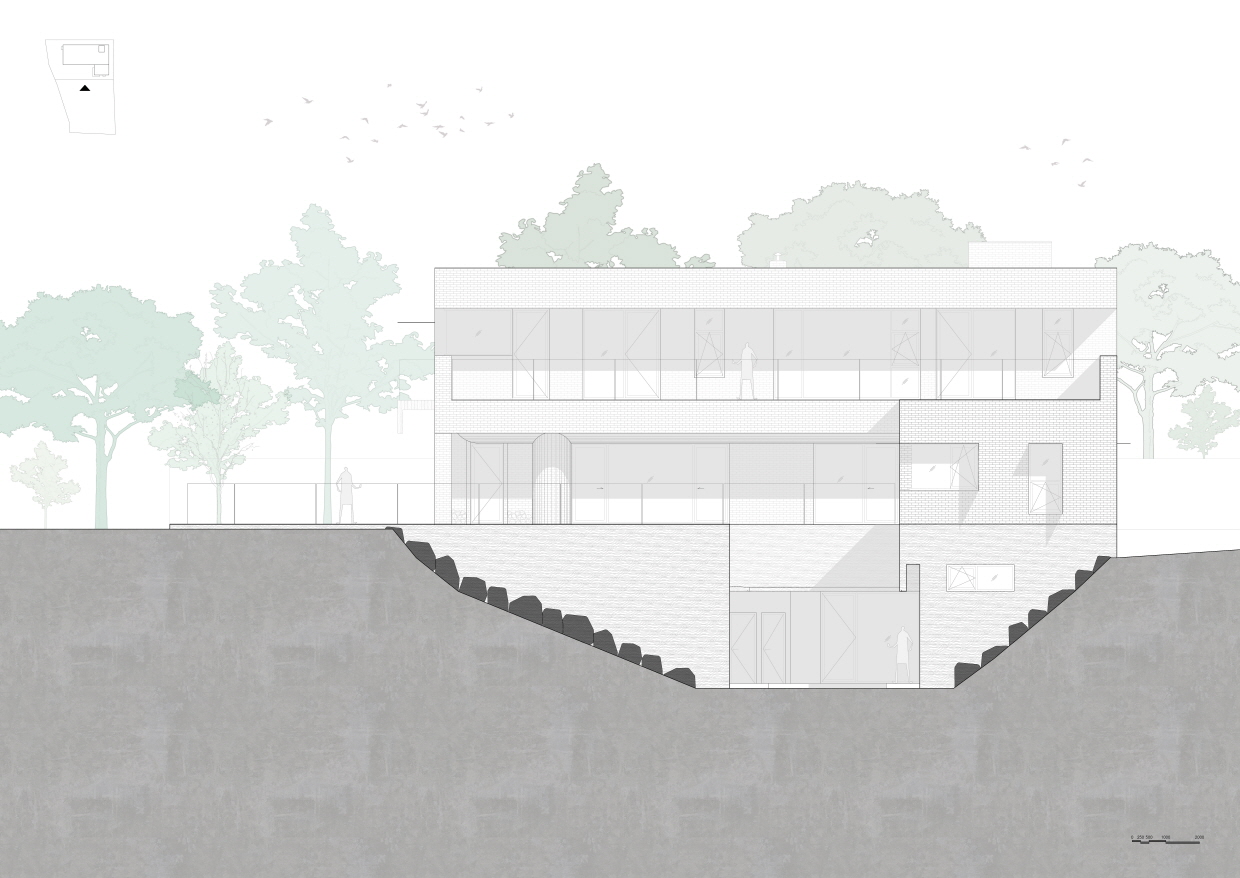
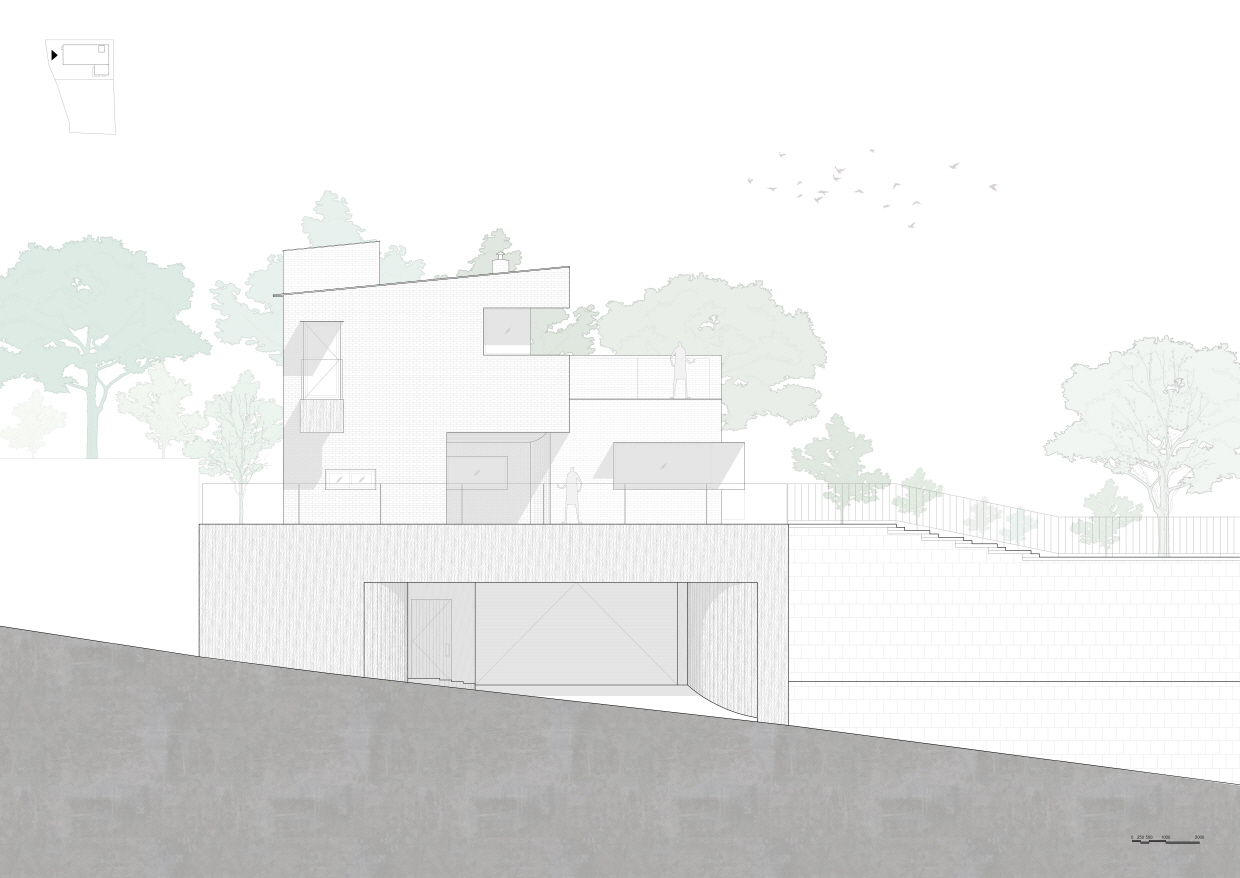
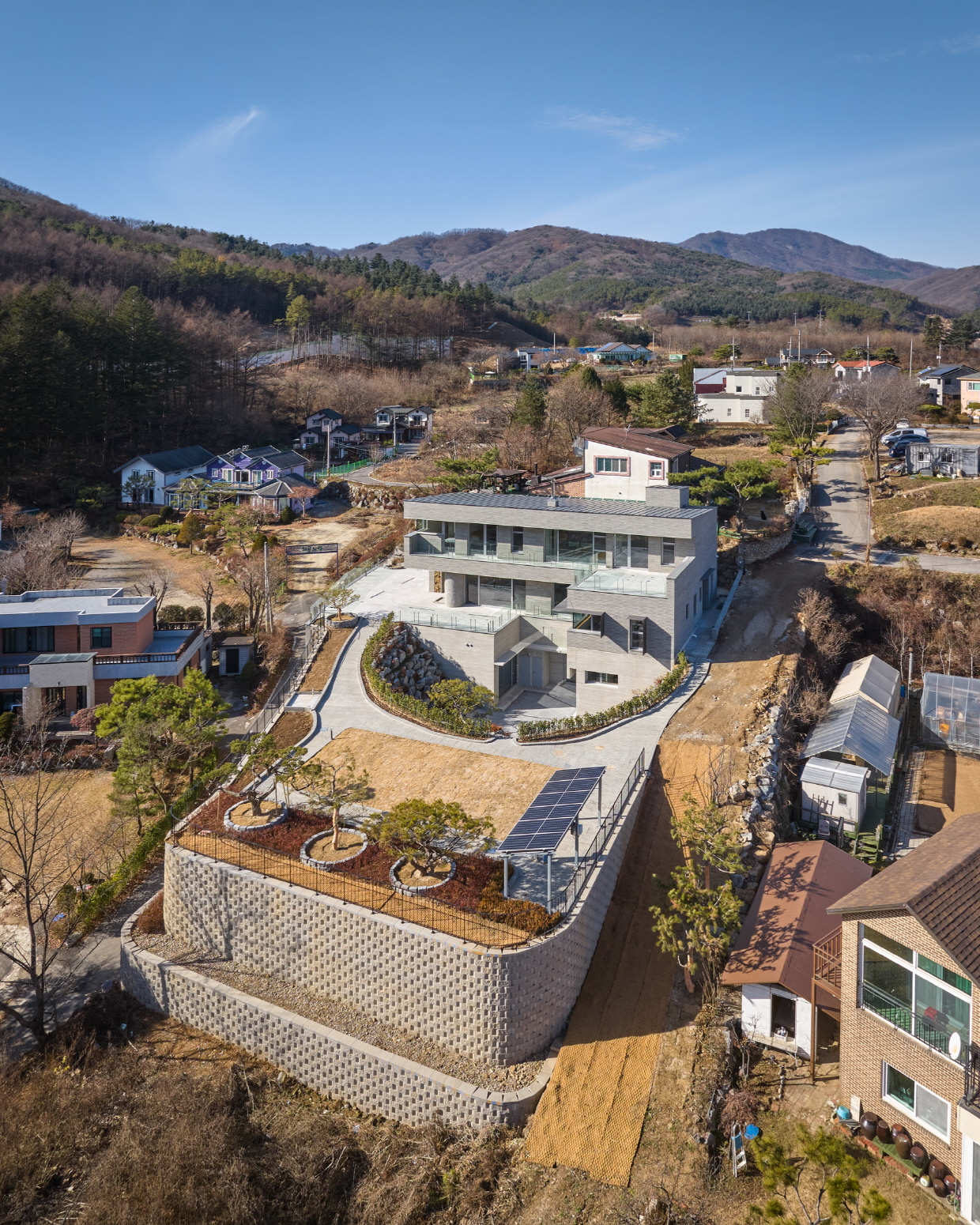
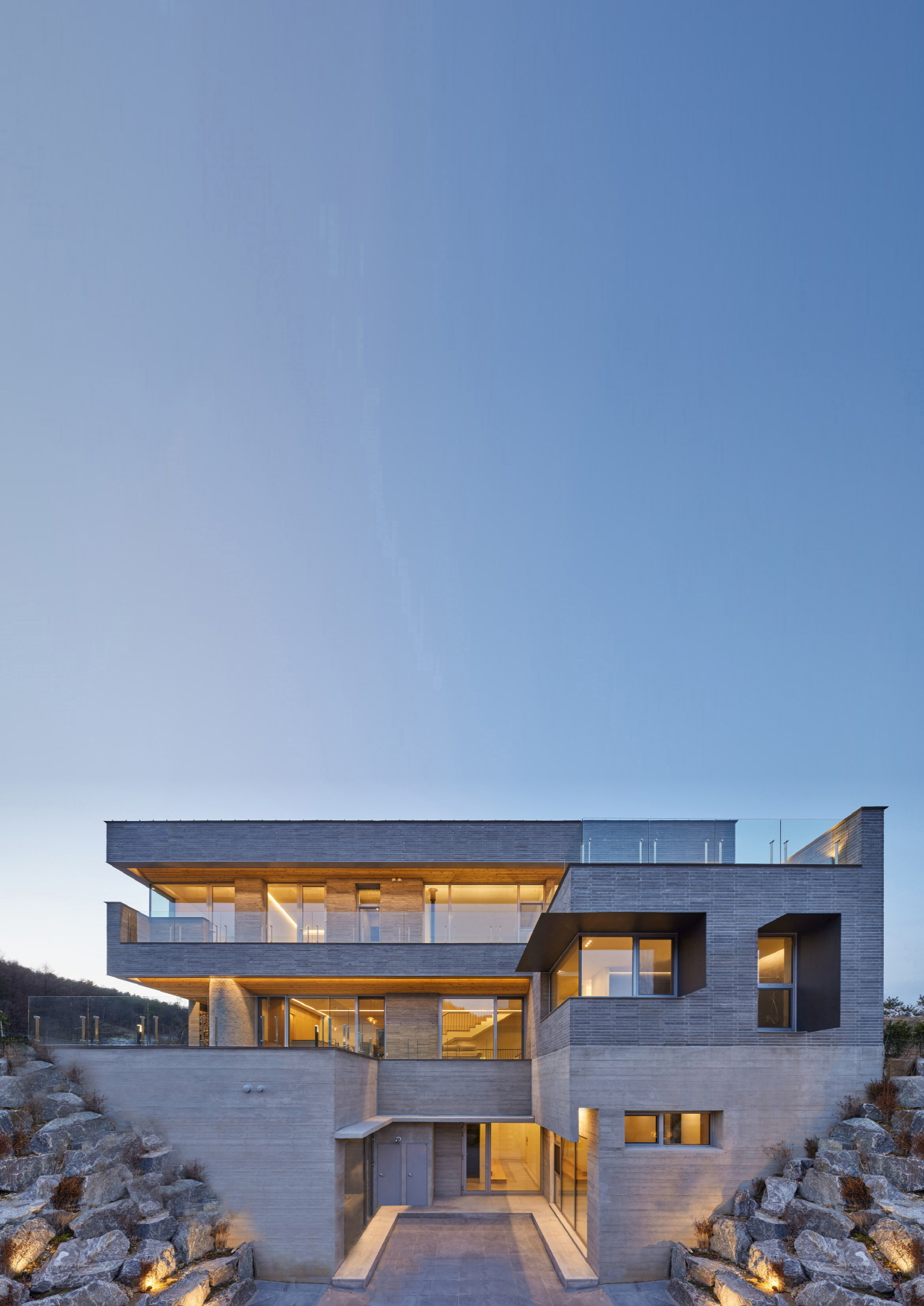
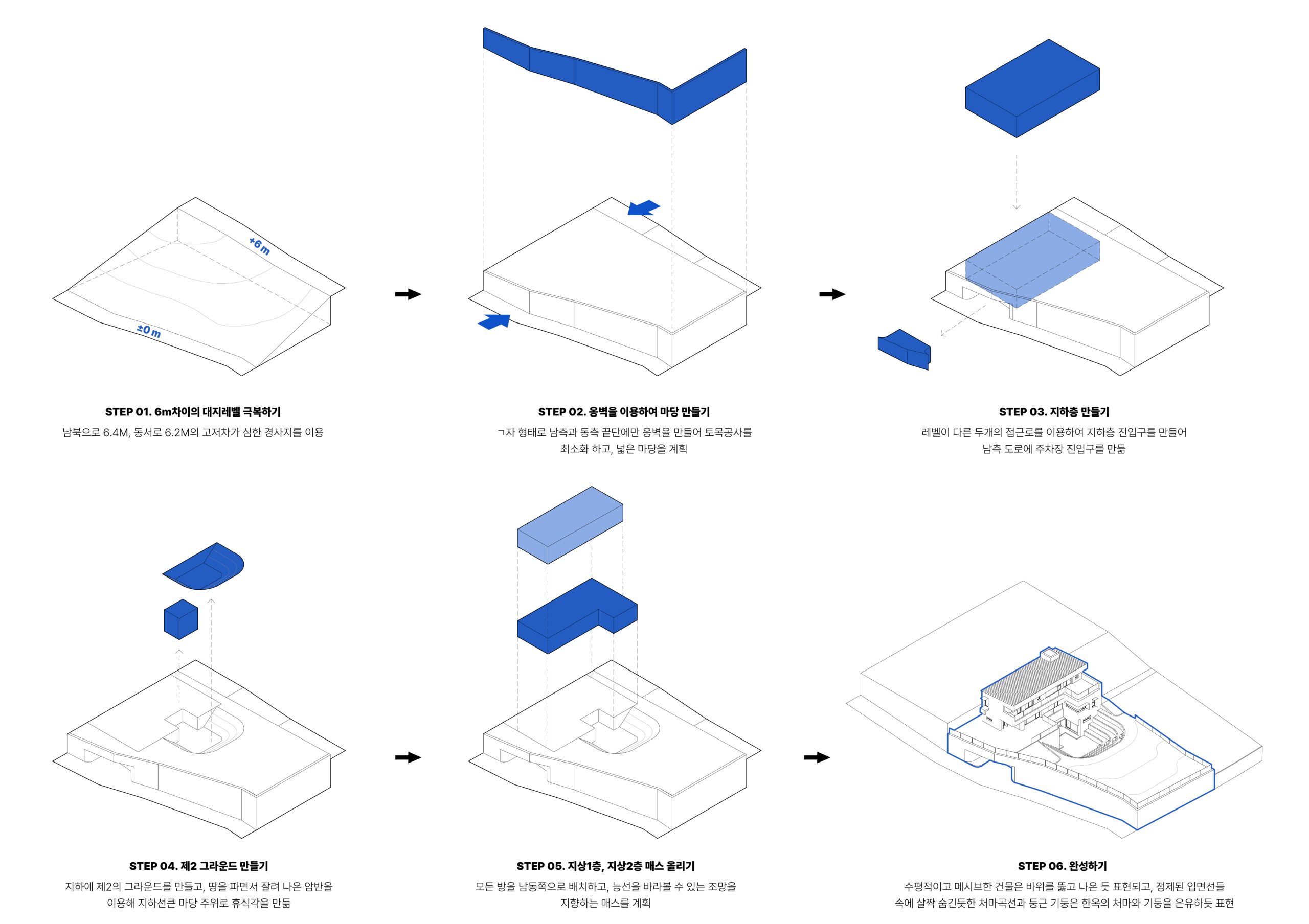
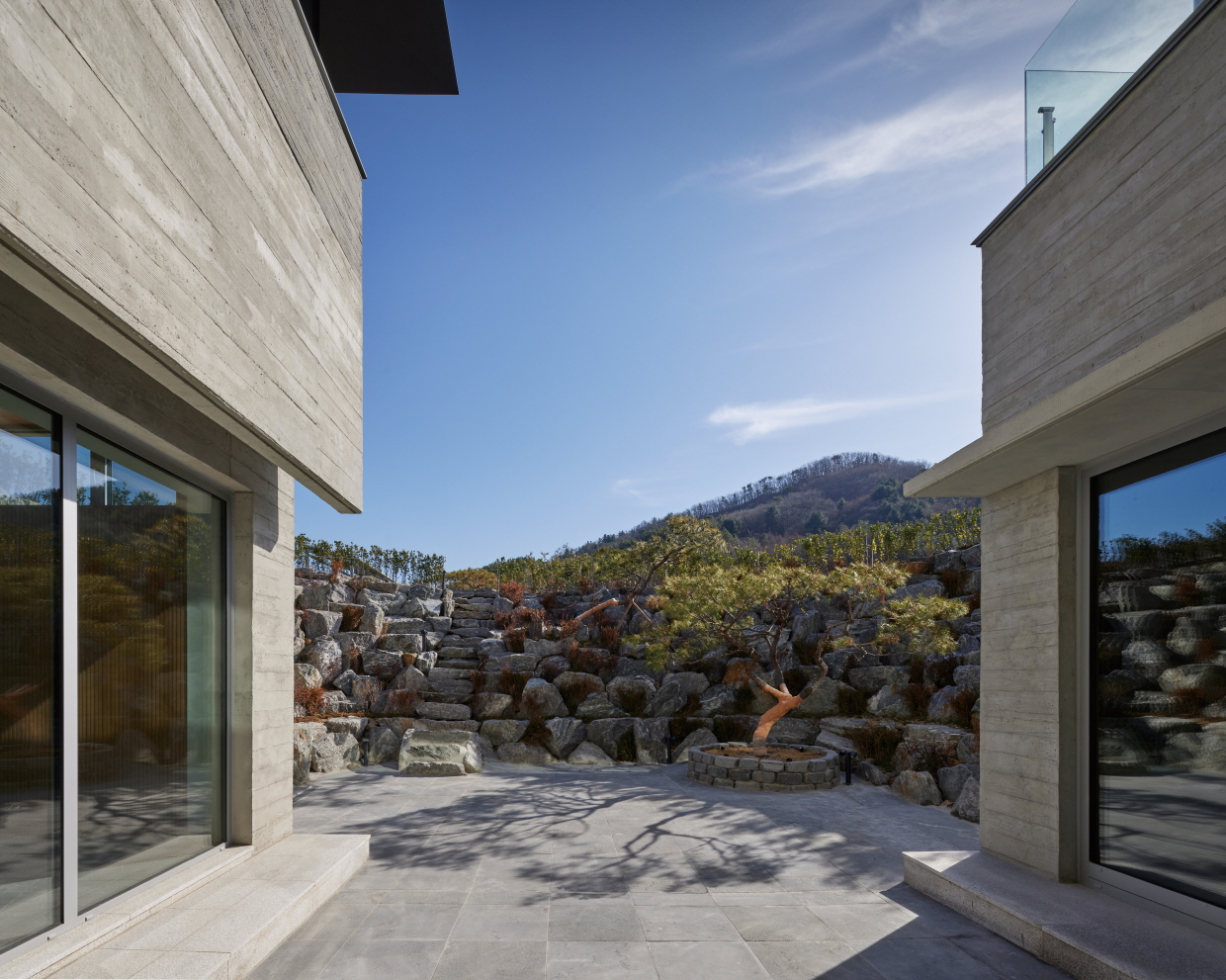
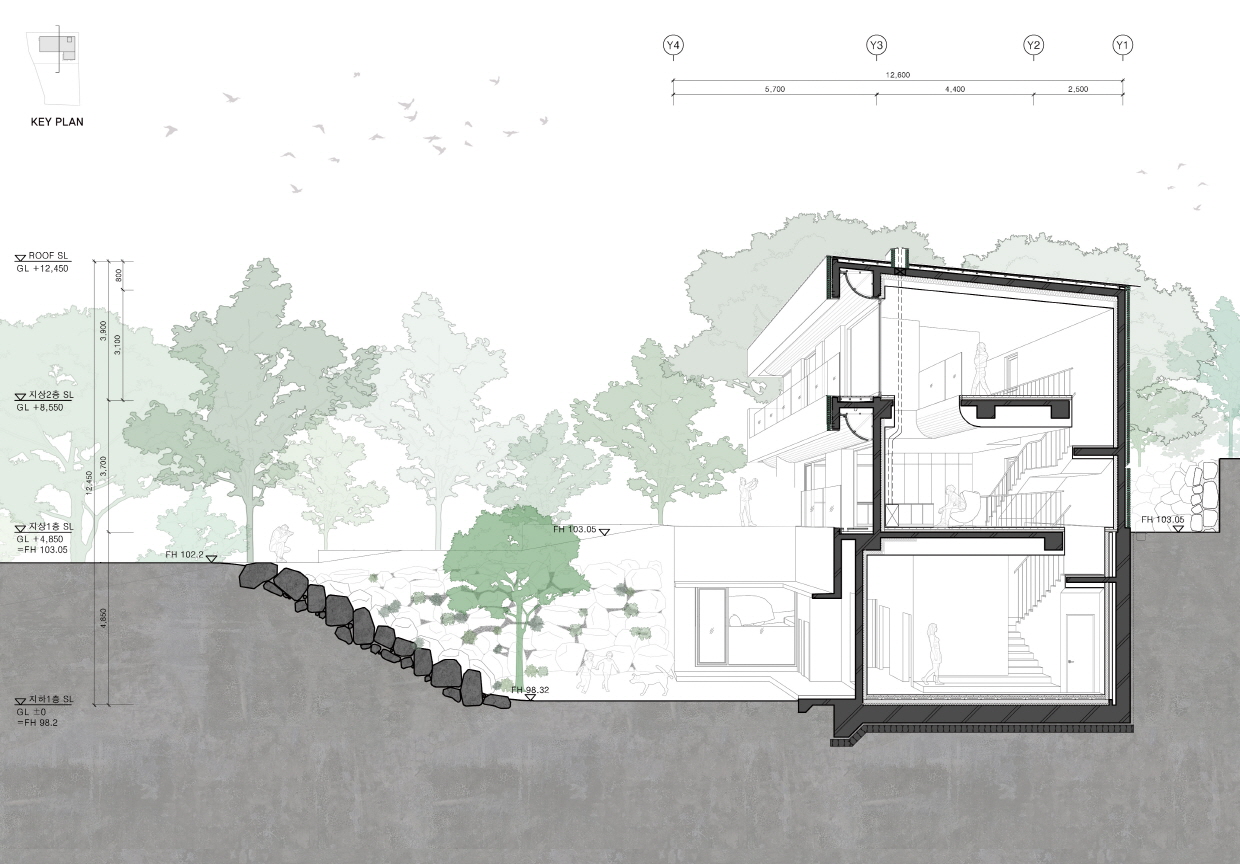
대지는 전망 좋은 언덕의 비탈면에 자리하고 있다. 300평이 넘는 넉넉한 대지는 남북으로 6.4m, 동서로 6.2m의 큰 고저차를 지닌 경사지로, 서로 다른 레벨의 두 도로에 접하고 있다. 이로 인해 대지의 남·북은 직접 이어질 수 없고, 마을길을 크게 돌아 접근해야 하는 불편한 조건을 지니고 있었다. 우리는 이러한 고저차를 제약이 아닌 설계의 출발점으로 삼아 낮은도로에는 지하 주차장과 주출입구를, 높은 도로에는 1층 부출입구를 계획하여 대지가 가진 고저차를 동선과 프로그램에 적극적으로 반영하였다. 두 레벨은 실내계단과 엘리베이터를 통해 내부에서 극복되고 레벨이 중첩되는 그중심에는 외부의 시선에서 완전히 자유로운 제2의 그라운드(바위로 둘러싸인 선큰마당)를 계획하였다.
Site Conditions
The site is situated on the slope of a hill with excellent views. Spanning over 300 pyeong (approximately 990 m²), it features a steep incline with a height difference of 6.4 meters north to south and 6.2 meters east to west, connecting to two roads at different levels. As a result, the north and south ends of the site cannot be directly linked, requiring a significant detour along the village road to access the property. We treated this steep terrain not as a limitation but as a starting point for design. The lower road accommodates the underground parking and main entrance, while the higher road provides a secondary entrance on the first floor, integrating the site’s elevation into both circulation and program. The difference in levels is overcome internally via a staircase and elevator, and at the point where the levels overlap, we created a second “ground” entirely free from external views—a sunken courtyard enclosed by natural rocks.
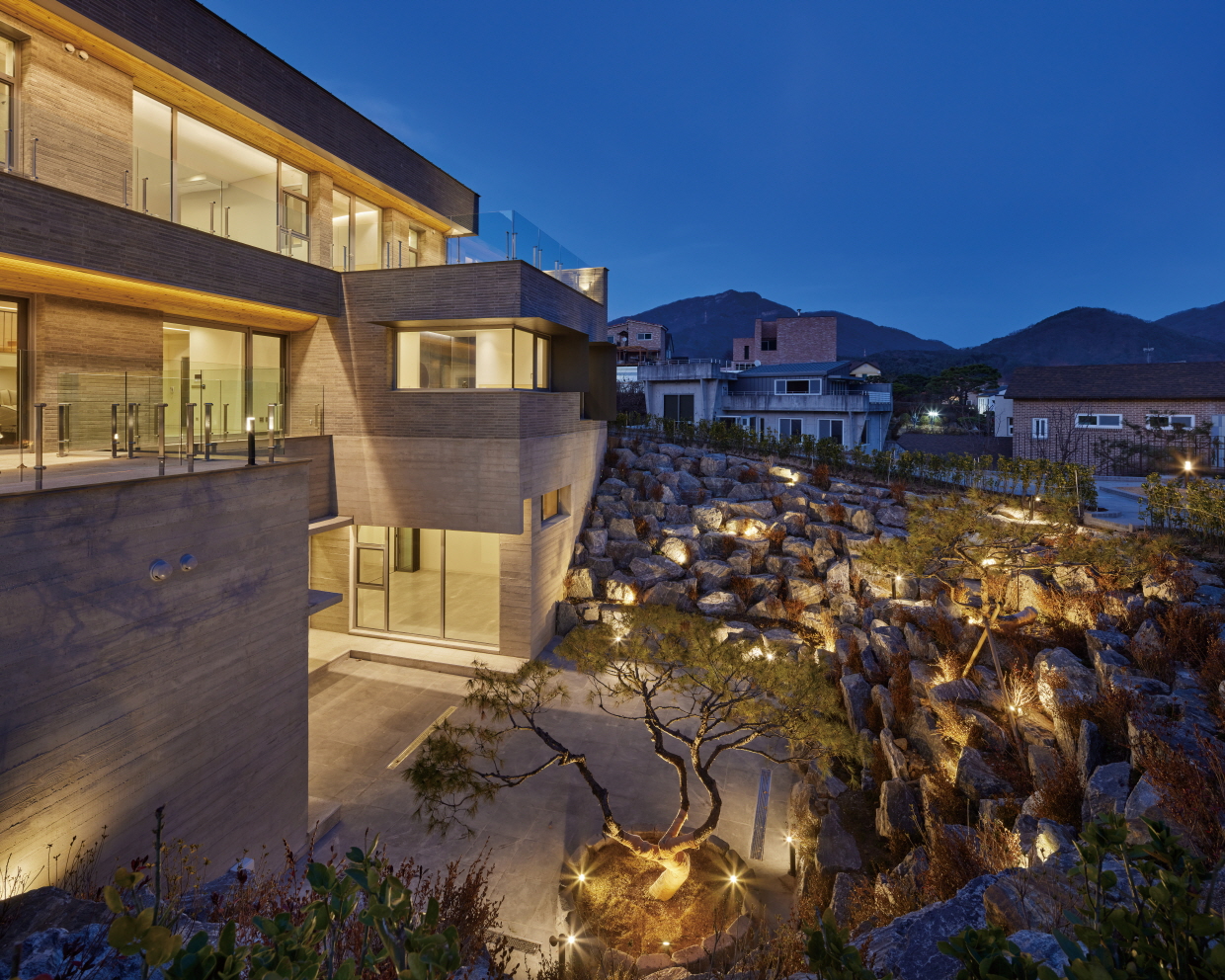
경사지에 마당을 조성하기 위해 남측과 동측 끝단에만 ㄱ자 형태로 옹벽을 두어 성절토를 최소화하였다. 지형 특성상 지하층의 형성이 불가피했지만, 우리는 이를 단순한 지하 공간이 아닌 외기에 최대한 면한 지상층처럼 만들길 바랐다. 법적 기준에 따라 가중 평균한 값이 “지하층이 가능한 지표면의 1/2 이상이 묻힌” 최대치로 설정되었고, 그 결과 외부와의 접면을 극대화할 수 있었다. 이때 터파기 중 잘려 나온 암반 조각들을 모아 선큰 마당 주위로 휴식각을 두고 넓게 둘렀다. 바위로 감싼 형태의 지하 마당은 오직 이곳에서만 느낄 수 있는 위요감과 높은 하늘, 멀리 보이는 산등선까지. 이 모든 것이 새로운 공감각으로 읽히고, 하늘로만 열려 있어 개방적이면서 동시에 완벽한 프라이버시를 제공해준다.
To create a courtyard on the sloped site, retaining walls in an L-shape were placed only at the southern and eastern edges, minimizing earthwork. While the formation of a basement was inevitable due to the terrain, we aimed to make it feel like a ground floor exposed as much as possible to the outdoors rather than a typical underground space. According to legal standards, the maximum allowable value was set based on the weighted average, meaning “more than half of the basement could be buried below the surface,” which allowed us to maximize contact with the exterior. During excavation, rock fragments that were cut out were gathered and arranged around the sunken courtyard as seating and resting areas. The rock-enclosed basement courtyard offers a sense of refuge unique to this space, with views of the high sky and distant mountain ridges. Fully open to the sky, it provides an expansive sense of openness while maintaining complete privacy.
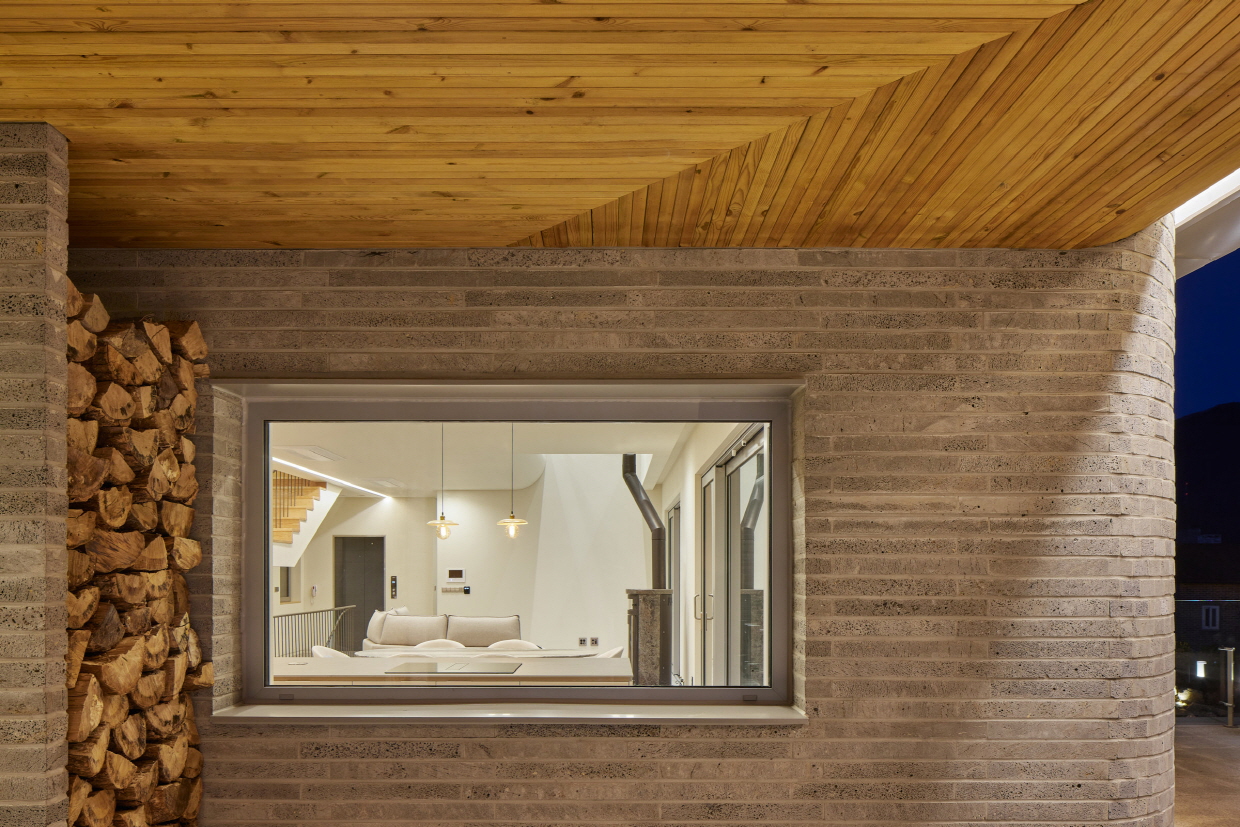
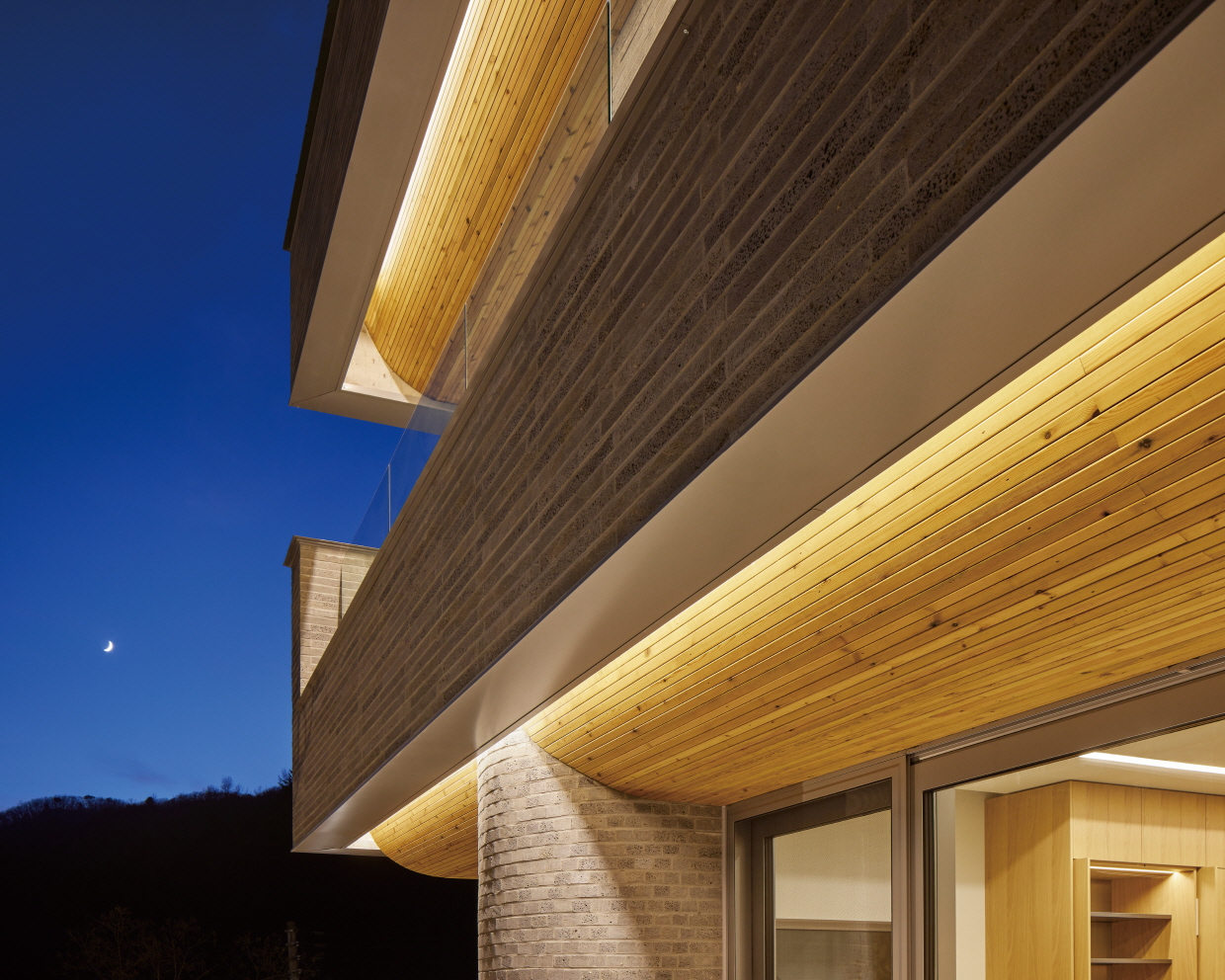
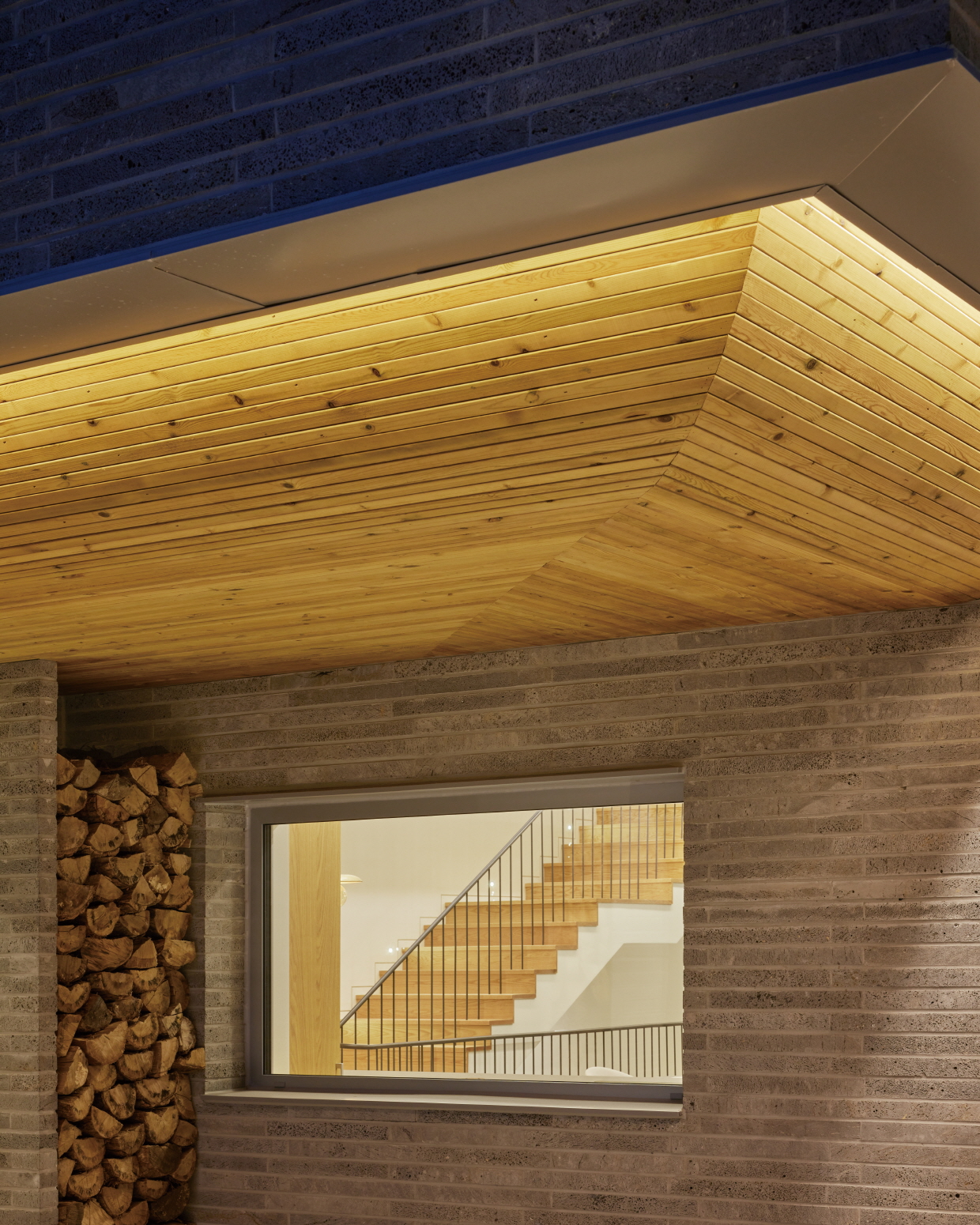
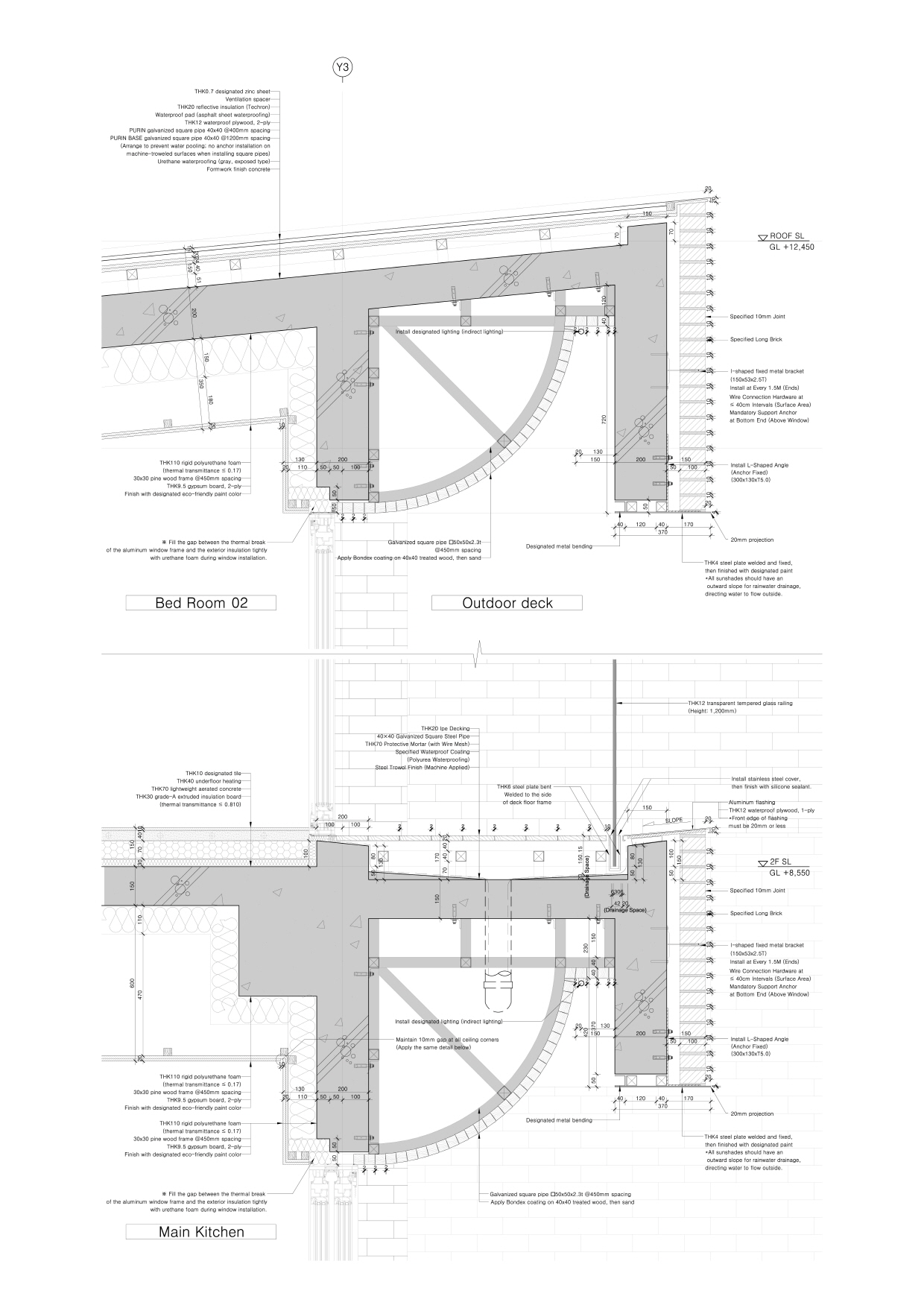
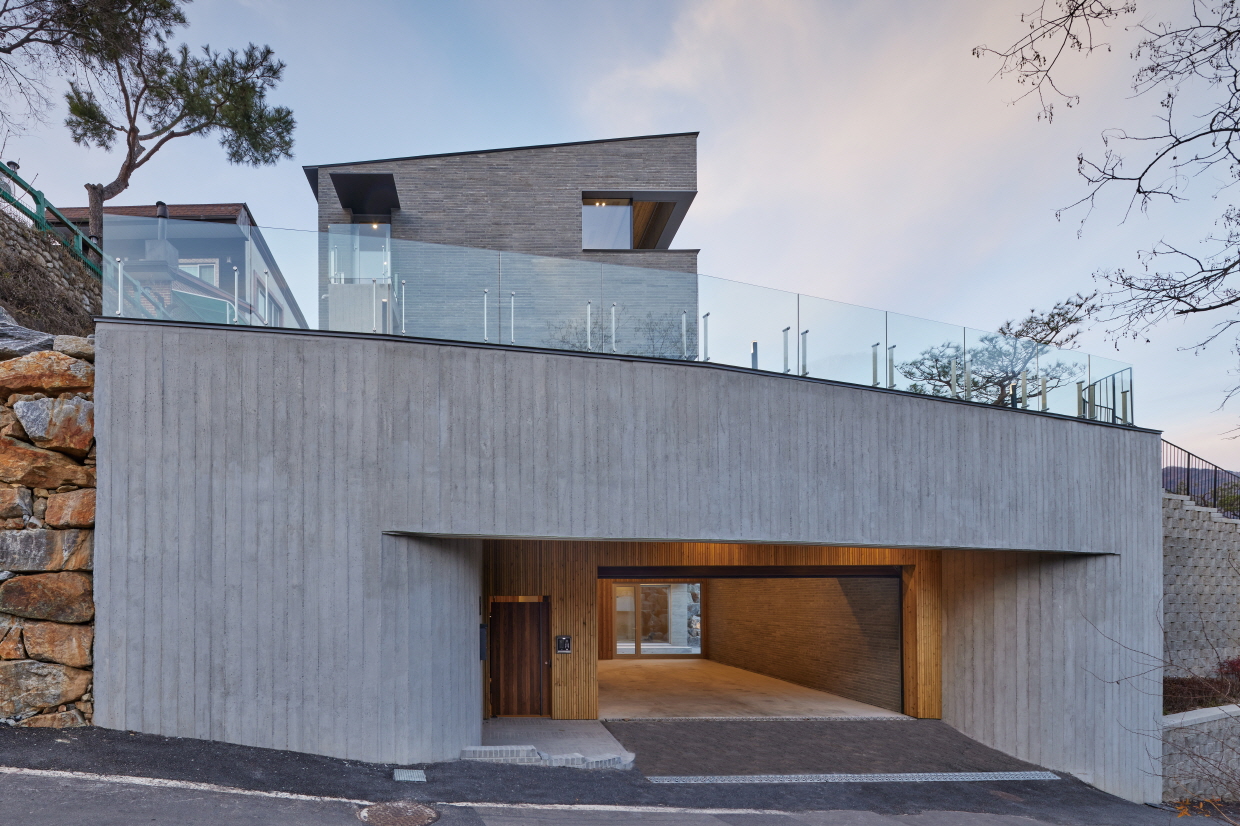
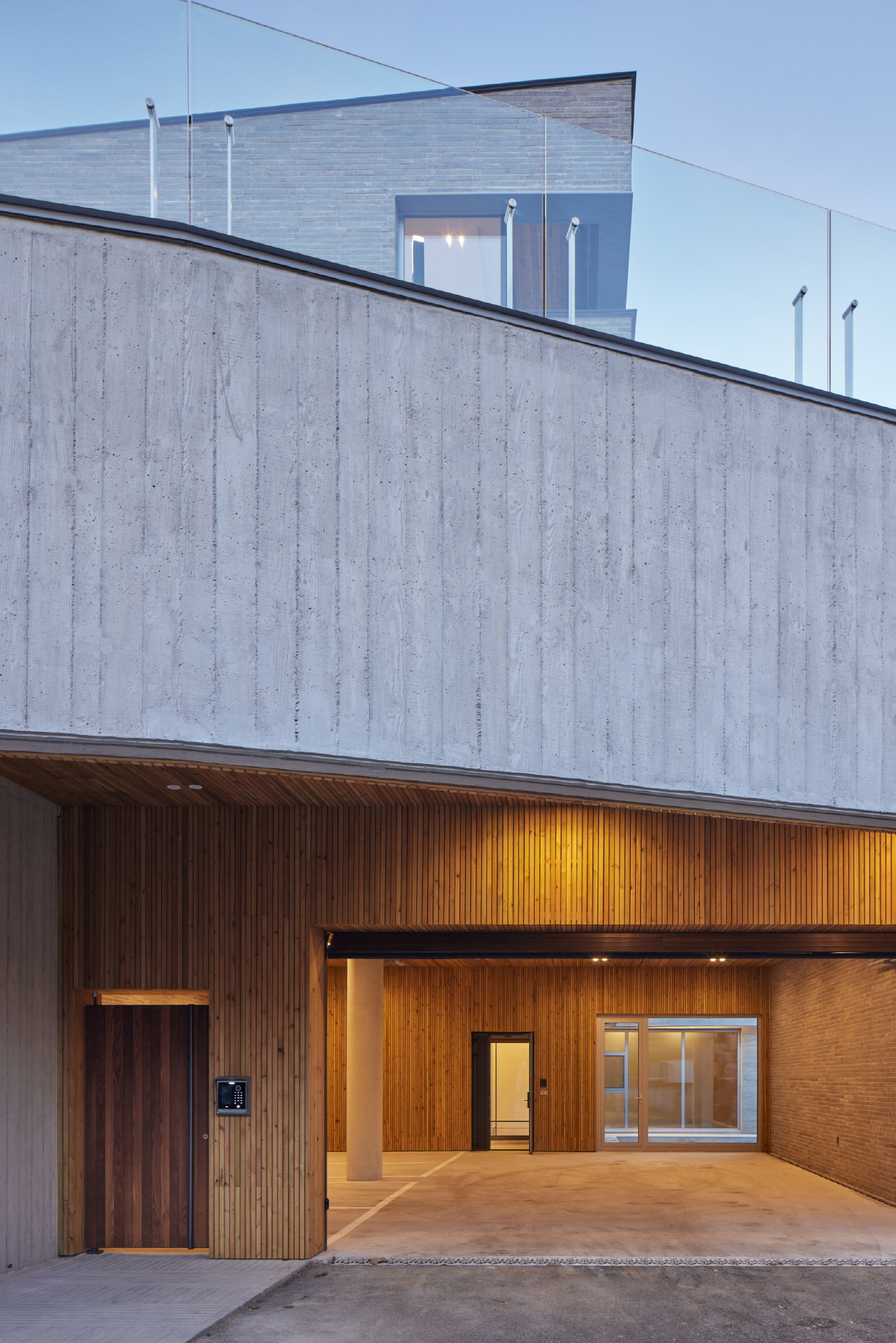

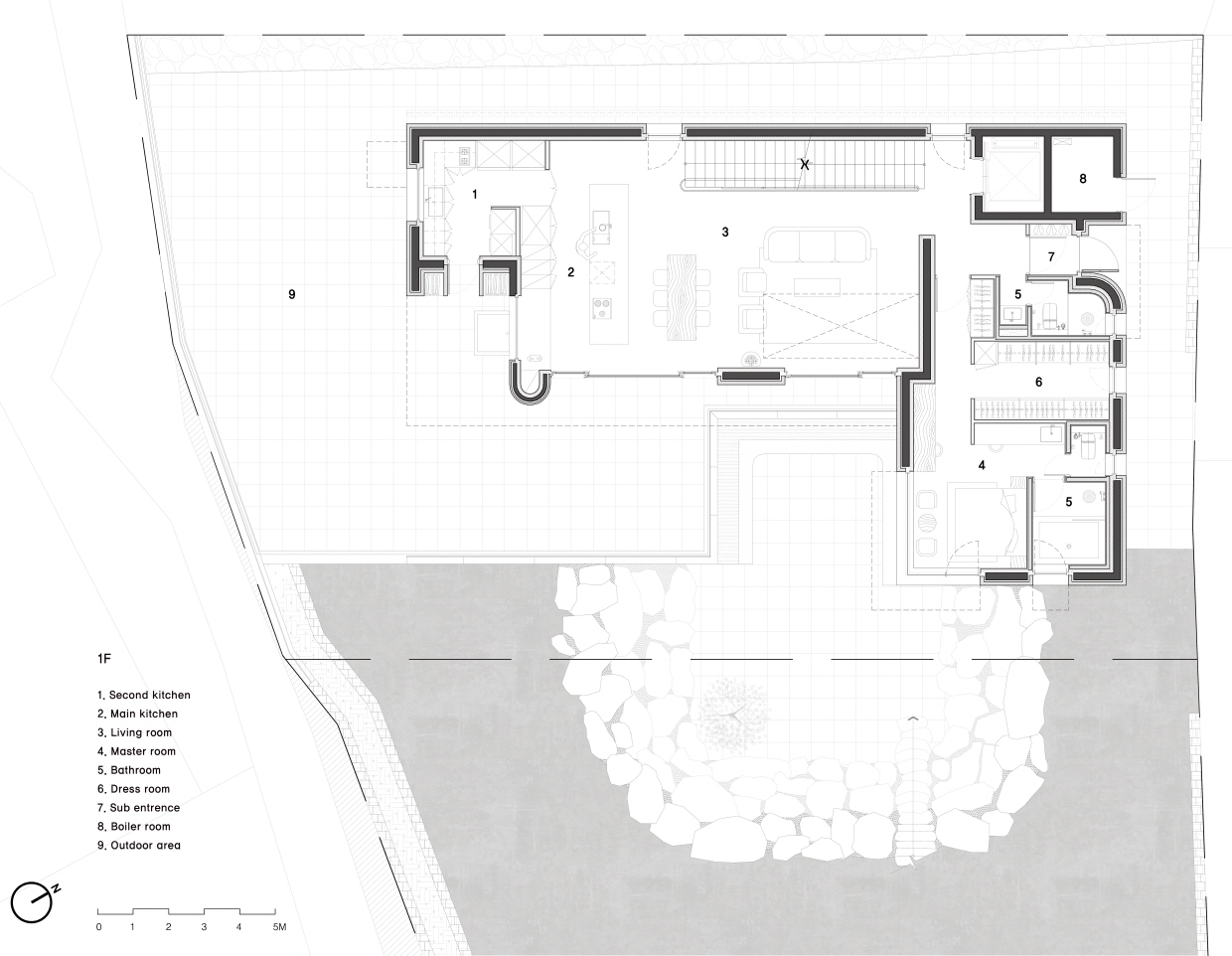
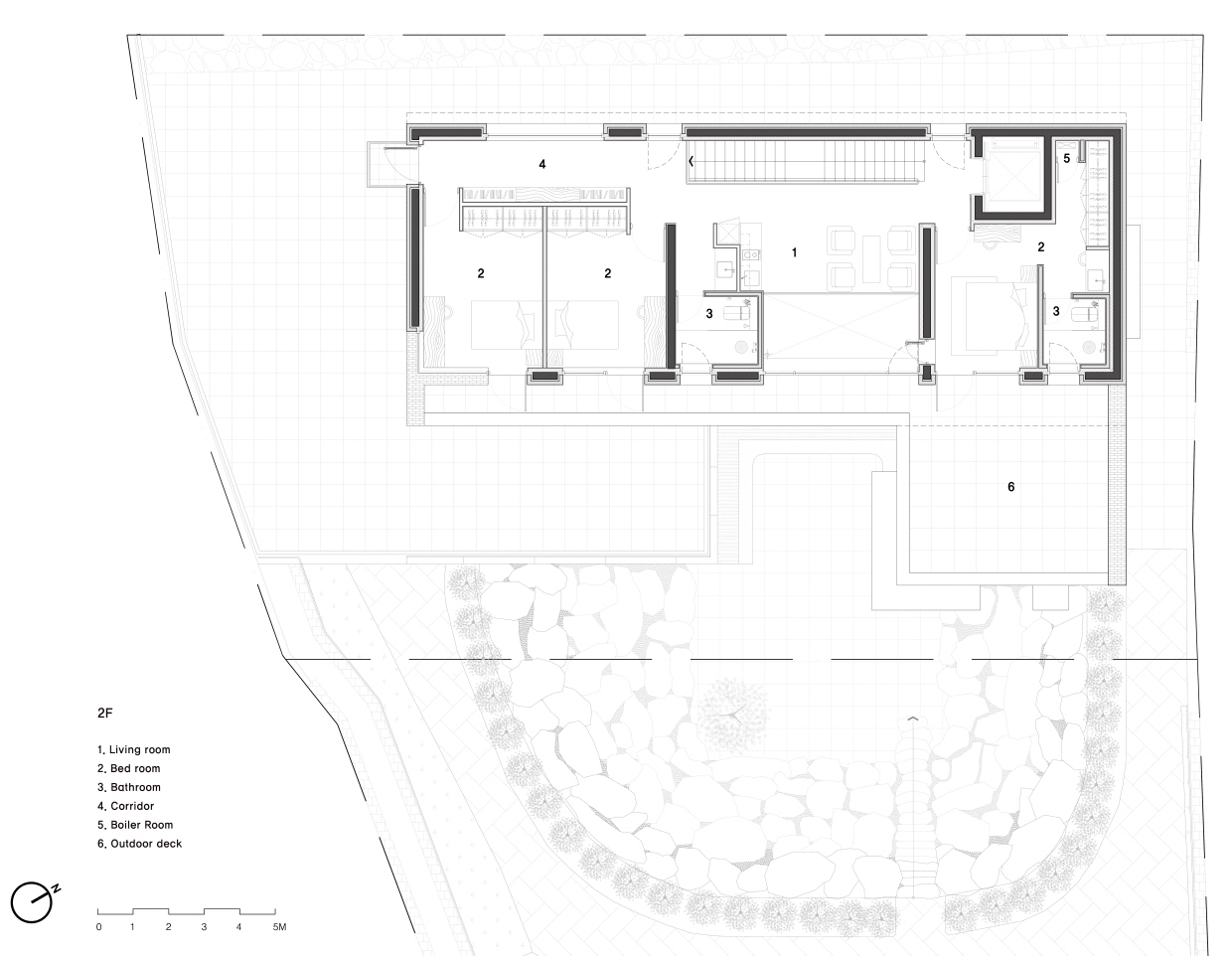
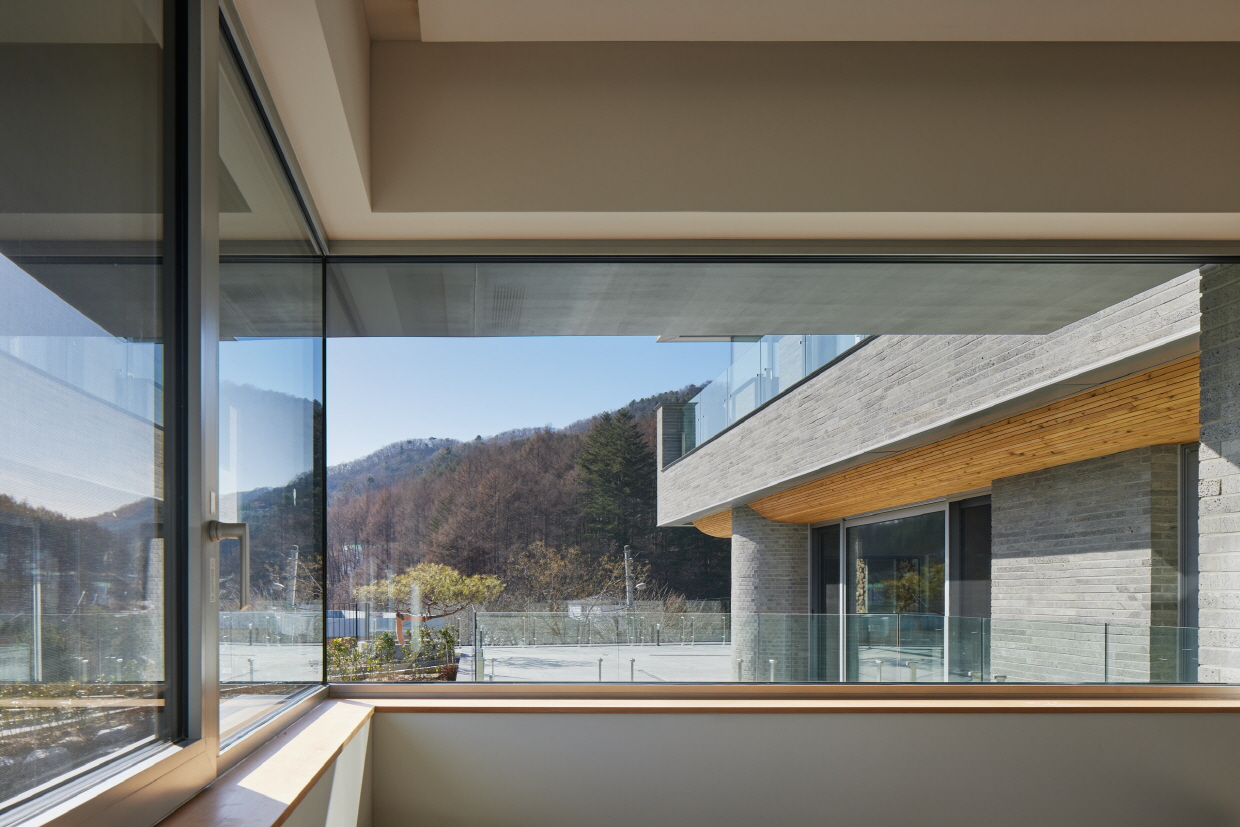
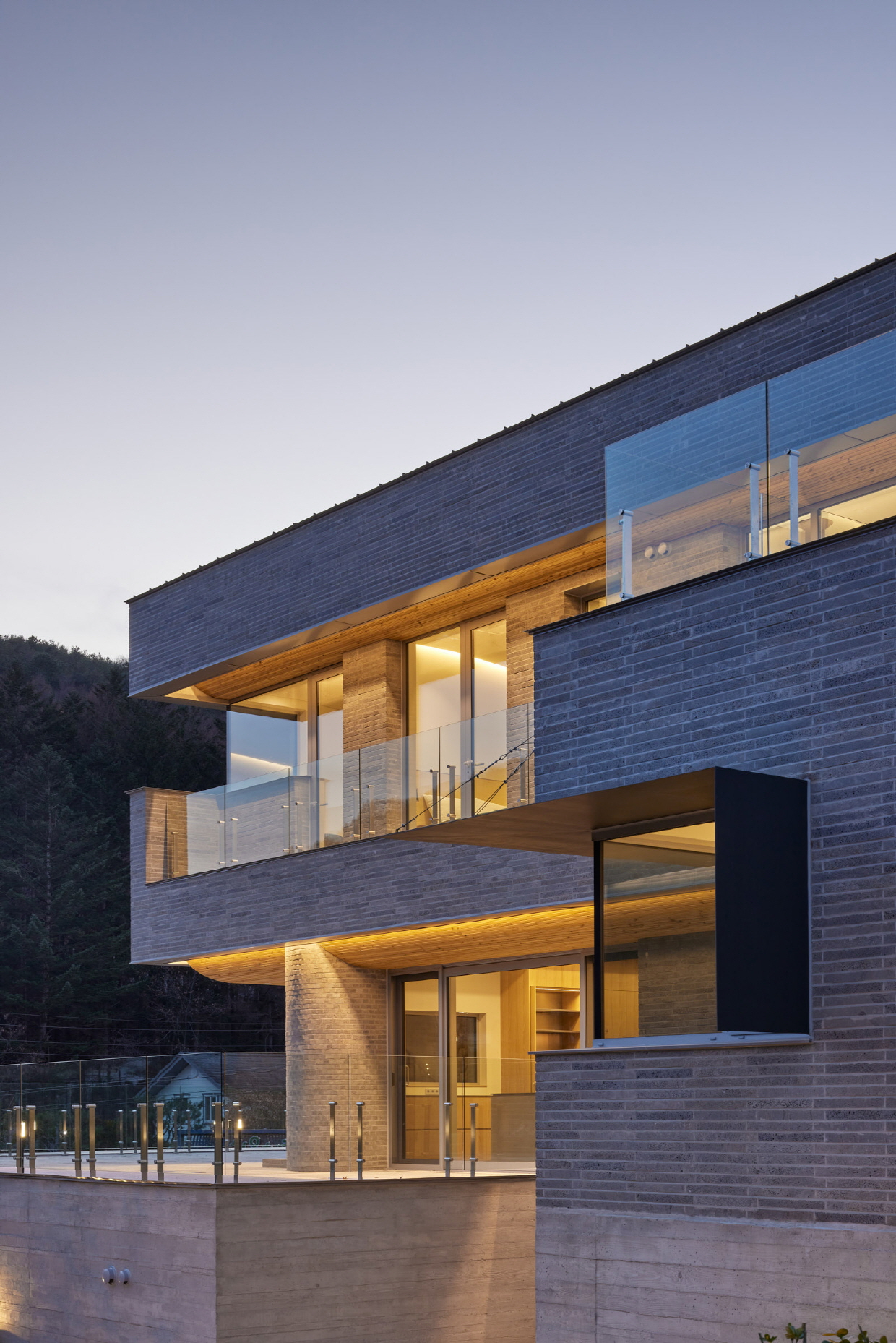
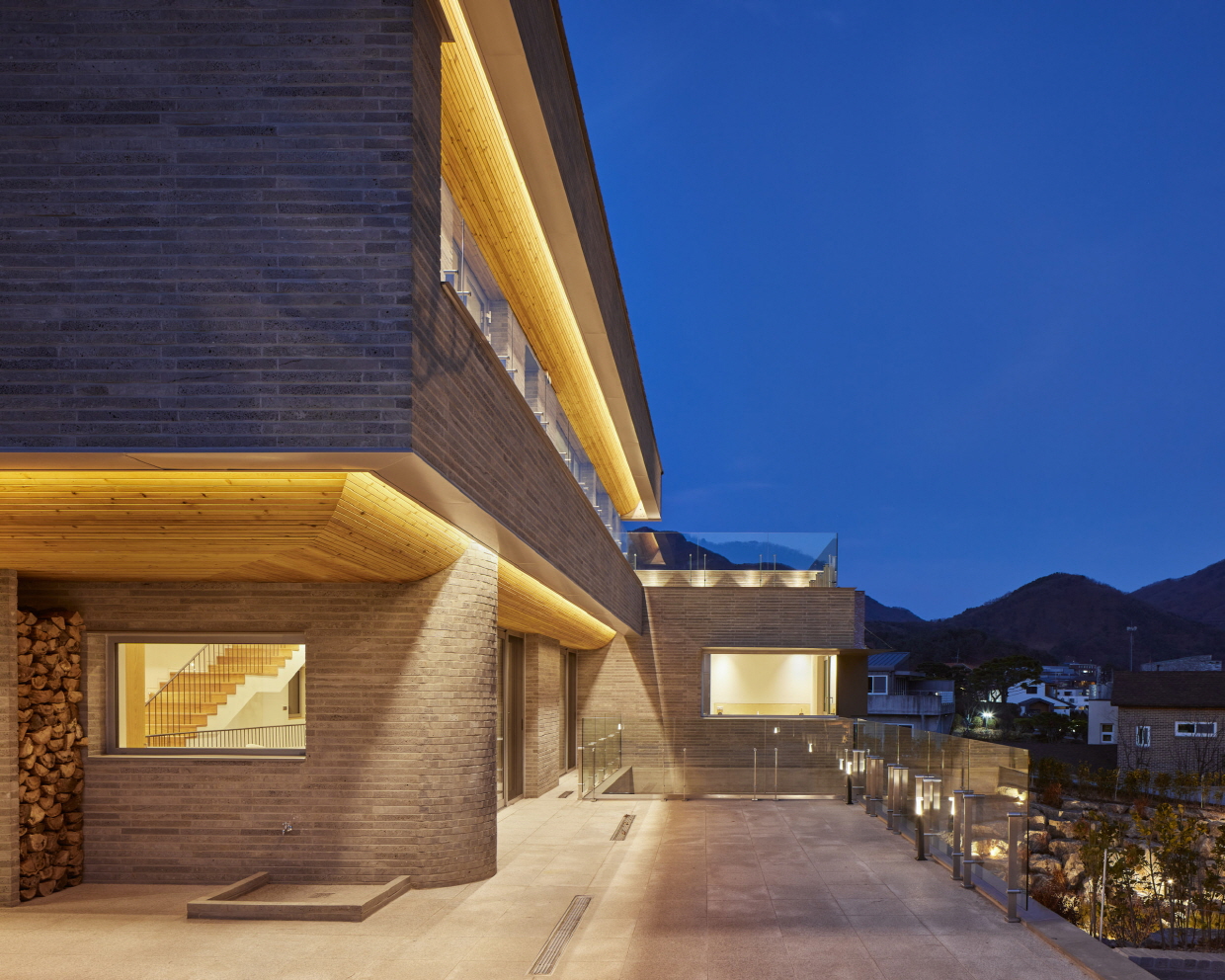
주요 실을 모두 남동쪽으로 배치하여 하루 내내 안정적인 남향 채광을 확보하였다. 막힘없이 열린 천마산의 능선을 시야에 담을 수 있도록 조망 또한 고려했다. 가로로 긴 평면은 각 실마다 테라스를 연결할 수 있도록 계획하였고, 모든 방에 각각 외부로 나가는 창을 두어 내부와 외부가 자연스럽게 이어지도록 했다. 또한, 모든 방과 복도의 창을 대면 배치하여 문과 창을 동시에 열면 실마다 맞바람이 통과할 수 있는 바람길을 내었다. 시선이 머무는 복도의 끝에는 언제든지 창을 내어 시선의 확장을 유도하였다. 외부로 돌출된 처마는 입면의 수평선을 강조하며, 실내로 유입되는 빛의 양을 조절한다. 이는 비를 맞지 않고 전체를 이동할 수 있게 하며, 테라스에 앉아 천마산을 마주할 수 있는 장소로 기능한다. 건축은 마치 바위 틈을 밀어내고 올라온 듯 표현되고, 정제된 수평의 입면 아래 살짝 숨은 곡선 처마는 기능과 조형을 넘어서, 재료를 다루는 감각과 그 안에 깃든 질서의 축적으로 공간에 스며든다.
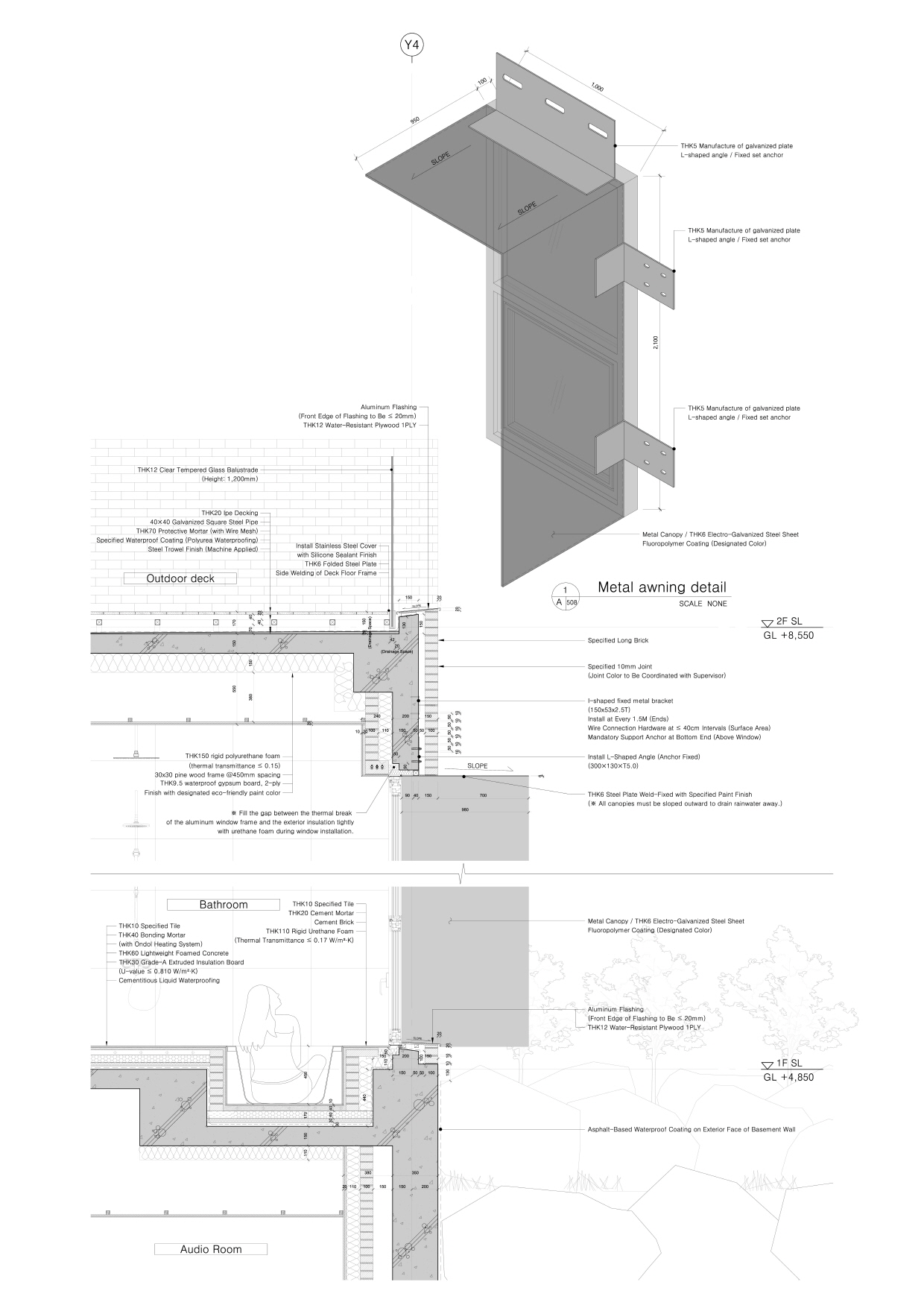
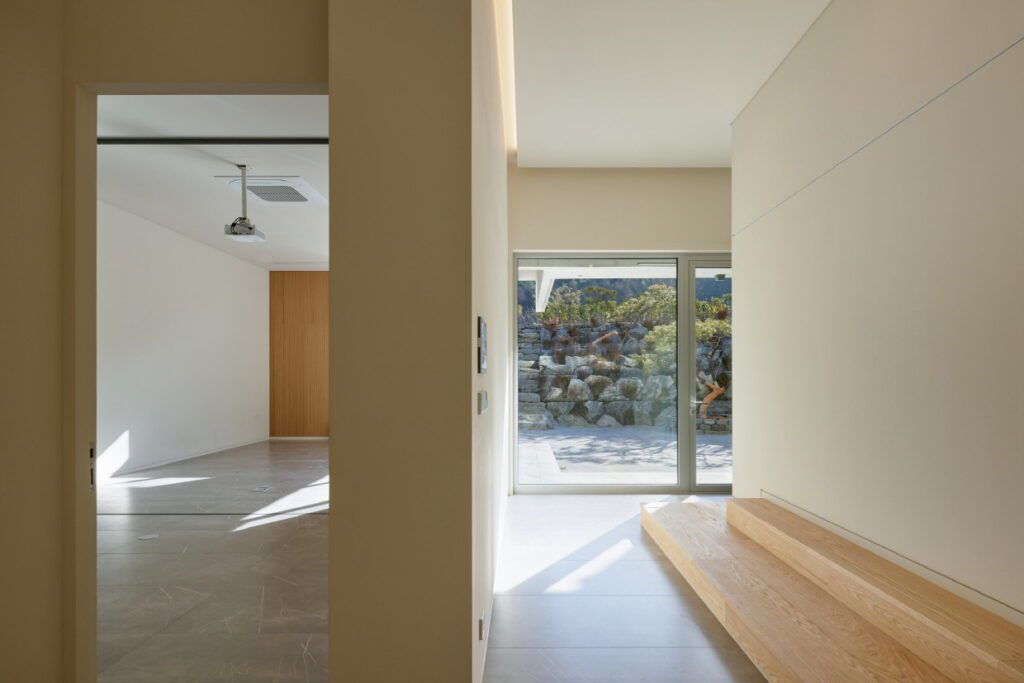
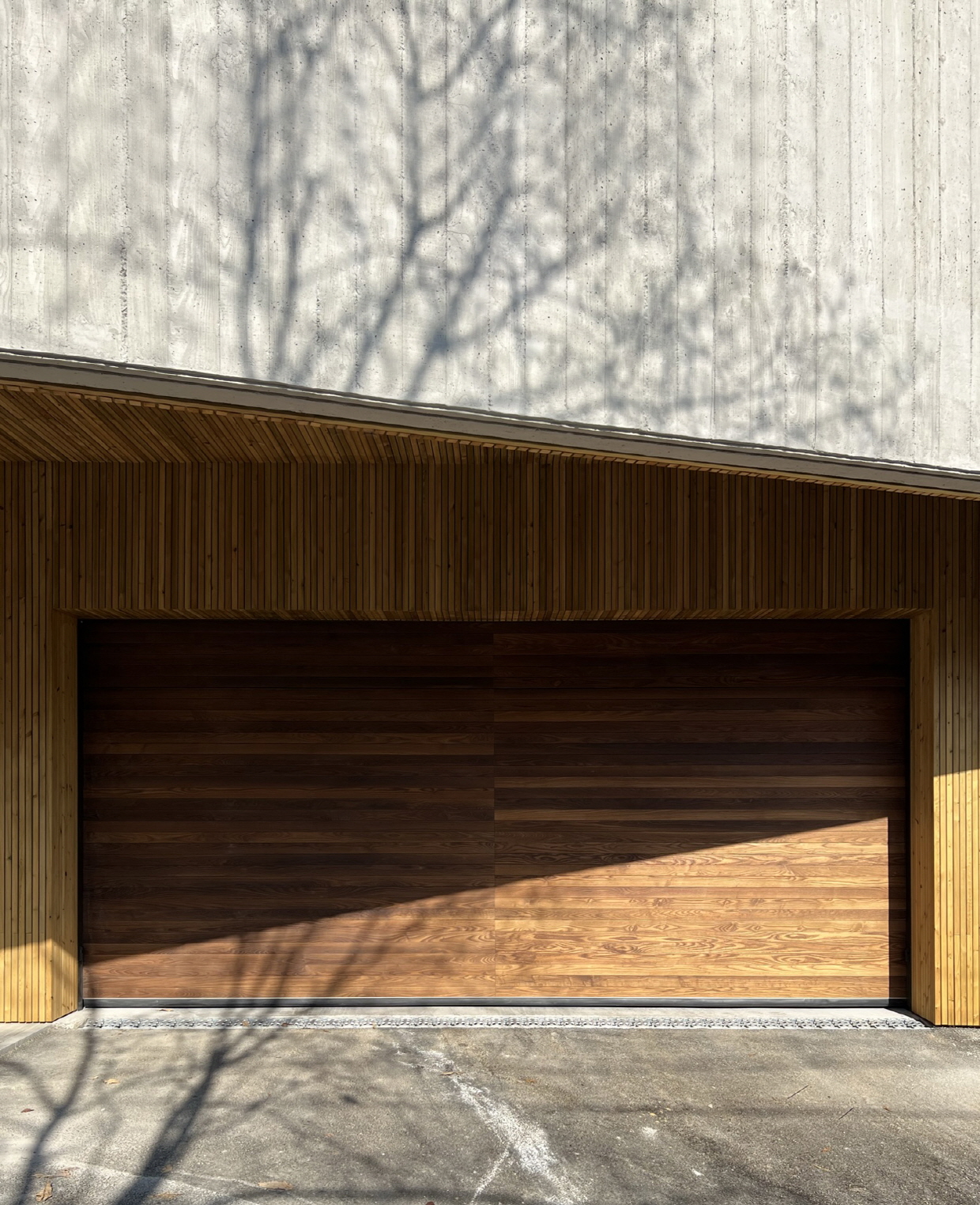
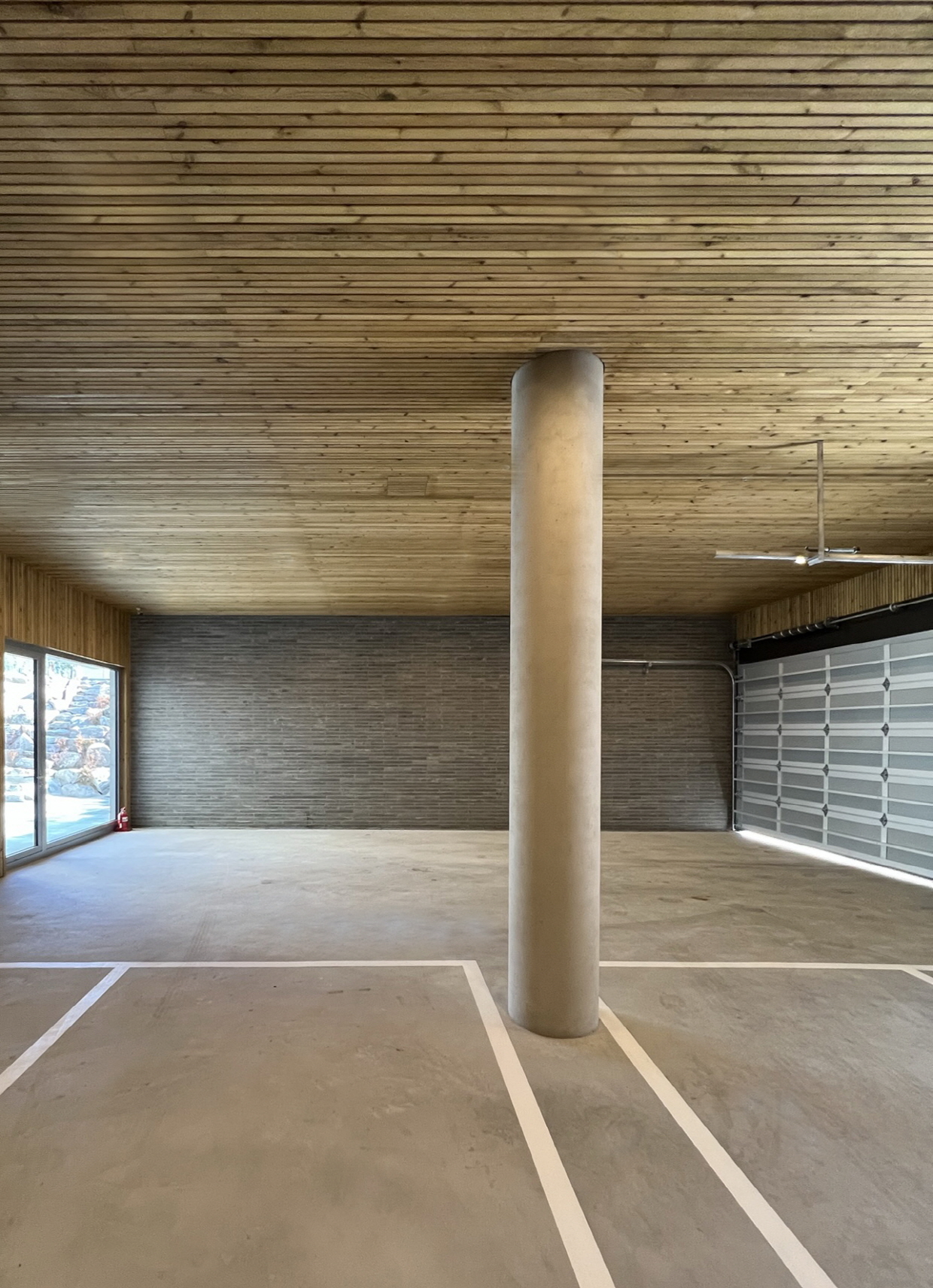
비를 피한 깊은 처마 아래, 구조용 목재를 길이 방향으로 하나씩 정성스레 붙여 나간다. 단순한 반복 행위는 물성에서 비롯된 감각을 넘어 그 ‘지속의 태도’ 자체를 고유한 아름다움으로 보게 만든다. 축적된 시간이 만든 아름다움에 건축은 기능을 넘어 태도와 질서를 발견하게 된다. 낮은 도로에서 진입되는 지하층은 어둡고 밀폐된 공간으로 향하는 것이 아니라, 지하 선큰 마당과 연결된 전면창을 통해 시선이 확장되고, 깊숙이 들어오는 자연광은 내부 공간에 밝은 생기를 불어넣는다. 1층 안방과 욕실에 설치된 ㄱ자 형태의 금속 처마는 북동쪽 인근 주택의 시선을 유연하게 차단하고, 일상의 흐름을 방해받지 않을 정도의 섬세한 경계를 만든다. 전면으로 펼쳐진 천마산 조망 역시 더 깊게 응시하게 한다.
All primary rooms were positioned toward the southeast to ensure consistent southern sunlight throughout the day.
Views were carefully considered to capture the uninterrupted ridgeline of Cheonmasan Mountain. The horizontally elongated floor plan allows each room to connect to a terrace, and every room has windows opening directly to the outdoors, fostering a natural connection between interior and exterior spaces. Windows in all rooms and corridors are aligned so that opening both doors and windows creates cross-ventilation paths within each space. At the end of corridors, windows were placed to extend sightlines and invite visual openness. Protruding eaves emphasize the horizontal lines of the façade while regulating the amount of light entering the interiors. They allow movement without getting wet in the rain and create terrace spaces where one can face Cheonmasan comfortably. The architecture appears as if it has emerged by pushing through the rock, with subtly curved eaves tucked beneath refined horizontal lines. Beyond functional and formal considerations, these eaves reflect the tactile handling of materials and the accumulated order embedded within, permeating the space.
Under the deep, rain-protecting eaves, structural timber is carefully placed lengthwise, one piece at a time. This simple repetitive act transforms a tactile experience into a unique beauty derived from the “attitude of persistence” itself. The beauty created by accumulated time allows the architecture to reveal attitude and order beyond mere function. The basement, accessed from the lower road, does not lead to a dark, enclosed space but instead connects visually to the sunken courtyard through front-facing windows. Deep natural light brightens and energizes the interior. An L-shaped metal eave installed over the first-floor master bedroom and bathroom subtly screens the view from nearby northeast houses, providing a delicate boundary that does not interrupt daily life. At the same time, the view toward Cheonmasan unfolds more profoundly, inviting deeper contemplation.
마침내, 그 순간
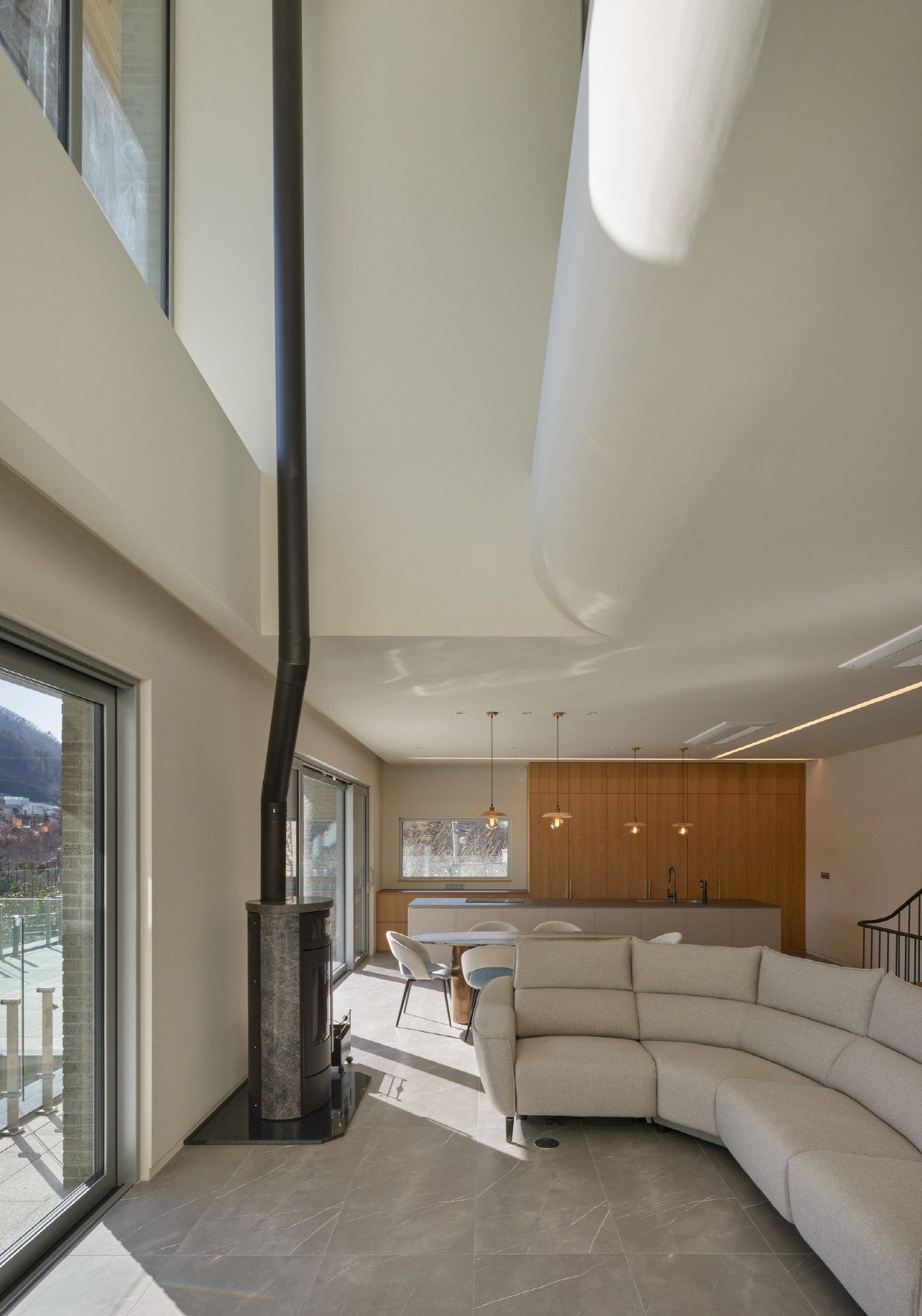
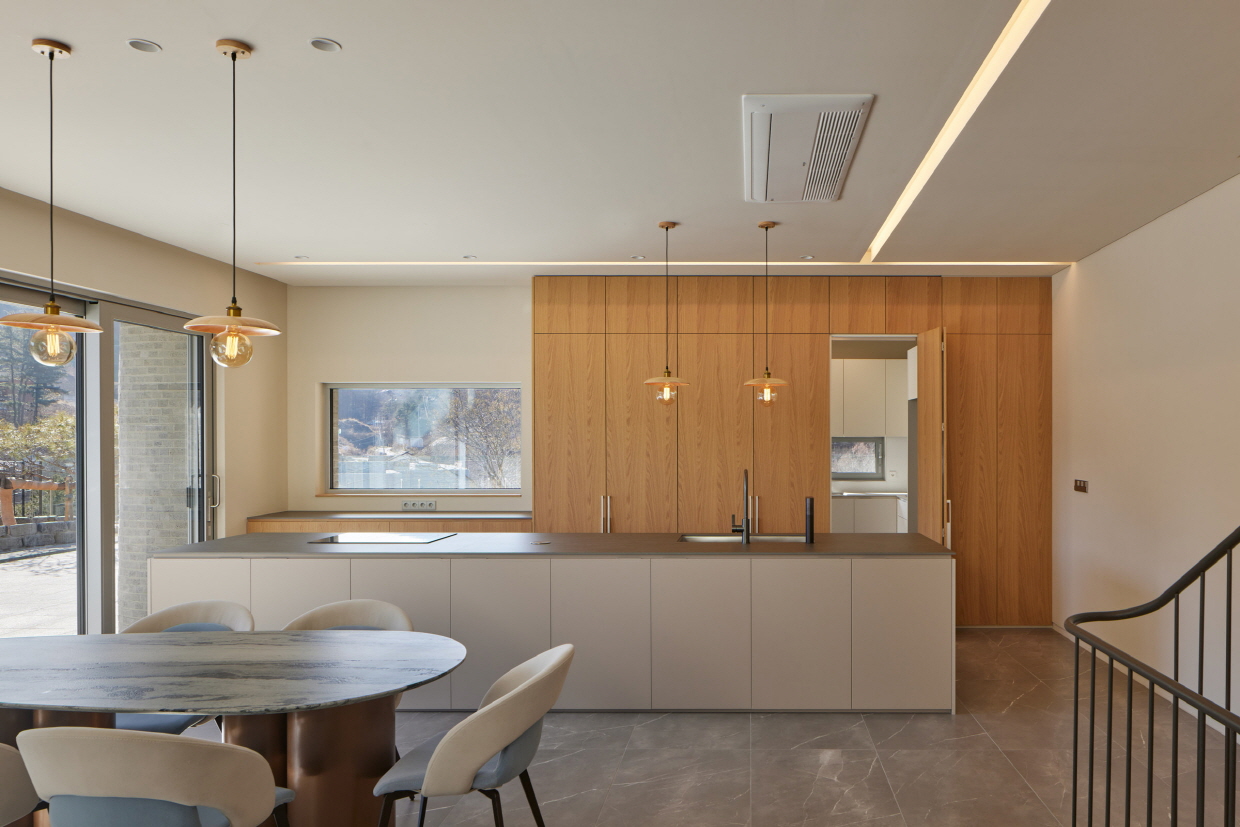
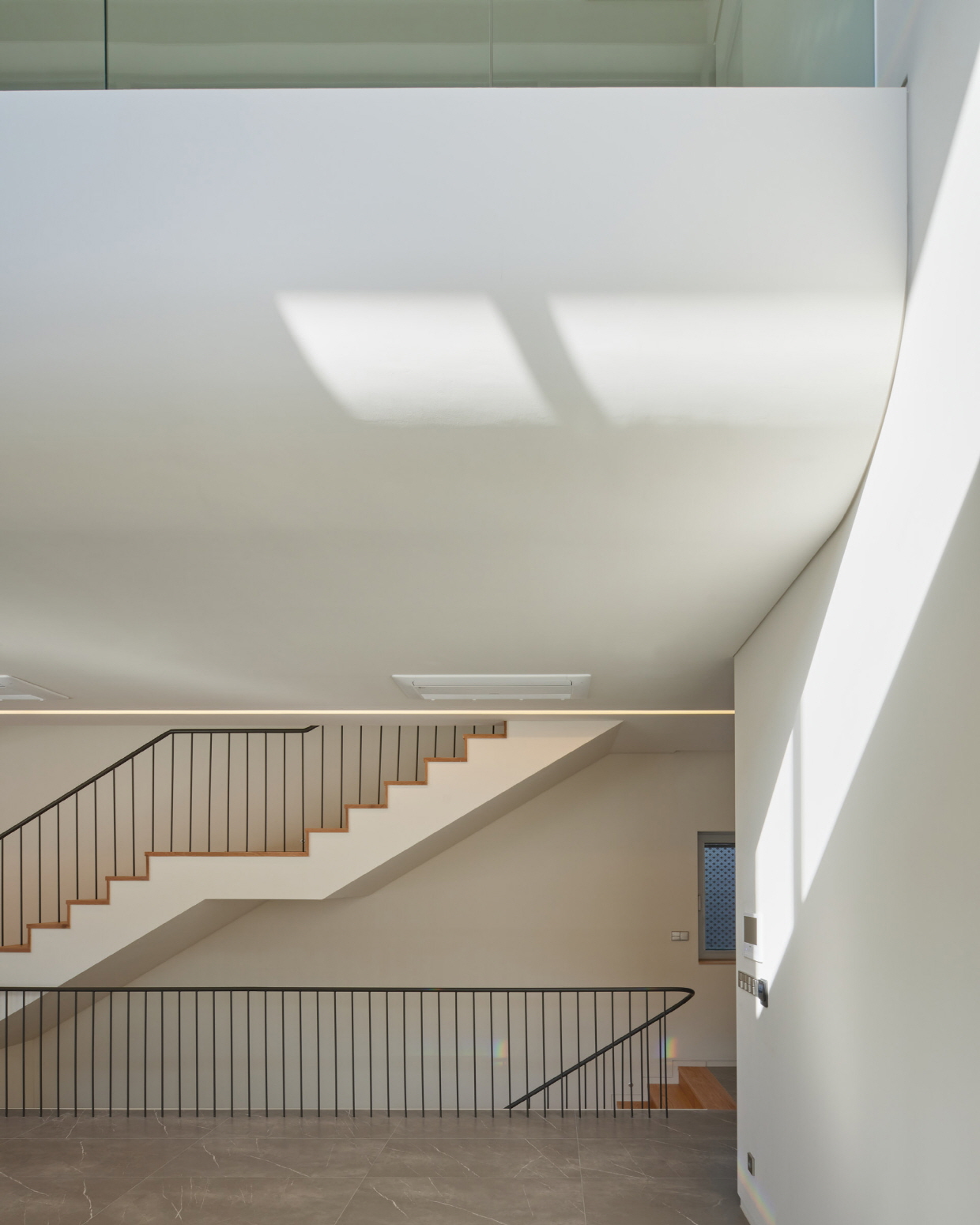
“휴일 오후, 지하 음악 감상실에 앉아 눈 쌓인 선큰 광장의 소나무를 보며, 블루레이 화질로 재생한 안드레아 보첼리의 공연 실황을 감상했다. 건축을 하며 굳이 많은 돈을 들여 지하에 새로운 야외 공간을 만들 필요가 있을까 고민했던 기억들이 떠올랐다. 그때 예산 문제로 포기했다면 지금 이 광경을 보지 못했을 거란 생각에, 욕심 내길 정말 잘했다는 확신이 들었다.”“1층 거실의 공간도 철저히 음악 감상에 맞추어 가구를 배치했다. 그중 ㄴ자 소파의 꺾인 한 자리는 음악을 듣기에 더없이 좋은 위치다. 바로 옆에 벽난로가 놓여 있는데, 퇴근 후 벽난로에 불을 피우고 그 자리에 앉아 음악을 들으면, 새 집을 지으며 겪었던 고생들이 한꺼번에 보상 받는 느낌을 받는다. 1층과 2층의 공간이 오픈되어 있어서, 전과 동일한 오디오로 음악을 들어도 훨씬 더 공간감 있게 들리는 건 덤이다.” — 건축주 인터뷰 중
이 글을 받아 읽으며, 건축이라는 일이 누군가의 일상에 어떻게 스며드는지 새삼 느꼈다. 건축을 완성하는 단계는 분명 살며 살아가며 느끼는 그 지점 안에 있다. 그리고 문득, 이제서야 이 집이 정말로 완성되었구나 하는 생각이 들었다.
Finally, That Moment
“On a holiday afternoon, I sat in the underground music room, looking at the snow-covered pine trees in the sunken courtyard, and watched a live performance by Andrea Bocelli in Blu-ray quality. I remembered wondering while designing the house whether it was really necessary to spend so much to create a new outdoor space in the basement. Thinking that if we had given up due to budget back then, we wouldn’t be seeing this view now, I felt certain that indulging that desire was absolutely the right choice.”
“The living room on the first floor was also arranged entirely for music enjoyment. One corner of the L-shaped sofa is the perfect spot for listening to music. Right beside it is a fireplace, and after work, lighting a fire there and sitting in that spot while listening to music makes all the hardships we went through building this house feel completely rewarded. Since the first and second floors are open to each other, even listening to the same audio system as before feels much more spacious and immersive.” — Excerpt from the client interview
Reading these words, I was reminded once again of how architecture permeates someone’s daily life. The completion of architecture is found precisely in those lived, experienced moments. And suddenly, I realized—only now—that this house is truly complete.